
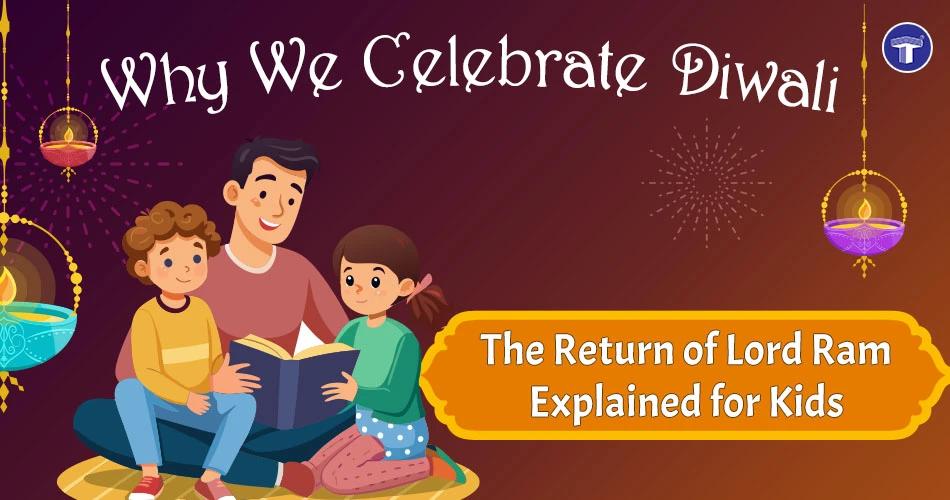
Every year, as the air fills with the smell of mithai, the sparkle of diyas, and the laughter of family, our hearts know that Diwali is here.
But beyond the joy and celebrations, there lies a story that every Indian child should grow up hearing. It is a story that has travelled from grandparents’ lips to bedtime tales, reminding us of who we are and why we celebrate Diwali. Every parent hopes their little ones remember not just the festival, but its meaning.
So this Diwali, let us take our little ones on a journey back to Ayodhya, to the very beginning where the first diya was ever lit.
The Story Behind Diwali: The Return of Lord Ram
Long ago, in the sacred city of Ayodhya, lived a prince named Lord Ram He was brave, kind, and righteous. But due to a promise made by his father, King Dasharath, Lord Ram was sent to live in the forest for fourteen long years. His devoted wife Sita and loyal brother Lakshman went with him, leaving behind a golden palace for a simple hut.
In the forest, a terrible thing happened. — Ravan, the mighty king of Lanka, captured Sita and took her away. To rescue her, Lord Ram built an army of vanaras (monkeys), and, with the help of Hanuman, crossed the seas to Lanka. After a fierce battle, Ram defeated Ravan and freed Sita.
When Lord Ram, Sita, and Lakshman returned home after fourteen years, the people of Ayodhya were overwhelmed with joy. They lit puja thalis and homes with rows of oil lamps, sang songs of victory, and filled the streets with happiness. That night, glowing with thousands of diyas, became what we now know as Diwali.
It wasn’t just the victory of a king; it was the triumph of light over darkness, good over evil, and love over fear.
What Origin of Diwali Teaches Us
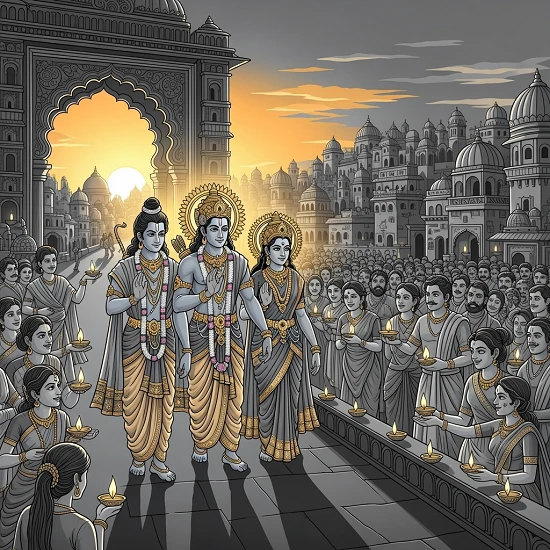
Lord Rama, Sita, and Lakshman returning to Ayodhya
Lord Ram, Sita, and Lakshman returning to Ayodhya show that Diwali is about more than lights and celebrations. It is about hope, perseverance, and the victory of good over evil. The story teaches children patience, faith, and righteousness, showing that even in dark times, positive outcomes are possible. Parents can help their kids bring these lessons into daily life by instilling the values of patience, faith, and good conduct by teaching them shlokas and mantras. Such simple practices allow children to experience the same values that Diwali celebrates, making the festival meaningful beyond the lamps and sweets.
Every diya we light symbolises our own little victory — choosing kindness over anger, truth over lies, and goodness over greed.
That is why we celebrate Diwali, not just as a festival, but as a feeling that connects us to our roots, our values, and our faith.
Why We Celebrate Diwali in India: Diverse Traditions
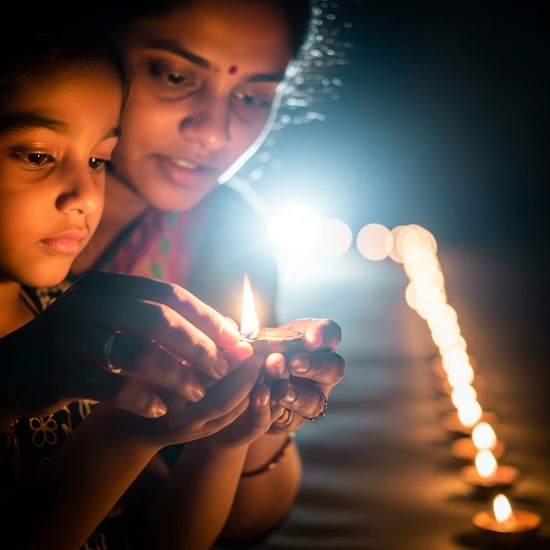
Lighting diyas to celebrate Diwali’s true meaning
Across India, the reason for celebrating Diwali changes from region to region, yet the soul remains the same.
- In North India, we remember Lord Rama’s return to Ayodhya.
- In Gujarat, it marks Goddess Lakshmi’s arrival, symbolising prosperity.
- In South India, people celebrate Lord Krishna’s victory over Narakasura.
No matter where you are, the message stays unchanged: light always wins. That’s what makes Diwali so important for every Indian family.
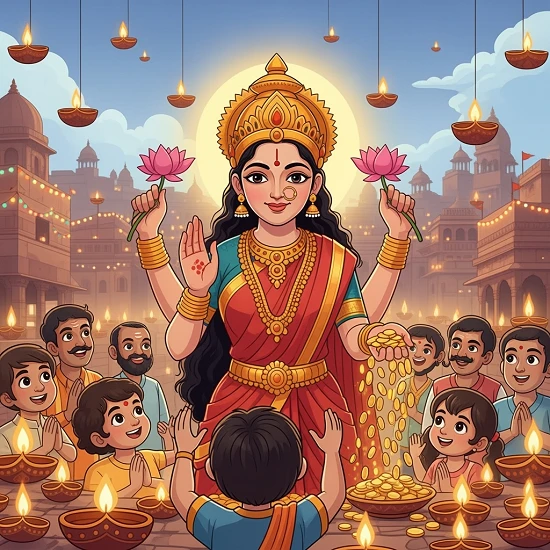
Goddess Lakshmi blessing people on Diwali
🌟 Fun Fact: Many wonder why we perform Lakshmi Puja on Diwali and not Ram Puja. When Lord Rama returned to Ayodhya, the city was filled with joy and prosperity, so people welcomed Goddess Lakshmi along with him to bless their homes.
That’s why we welcome Goddess Lakshmi, the goddess of wealth and prosperity, into our homes to bless us with joy, health, and harmony, just like she blessed Ayodhya that night.
So, even though Lord Rama is not directly worshipped on Diwali, his journey remains the heart of the celebration.
How Do You Celebrate Diwali with Your Family?
Every Indian family has their own Diwali rituals—cleaning the home, buying new clothes, preparing mithai, decorating with rangoli, and lighting diyas together. But the most precious part? Sharing stories.
As parents, when we tell our children why we celebrate Diwali, we aren’t just teaching mythology, we’re passing down light, values, and legacy.
You can make it even more meaningful by:
- Reading short Ramayana stories before bedtime.
- Creating fun Diwali crafts or colouring activities together.
- Talking about what light means—not just in the sky, but in our hearts.
You can also explore how simple mantras can help modern families bring calm, focus, and positive energy into daily life.
This is how we celebrate Diwali with family, by turning simple rituals into moments of love and learning.
These small rituals help families connect, turn everyday moments into learning experiences, and guide children in blending Indian culture and creativity into their daily routines.
Why Is the Story of Rama and Sita Important?
The story of Rama and Sita is not just an old tale; it’s a guide for life.
It teaches children that even when the world feels unfair, we can stay kind and true.
It shows the strength of love, the power of faith, and the beauty of returning home, not just to a place, but to values that define us.
Every generation that retells this story keeps its light alive.
A Festival That Still Shines Within Us
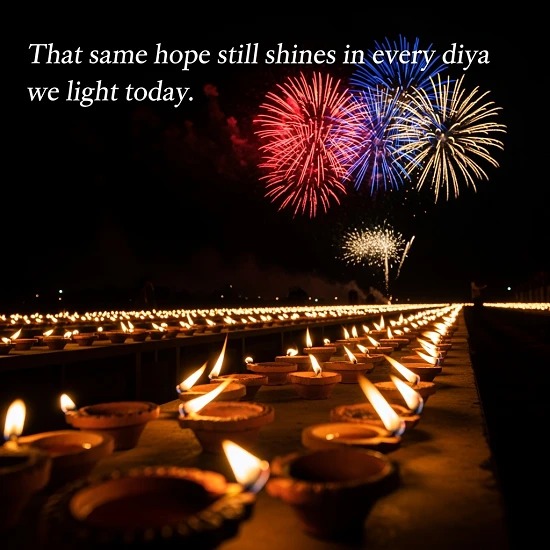
Hope shines in every Diwali diya
As parents, we hope the stories, lights, and laughter of Diwali guide our children towards goodness. So when your child asks, ‘Mum, Dad, why do we celebrate Diwali?’
Tell them this:
‘Because many years ago, a noble king named Ram returned home after years of hardship. His people lit diyas not just to welcome him, but to celebrate the triumph of light over darkness, hope over despair. And that same hope still shines in every diya we light today.’
This Diwali, may your home shine bright with diyas, your hearts glow with love, and your children grow up knowing that the greatest light of all is the one that lives inside us.
Frequently Asked Questions
1. How do I explain the story of Diwali to kids?
Ans: Start with the heart of it: Lord Rama’s return to Ayodhya after fourteen years. Tell your child how people lit diyas to celebrate his homecoming, and explain that the festival reminds us to be brave, kind, and truthful.
Want to make the story come alive for your little one? Explore our beautifully illustrated Ramayana book for kids, perfect for bedtime storytelling and festive learning.
2. What lesson does Diwali teach children?
Ans: Diwali teaches that goodness always finds its way back, no matter how dark things get. It’s about believing in yourself, staying honest, and choosing light even when it’s hard.
3. Why is lighting diyas important on Diwali?
Ans: Lighting diyas isn’t just a tradition, it’s an emotion. Every lamp symbolises joy, purity, and the victory of light over darkness. It’s a moment of gratitude, a prayer that our homes and hearts stay filled with light.
4. Is Diwali only about Lord Rama’s return?
Ans: In most of North India, yes, but across the country, Diwali holds different meanings. Some honour Goddess Lakshmi, others Lord Krishna. But the message remains one: light, goodness, and hope.
5. How can parents make Diwali meaningful for kids?
Ans: Tell stories. Let your children light diyas. Teach them to give, not just receive. Let them feel the warmth of traditions, because these moments become memories, and these stories become strength.
6. Why is Diwali called the Festival of Lights?
Ans: Because that night in Ayodhya, when Lord Ram and Sita returned, thousands of diyas lit the city like stars on earth. Even today, when we light our lamps, we continue that same promise: to let light guide our lives.