
Raising children is about more than academics. While books and lessons shape their knowledge, it is good manners that shape their character. Teaching children how to behave politely, show respect, and care for others makes them confident and compassionate individuals. In Indian homes, where values and traditions play a big role, introducing children to good manners at home becomes even more meaningful.
What Are Good Manners?
Simply put, good manners are positive behaviours that show respect, kindness, and consideration towards others. For children, this could mean saying 'thank you' when receiving something, greeting elders politely, waiting for their turn, or speaking kindly to friends. Learning these skills early makes life easier at school, at home, and in society.
Once we understand what manners mean, it becomes easier to see why they hold such an important place in a child's upbringing.

Indian child showing good manners by greeting elders politely
Importance of Good Manners in Children
The importance of good manners goes beyond just being polite. They help children:
- Build stronger relationships with family and friends.
- Develop respect for elders, teachers, and peers.
- Gain confidence in social situations.
- Learn patience and empathy.
Parents often wonder why good manners are important. The truth is, children who practise them are more likely to be accepted and appreciated in any environment.
Manners are not just about home life; they play a big role in how children behave in schools too.
Good Manners of Students
At school, manners are as important as studies. Teachers value children who:
- Listen carefully in class.
- Raise their hand before speaking.
- Share materials with classmates.
- Say 'sorry' if they make a mistake.
A simple list of good manners for students could include being punctual, respecting school rules, and showing gratitude to teachers. These small habits go a long way in creating a positive learning environment.
To make sure children pick up these habits easily, it helps to start teaching them from a very young age.
Good Manners for Nursery and Kindergarten Children
Introducing manners at a young age makes learning easier. For example, good manners for nursery class can include:
- Greeting teachers with a smile.
- Saying 'please' and 'thank you'.
- Keeping toys back after playtime.
Similarly, good manners for kindergarten or UKG children can extend to helping friends, waiting patiently in line, and showing kindness to everyone. Using a good manners chart at home can make the process fun, as children love visual learning.
Watch this engaging video on good manners for kids, packed with simple examples that make learning polite behaviour fun and easy.
Once children understand the basics, parents can expand their learning with everyday examples and simple activities.
Examples of Good Manners for Kids
Parents can start with the basics. Here are 5 good manners every child should know:
- Saying 'please' and 'thank you'.
- Sharing toys and books.
- Respecting elders.
- Speaking politely without interrupting.
- Cleaning up after themselves.
Adding fun elements like a good manners activity or good manners rhymes can help children remember these lessons better. For instance, role-play games where they act as teacher and student are excellent ways to reinforce manners through play.
Since children watch and imitate adults closely, the best place to continue teaching these lessons is at home.
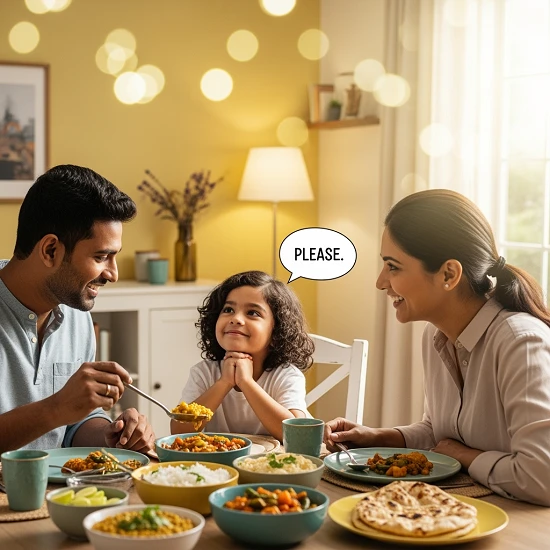
Children show good manners by using polite words at dining
Good Manners at Home
Children learn best by watching their parents. Everyday situations like eating together, talking on the phone, or welcoming guests are perfect moments to model good manners at home. When children see parents being polite, they naturally copy those behaviours.
Another way to help children understand the value of manners is to show them the difference between good and bad behaviours.
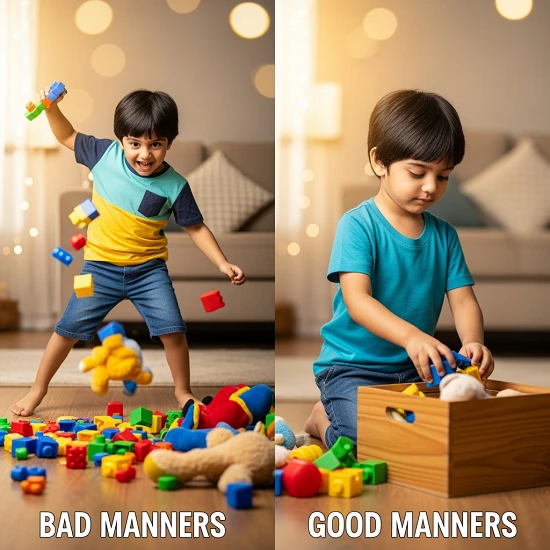
Child showing bad and good manners with toys
Bad Manners vs Good Manners
Sometimes the easiest way to teach is by showing contrasts. For example:
- Throwing toys (bad manners) vs keeping them back in place (good manners).
- Interrupting conversations (bad manners) vs waiting patiently (good manners).
This comparison helps children understand why manners matter and what they can do differently.
And of course, making manners enjoyable ensures children learn faster and more willingly.
For more ideas on cultivating polite behaviour in your child, take a look at 10 Necessary Good Manners for Kids (K.R. Mangalam) — a helpful list that reinforces habits like respect, kindness and gratitude.
Making Manners Fun for Children
Learning does not have to feel like a lecture. Parents can try using various methods like:
- Good manners with pictures for visual learners.
- A storytelling session with a story about good manners.
- Using flashcards or activity books to make lessons engaging.
- Encouraging children to use new good manners words daily.
Teaching good manners may take patience, but it is an investment that lasts a lifetime. As Indian parents, making manners part of everyday life ensures our children grow up not only intelligent but also kind, respectful, and well-loved wherever they go.
FAQs on Good Manners
1. At what age should children start learning good manners?
Ans: Children can start learning simple manners as early as two or three years old. At this age, they can grasp easy habits such as saying 'thank you' or sharing toys.
2. What are some basic good manners every child should know?
Ans: Some essential ones include greeting others politely, waiting their turn, saying 'please' and 'sorry', and showing respect for elders.
3. How can parents teach good manners to kids effectively?
Ans: The best way to teach by example. Parents should practise polite behaviour at home, use charts or rhymes, and gently remind children of expected behaviour.
4. What are some fun activities to teach kids good manners?
Ans: Storytelling, role-play, rhymes, and drawing activities can all make learning manners enjoyable and memorable for children.
5. What are some common mistakes parents make while teaching manners?
Ans: Expecting perfection too soon, being inconsistent, or scolding harshly can discourage children. Patience and consistency are key.
6. Are good manners different in different cultures?
Ans: Yes, manners can vary depending on cultural traditions. For example, touching elders' feet is a sign of respect in India, while greetings may differ in other countries.