
Keeping children meaningfully engaged every day can feel challenging for parents. Many look for activities that are both enjoyable and developmentally beneficial. Fun puzzles and brain games for kids offer the perfect balance between learning and play.
Puzzles and brain games are important because they strengthen problem-solving skills, improve memory, and build concentration from an early age. Even a short daily puzzle session can quietly support long-term cognitive growth.
Types of Puzzles for Toddlers
Choosing the right puzzles for toddlers ensures learning stays joyful and frustration-free. Age-appropriate brain games help children explore patterns, shapes, and logic in simple ways.
Fun Puzzles and Brain Games for Kids
1. Jigsaw Puzzles
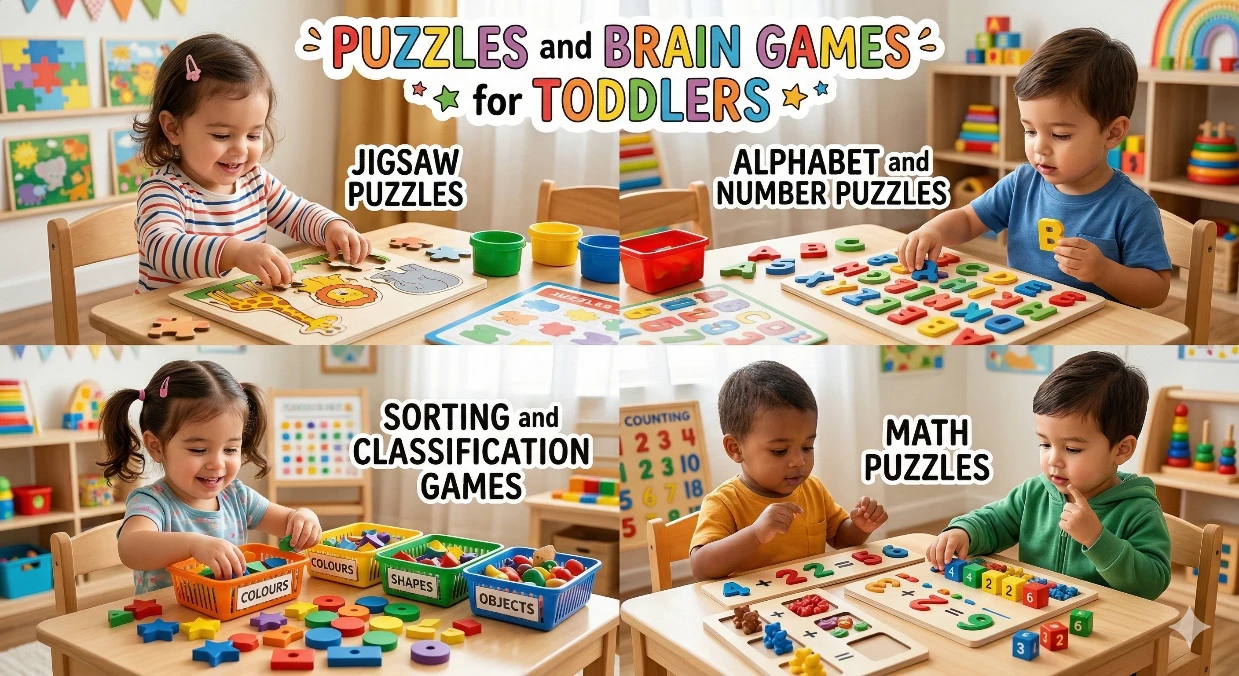
Large-piece jigsaw puzzles improve hand-eye coordination in young kids. As toddlers place each piece correctly, they begin to understand how parts connect to form a complete picture.
2. Alphabet and Number Puzzles
Alphabet puzzles for toddlers help them recognise letters while strengthening fine motor skills. Interactive alphabet puzzle books that combine tracing, matching, and playful activities make early literacy more structured. Number activity books similarly introduce counting and symbol recognition.
DIY Brain Games at Home
You do not always need store-bought materials to introduce brain games for kids. Simple household items can turn into powerful DIY learning tools.
1. Memory Card Matching
Create small picture cards and ask your child to find matching pairs. This strengthens a kid’s memory, attention span, and visual recall in a playful way.
2. Treasure Hunt with Clues
Hide familiar objects around the house and give simple clues such as colour or location hints. This encourages listening skills and reasoning in kids.
3. Sorting and Classification Games
Encourage your kids to sort buttons or toys by size, colour, or shape. Classification activities build analytical thinking while keeping children actively involved.
DIY brain games are affordable and more adaptable to your child’s interests.
Educational Puzzles that Support Early Learning
Educational puzzles for kids connect play with school readiness in a natural and relaxed way.
1. Phonics and Word Puzzles
Letter-matching games and simple word-building tasks help strengthen early literacy. When paired with Activity-based Learning Books, puzzle play for kids becomes structured yet enjoyable.
2. Math Puzzles
Number-matching cards and simple addition challenges introduce foundational math skills. These puzzles help children recognise number patterns confidently.
3. STEM-Based Brain Games
Simple engineering challenges encourage experimentation. Such brain games for kids promote curiosity and structured problem-solving, supporting early STEM learning.
Educational puzzles for kids ensure that learning continues even outside formal classroom settings.
Screen-Free Brain Games for Kids
Reducing screen time becomes easier when children enjoy engaging alternatives. Screen-free brain games offer meaningful play without digital distractions.
1. Sudoku Puzzles
Simple Sudoku Puzzles for kids build logic, patience, and focus while encouraging independent problem-solving.
2. Building Challenges
Ask your child to build the tallest tower or recreate a simple structure using blocks. This strengthens planning skills and encourages creative thinking.
3. Word-Building Games
Word search activity books and flashcards allow children to form words independently. These activities support vocabulary growth and confidence in early reading.
Such screen-free brain games for kids improve focus while protecting young minds from overstimulation.
Conclusion
Fun puzzles and brain games for kids transform everyday play into meaningful learning. Whether it is a jigsaw puzzle, an alphabet challenge, or a simple logic grid, each activity strengthens growing minds.
By introducing a variety of puzzles for toddlers and maintaining short, consistent sessions, parents can nurture curiosity and independence. Small daily challenges build focus, resilience, and confidence that support kids well beyond their early years.
Frequently Asked Questions
1. At what age can toddlers start puzzles?
Ans: Toddlers can begin simple shape puzzles at around 18 months of age. Large pieces and bright visuals make early puzzle play safe, engaging, and developmentally appropriate for young kids.
2. How long should my child play brain games daily?
Ans: Fifteen to twenty minutes daily is sufficient for toddlers. Short, consistent puzzle-solving sessions help improve focus and logical thinking without causing frustration or mental fatigue.
3. Are puzzles good for speech development?
Ans: Yes, puzzles encourage children to name objects, describe pictures, and follow instructions, which naturally strengthen vocabulary, listening skills, and overall language development.
4. Can brain games help reduce screen time?
Ans: Engaging, hands-on brain games provide stimulating alternatives to screens, helping kids develop concentration and creativity while reducing dependence on digital devices.
5. What type of puzzle improves concentration the most?
Ans: Matching challenges, sequencing puzzles, and simple brain games are especially effective for building attention span and structured thinking in preschoolers.