
Creating a daily routine for your little one doesn’t have to be perfect. Just a few simple steps can make your days smoother and more joyful!
The Power of a Simple Routine for Kids (and You!)
Kids are bursting with energy, curiosity, and creativity but without a clear routine, all that excitement can quickly turn into restlessness, boredom, or even meltdowns.
Ever noticed how things go smoother when your child knows what’s coming next?
That’s because routines make them feel safe, confident, and in control. A simple daily routine can work wonders in calming the chaos and helping them thrive.
But they aren’t just for kids, they help parents too. When there’s a flow to the day, it’s easier to plan activities, get things done, and avoid last-minute chaos. It brings calm to your home and makes everyday moments more enjoyable for both you and your child. A well planned routine creates a sense of security and predictability.
Easy Daily Schedule for Kids Aged 3 to 6 (Sample)
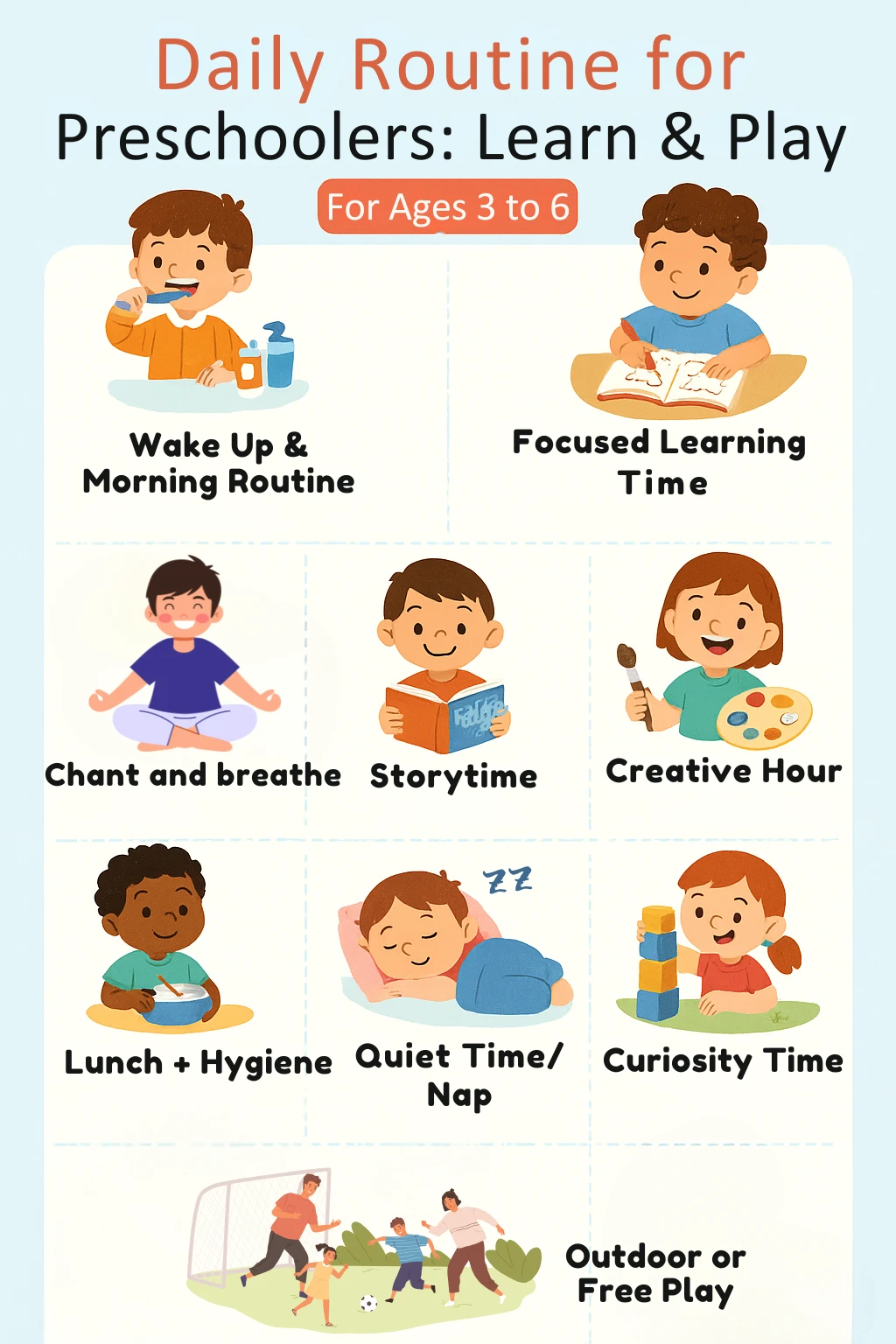
Daily routine chart for preschoolers aged 3–6
Looking for a daily routine that keeps your child active, learning, and happy? Here’s a balanced plan, perfect for little minds and busy days.
| Daily Timetable for Kids (Ages 3 to 6) | ||
| Time | Activity | Purpose |
| 7:00 AM | Wake Up and Hygiene | Start the day fresh with brushing, bathing, and morning freshness |
| 7:30 AM | Chant and Breathe* | Simple mantra to help your child feel calm, focused, and positive. |
| 8:00 AM | Breakfast | Nutritious meal to fuel energy |
| 9:00 AM–12:00 PM | Preschool Time | Structured learning, group play, songs, and hands-on activities |
| 12:15 PM | Lunch and Hygiene | A wholesome meal + handwashing or brushing |
| 1:00 PM | Quiet Time / Nap | Rest and recharge |
| 2:30 PM | Storytime | Calm re-entry into the day with books or audiobooks |
| 3:00 PM | Creative Hour | Drawing, painting, or simple DIY craft activities |
| 4:00 PM | Curiosity Time | Building blocks, puzzles, or exploring toys with learning focus |
| 5:00 PM | Outdoor or Free Play | Running, cycling, or playtime with peers or family outdoors |
| 6:00 PM | Light Snack | Small healthy refreshment (fruits, milk, etc.) |
| 6:30 PM | Family Time / Indoor Play | Board games, music, helping in small tasks |
| 7:30 PM | Dinner | Balanced, filling dinner with family |
| 8:15 PM | Bedtime Routine & Wind Down** | Brushing, changing, relaxing with a bedtime story |
| 8:45–9:00 PM | Sleep | Lights out for a peaceful night |
*For simple chants to use during “Chant and Breathe” time, check out our blog on 7 easy morning shlokas and mantras for kids perfect for starting the day with calm and focus!
**Looking for calming bedtime reads to end the day? Explore our bedtime story books that help your little one relax, unwind, and drift off with a smile.
Why Is a Daily Routine So Helpful for Your Child?
A good routine keeps children active and focused. It also helps them learn better!
It builds thinking skills through puzzles and problem solving, improves hand control with activities like colouring. Even simple play or storytelling helps build early social skills. Plus, having a routine makes your day as a parent feel more manageable and less stressful. Sounds like a win-win, right?
Common Challenges Parents Face
“My child gets bored quickly.”
Preschoolers need variety. Repeating the same activities daily can lead to disinterest.
“I’m not sure how much to teach.”
You don’t need to replicate a classroom. Simple, age-appropriate learning through play is enough.
“I don’t have time to prepare activities daily.”
You don’t need to prepare new activities daily—simple tools like an activity book or basic crafts can keep your child engaged with minimal effort.
Tips to Make the Routine Work (Without Stress)
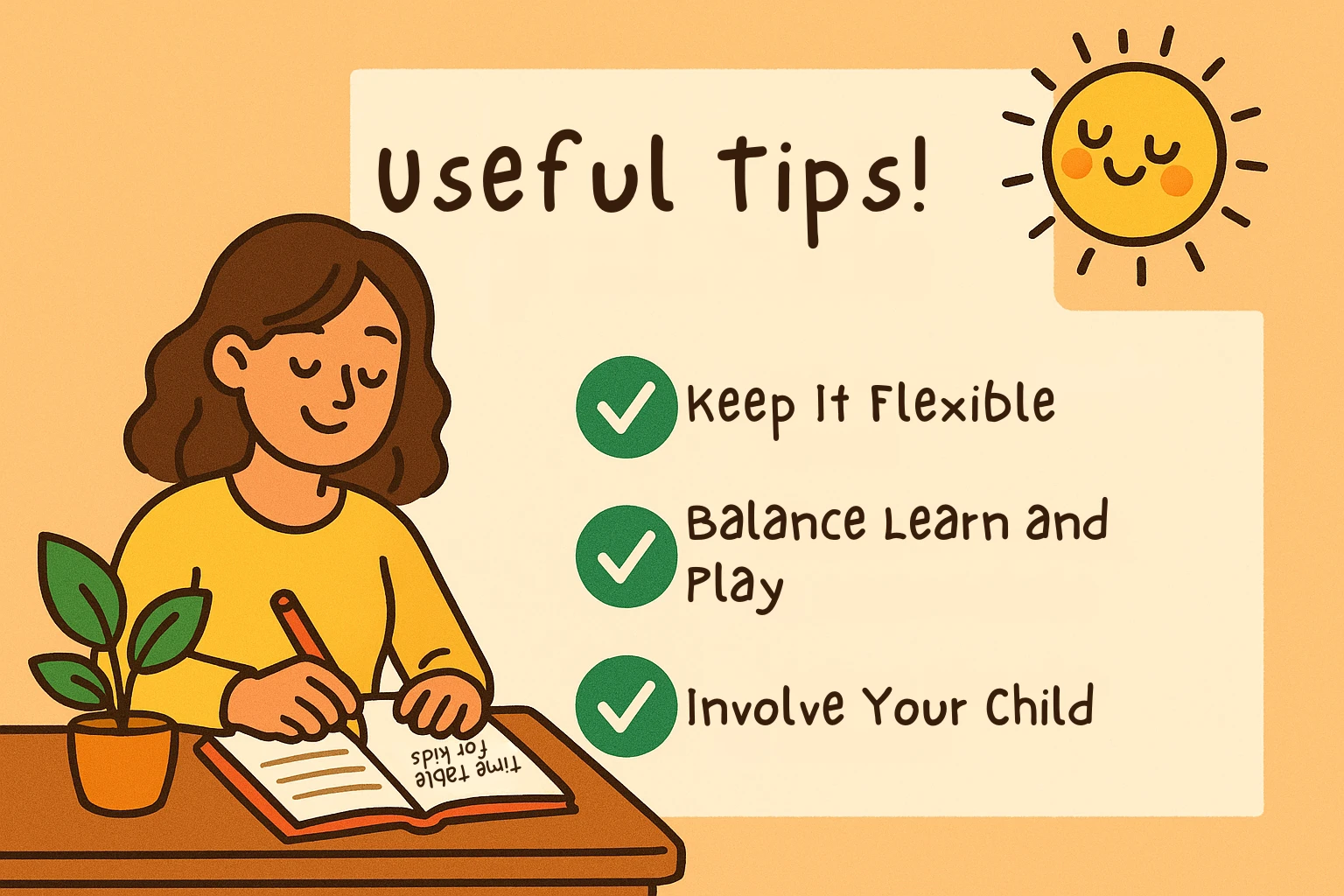
Tips to Build a Kid-Friendly Daily Routine
Here’s how to plan a routine that works for you and your child:
1. Keep It Flexible
Use the routine as a guide, not a strict rule book. If your child is loving a puzzle session or feeling tired early, adjust as needed.
2. Use Learning Tools (All-In-One)
Instead of preparing new activities every day, invest in resources that offer multiple learning experiences in one place.
For example, the Nurture 505 Activity Book is a practical solution with 500+ activities including colouring, crosswords, GK, puzzles etc. It can be helpful during learning time, creative time, or even for winding down in the evening.
Moreover, it reduces prep time for parents and keeps kids excited about “what’s next” in the book, making your routine easier to follow and more fun.
3. Involve Your Child
Let them choose between two options (e.g., ‘Do you want to colour or do a maze?’). This builds independence and makes the schedule feel like a collaboration.
4. Balance Learning and Play
Kids learn best when there’s a mix of study and play. A balanced routine keeps them happy, active, and learning without pressure.
Final Thoughts
A routine doesn’t have to fill every minute, it just needs to give your child a rhythm they can count on. When you mix learning, play, rest, and creativity, your little one feels safe, happy, and ready to grow.
And the best part? You don’t need anything fancy, just a good activity book, some simple supplies, and a little consistency.
What part of your child’s day do you enjoy the most—learning time or playtime? Let us know in the comments below.
FAQs: Daily Routine for Preschoolers at Home
1. What is a good daily routine for a 3 to 6 year old at home?
Ans: A good routine for kids aged 3 to 6 includes a mix of learning activities, playtime, meals, rest, and quiet time. Start the day with a morning chant or a story, include hands on activities like puzzles and colouring. Remember to allow plenty of breaks paired with outdoor play to keep your child engaged and happy.
2. How many hours of learning should a preschooler have each day?
Ans: Children don’t need long hours of learning, just 1 to 2 hours spread across the day in short + fun sessions is enough. Activity books, stories, and playful exercises work best for this age group.
3. How do I keep my 4 year old engaged without screen time?
Ans: Use activity books, DIY crafts, storytelling, role play, puzzles, and outdoor games. Creative resources like the Nurture 505 Activity Book can keep your child busy, learning, and away from screens.
4. Why is a daily routine important for preschoolers?
Ans: A routine gives children a sense of structure, helping them feel safe and confident. It also supports emotional development, reduces tantrums, and makes transitions (like mealtime or bedtime) much easier.
5. How can I start a routine with my child?
Ans: Start small—set fixed times for waking up, meals, and bedtime. Then, add short blocks of learning or play. Use simple tools like storybooks and activity books to keep it engaging and easy to follow.
6. How many meals and snacks should toddlers have per day?
Ans: Kids typically need three main meals and 2 to 3 healthy snacks spaced throughout the day. A routine helps set regular eating times and builds good food habits. However, every child is different. Make sure to follow the nutrition plan and schedule recommended by your respective doctor.
7. How much playtime and learning time should be in a toddler’s daily routine?
Ans: Children should have around 3 to 4 hours of play (including both free and guided play) and 1 to 2 hours of short learning activities. The key is to keep it light, interactive, and fun.