
Helping your child learn to read is one of the most rewarding parts of parenting. For many families in India, the journey begins with phonics for kids. Phonics is more than just learning letters. It is about connecting sounds with written symbols, giving children the confidence to recognise words, read sentences, and enjoy stories.
In this blog, we will explore why phonics is important, how parents can teach it at home, and the best ways to make learning fun and stress-free.
What is Phonics for Kids?
Phonics is a method of teaching children how to read by linking sounds with letters or groups of letters. For example, the letter 'b' makes the sound /b/, and when blended with 'a' and 't', a child can read the word 'bat'.
For Indian parents, phonics for kids provides a structured way to build reading skills in English, especially since English is often a second or third language at home.
Why Phonics Matters in Early Learning
- Builds strong reading foundations
- Improves spelling and writing skills
- Encourages independent reading
- Makes learning English enjoyable for young children
When children master phonics, they do not just memorise words. They learn how to decode and read new words on their own, which boosts their confidence.
When Should Children Start Learning Phonics?
Many parents ask, 'At what age should children start learning phonics?' While every child develops at their own pace, most experts suggest starting phonics for 2 year olds with simple sound games, rhymes, and listening activities. Formal phonics lessons usually begin in preschool or KG class, around age 3 to 5.
How to Teach Phonics Step by Step
Parents often wonder how to teach phonics to preschoolers or how to teach phonics step by step at home. Here is a simple guide:
1. Start with Sounds
Play listening games with everyday noises, animal sounds, or rhymes. This builds phonemic awareness.
2. Introduce Letter Sounds
Start by teaching one sound at a time. For example, focus on letters like 's', 'a', 't', 'p'. These can be blended to form simple words quickly, such as 'sat' or 'tap'.
To make this easier, parents can use YouTube phonics tutorials that demonstrate correct pronunciation and sound blending. Visual and audio examples help children pick up the sounds faster and keep them engaged.
3. Blend and Segment
Show children how to blend sounds together to read words (cat, tap). Encourage them to break words apart into sounds for spelling.
4. Use Fun Phonics Activities
Nursery phonics activities such as matching games, songs, and storybooks make learning enjoyable.
5. Practise Daily
Spend 10–15 minutes each day. Keep sessions short and fun to avoid pressure.
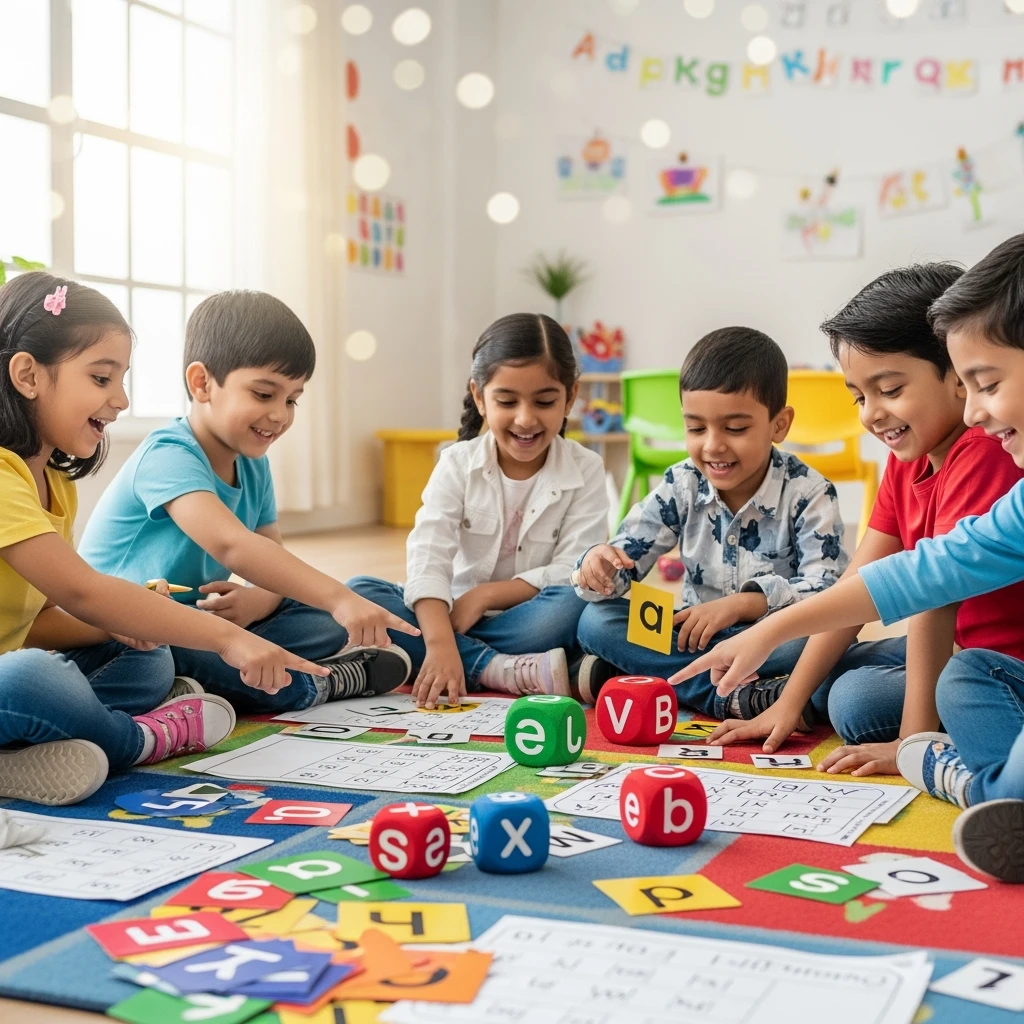
Children enjoying fun phonics activities for kindergarten learning
Phonics Activities for Kindergarten and Preschoolers
Learning phonics does not have to feel like schoolwork. Here are some engaging phonics learning activities for young children:
- Phonics for Kindergarten Games: Letter hopscotch, sound bingo, and flashcards
- Phonics Activities Worksheets: Colouring, tracing, and sound-matching worksheets
- Nursery Phonics Activities: Singing rhymes, clapping syllables, and story time
- Fun Phonics Activities at Home: Word hunts, fridge magnet letters, or storytelling with pictures
These playful methods are perfect for teaching phonics to 5 year olds or younger children in KG class.
Best Phonics Books for Kids
Choosing the right resources is just as important as the teaching method. Some of the best phonics books for kids include:
- Blossom English Alphabet Phonics Book
- Oxford Reading Tree: Floppy’s Phonics
- Jolly Phonics Readers
- Usborne Very First Reading
Indian parents can also find many affordable phonics books and activity sets online or in local bookstores.
Phonics Tips for Parents
- Be patient and encouraging
- Repeat sounds often
- Celebrate small successes
- Avoid comparing your child with others
- Use a phonics step by step guide for parents or resources to stay consistent
By following these phonics tips for parents, you will give your child the gift of confident reading, which will stay with them for life.
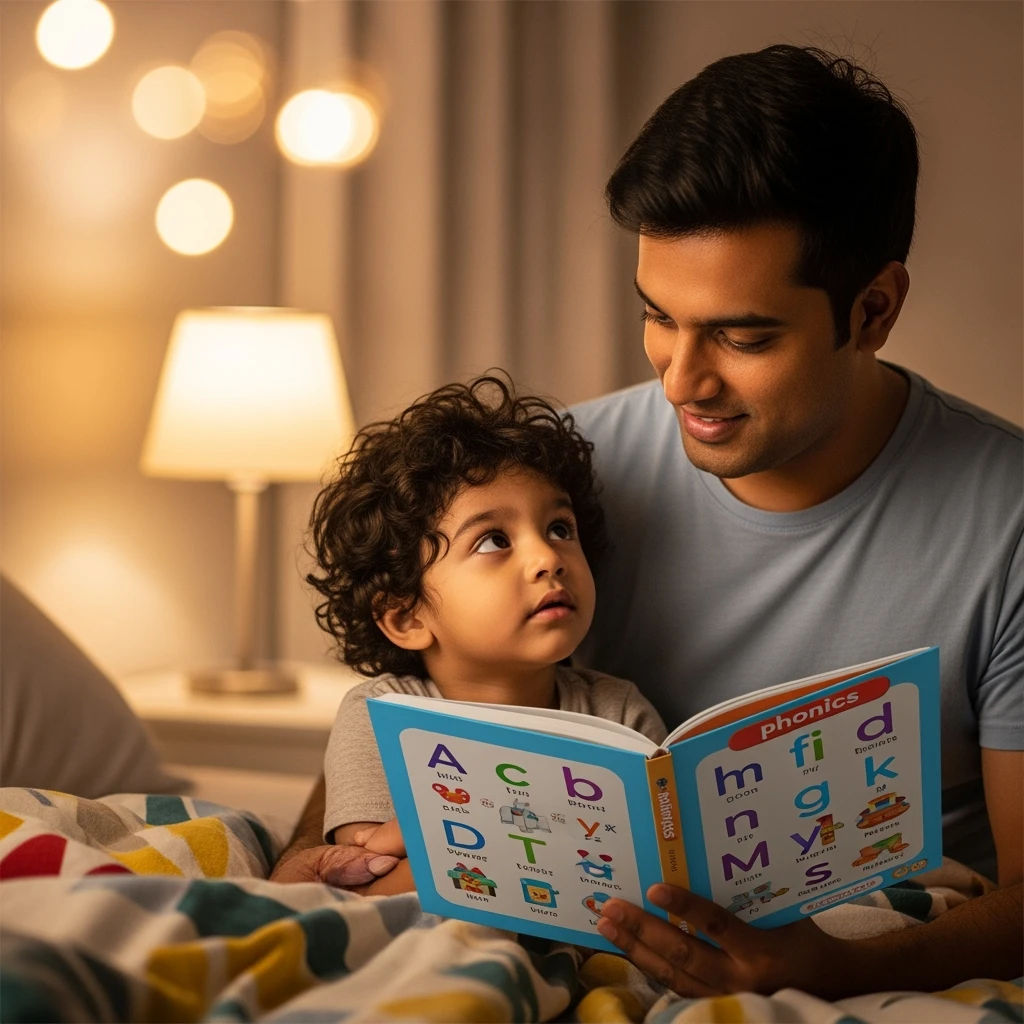
Father reading phonics for kids book at bedtime
Final Thoughts
Phonics for kids is one of the most effective ways to support early literacy in India. It not only helps children recognise words but also builds a strong foundation for confident reading and writing. With the right approach, patience, and a touch of creativity, parents can turn phonics practice into a joyful part of daily life.
FAQs About Phonics for Kids
1. At what age should children start learning phonics?
Ans: Children can start listening and sound-based activities from age 2. Formal phonics usually begins in preschool or KG class.
2. How can parents teach phonics at home?
Ans: Use simple games, worksheets, rhymes, and books. Keep lessons short, fun, and consistent. For beginners, follow guides on how to teach phonics at home.
3. What are the basic phonics rules every child should know?
Ans: Children should learn letter sounds, blending, segmenting, and common digraphs such as 'ch', 'sh', and 'th'.
4. How do phonics help children become better readers?
Ans: Phonics gives children the ability to decode unfamiliar words, which builds fluency and confidence.
5. Should kids learn phonics or sight words first?
Ans: Phonics should come first, with sight words introduced gradually for common words that do not follow regular phonics rules.
6. How much time should kids spend on phonics each day?
Ans: Ten to fifteen minutes daily is ideal for young learners.