
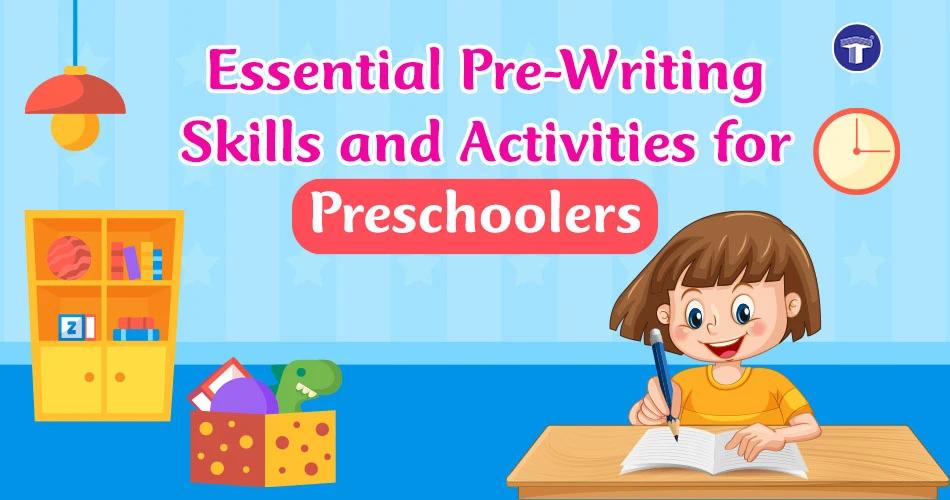
Does your little one enjoy scribbling on walls or drawing circles that look like potatoes? That is actually the beginning of something very important. Before children begin writing letters and words, they need to develop a set of foundational abilities known as pre-writing skills.
Think of these skills as stepping stones to confident writing. Just like a child learns to crawl before walking, pre-writing skills prepare small hands, fingers, and minds for the big world of writing.
In this blog, we will explore what pre-writing skills are, why they matter, and some simple activities that parents and teachers in India can use to build them.
What are Pre-Writing Skills?
Before a child can write neatly, they need to learn control and coordination. Pre-writing skills are the small actions and abilities that support handwriting. These include holding a crayon, tracing shapes, copying lines, and even playing with clay.
When children practise these skills, they are not just preparing to write. They are also building:
- Strong finger muscles
- Good hand–eye coordination
- Focus and patience
- The correct pencil grip
In short, pre-writing skills provide the foundation on which writing rests.
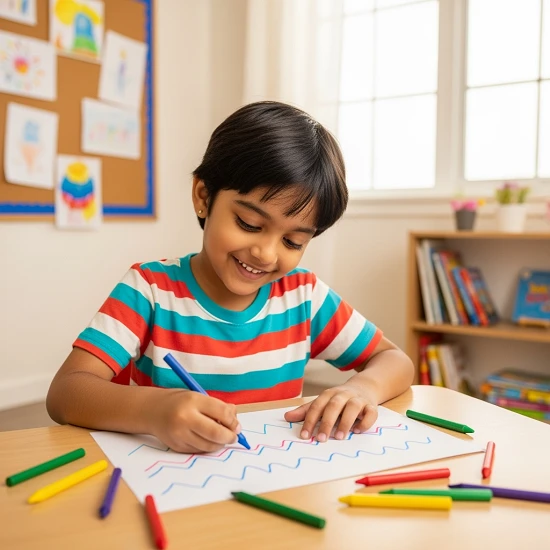
Preschooler joyfully tracing patterns
Why Pre-Writing Skills Matter for Preschoolers
It is natural for parents to ask, 'Why can't I simply give my child a pencil and start with the ABCs?' Writing is a complex skill that requires more than just holding a pencil. Without pre-writing readiness, children may:
- Press too hard or too lightly with a pencil
- Struggle to form letters correctly
- Feel frustrated and lose confidence
- Find it difficult to focus or complete tasks
When pre-writing skills are developed, children gain multiple benefits:
- They can hold a pencil comfortably and write neatly
- They enjoy the learning process and stay engaged
- They build self-confidence as they succeed in small tasks
- They improve cognitive development, including problem-solving, hand–eye coordination, and visual perception
- They strengthen fine motor skills and develop better focus and attention
As Indians, we have a unique advantage that often goes unnoticed. In many Indian homes, traditional art forms like rangoli patterns and chalk doodling—a natural part of our culture—can help children develop pre-writing skills by improving their hand-eye coordination, fine motor control, and creativity. These everyday activities are hidden lessons in writing readiness, nurturing both confidence and cognitive growth while making learning enjoyable.
Key Pre-Writing Skills Every Child Needs
Before moving on to activities, it is important to understand which skills really matter. The following abilities prepare children for handwriting:
- Fine motor skills: Using fingers and hand muscles for small movements such as cutting, threading beads, and squeezing playdough.
- Pencil grip development: Beginning with chunky crayons, and then gradually moving towards pencils as grip improves.
- Hand–eye coordination: Connecting what the eyes see with what the hands do, for example, in dot-to-dot, lacing, and colouring.
- Visual motor skills: Copying shapes, tracing patterns, and following lines correctly.
- Core strength and posture: Sitting upright and maintaining balance while writing.
Each of these skills builds on the others, making it easier for children to handle writing tasks with confidence.
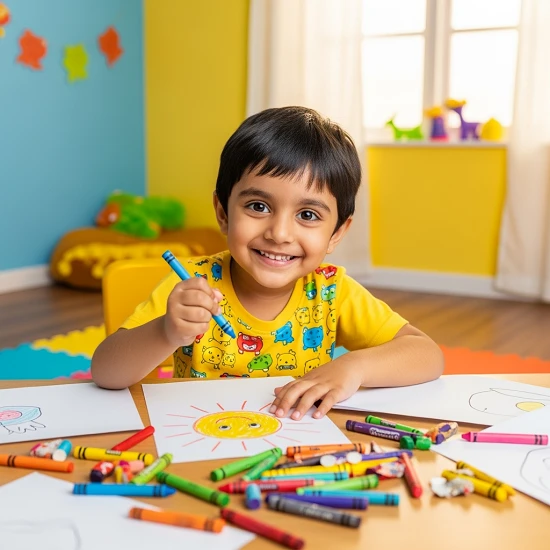
Preschooler joyfully practising pre-writing skills colouring
Fun Pre-Writing Activities for Preschoolers
Watching your little one take their first steps toward writing is magical, but it can also feel a bit overwhelming. The great news? Learning does not have to be complicated or expensive. In fact, some of the most powerful pre-writing activities happen right in your home, using simple everyday items.
Here are a few playful ways to help your child build their hand strength, coordination, and creativity, all while having fun together:
- Tracing patterns: Simple zig-zags, waves, and circles help children practise control.
- Playdough fun: Rolling, pinching, and shaping strengthens little fingers.
- Sand or rice trays: Children can draw letters or shapes with their fingers.
- Colouring and drawing: These improve grip and control, while also encouraging creativity.
- Threading beads or lacing cards: Excellent for hand–eye coordination.
- Scissor cutting practice: Safe cutting improves fine motor skills.
- Dot-to-dot and maze books: Fun puzzles that strengthen focus.
Want to see these pre-writing activities in action? Watch this: HOW TO TEACH TODDLER WRITING ABC
Start with short five to ten minute sessions. This keeps learning light and enjoyable, while still building essential skills.
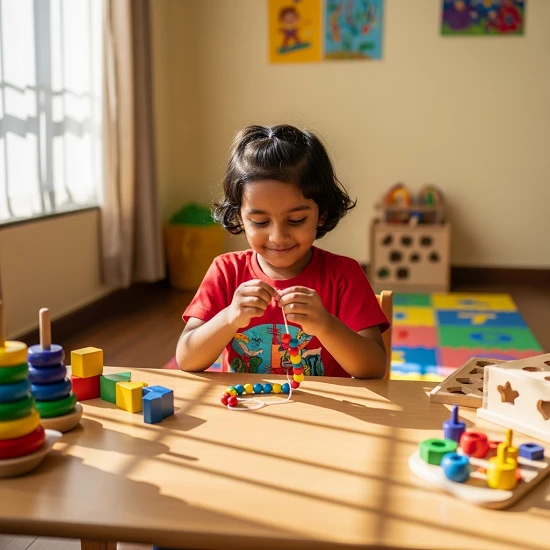
Preschooler practising pre-writing skills by threading beads
Tips for Parents and Teachers
Now that you have an idea of which activities are suitable for your child, here are some tips to make learning even smoother:
- Keep practice sessions short and enjoyable.
- Use thick crayons or chunky pencils for beginners.
- Do not force neatness, let children explore freely.
- Praise effort, not perfection.
- Mix in cultural fun such as chalk drawings during festivals, rangoli patterns, or colouring diya outlines.
These small adjustments can make a big difference in building confidence.
Recommended Books and Tools
Watching your child hold a pencil for the first time or carefully colour inside the lines is a small moment, but it’s full of wonder. Structured activity books can turn these moments into meaningful learning experiences, giving your little one both guidance and variety. Some favorites include:
- 101 Pencil Control Activity Book
- Writing Practice Books for Kids
- Colouring Box Set 12
- Cursive Writing Practice Books for Kids
These activity books make learning playful while keeping children engaged. Target Publications is committed to offering resources that support focus, confidence, and creativity.
Conclusion
Remember, writing does not begin with letters. It begins with the small skills that prepare children for handwriting. Pre-writing activities develop a child’s hands, eyes, and mind, so that writing feels natural and enjoyable.
With a little practice every day, your preschooler will soon be ready to hold a pencil, write with confidence, and enjoy their learning journey. So next time your child is happily scribbling or rolling playdough, smile. They are already building their writing future.
For parents looking to continue building their child’s writing skills, check out our detailed guide on cursive writing for kids.
FAQs
1. What are pre-writing skills for preschoolers?
Ans: Pre-writing skills are the basic fine motor and coordination abilities children need before they learn to write letters and numbers.
2. Why are pre-writing skills important?
Ans: They help children develop pencil grip, hand–eye coordination, and focus, making handwriting easier and more enjoyable.
3. How can parents develop pre-writing skills at home?
Ans: Parents can use fun activities such as colouring, tracing, sand writing, clay play, threading beads, and dot-to-dot puzzles.
4. At what age should pre-writing activities start?
Ans: Most children can begin simple pre-writing activities around two and a half to three years of age, depending on their readiness.
5. Which books or tools help improve pre-writing skills?
Ans: Tracing books, colouring sets, dot-to-dot puzzles, and activity books such as Target Nurtures’ Pencil Control Book are very effective.