
Teaching kids to chant shlokas is more than tradition, it’s a mindful habit that nurtures focus, respect, and calm. Here’s how to guide them with love.
What Are Shlokas and Mantras?
Shlokas are sacred Sanskrit verses, often drawn from ancient Hindu scriptures like the Vedas and Upanishads. Mantras are spiritual sounds or phrases believed to have psychological and spiritual powers when chanted repeatedly.
Both form a vital part of Sanatan Dharma—India’s eternal, timeless spiritual tradition and way of life. When introduced to children in simple and joyful ways, these practices can help build emotional balance, focus, and spiritual awareness early in life.
Top Benefits of Shlokas and Mantras for Young Children
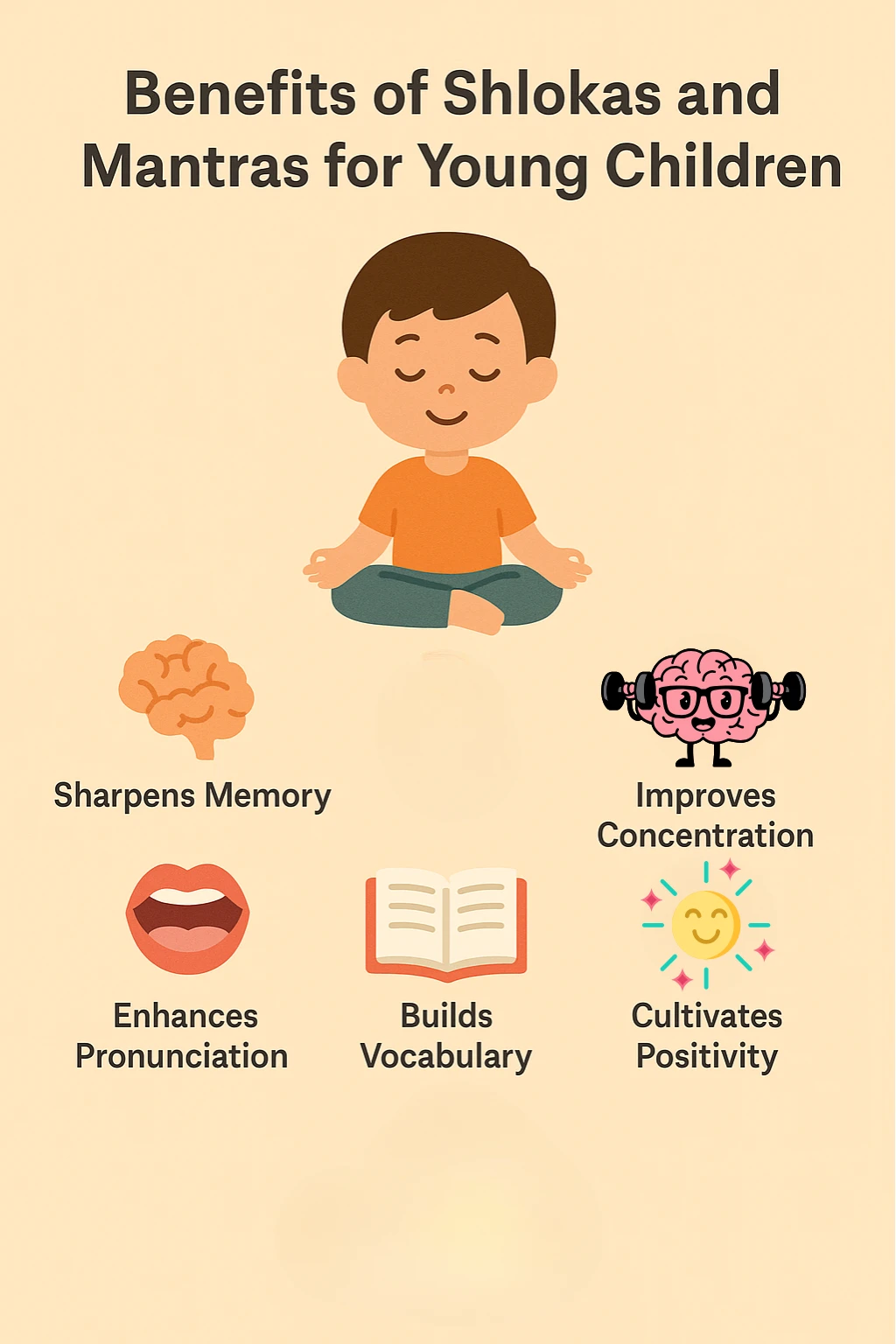
Benefits of teaching children to chant shlokas and mantras
- Enhances concentration and memory
- Encourages discipline and daily routine
- Builds cultural connection and spiritual values
- Calms the mind and reduces restlessness or anxiety
- Encourages respect for teachers, nature, and divinity
- Research even shows that rhythmic chanting supports language development and auditory learning in early childhood.
Why Morning Is the Best Time for Kids to Chant Mantras
In Hinduism, mornings are considered the most sacred time of the day. The mind is still, distractions are fewer, and it’s the ideal moment to introduce peace, focus, and positive intentions.
Morning chanting becomes a spiritual anchor—a calm, grounding ritual before the world gets busy.
7 Powerful Morning Shlokas and Mantras Every Child Should Know
Here are seven simple, powerful (and easy) verses every child can begin with:
1. Ganesh Mantra: A Gentle Start for Young Minds
ॐ गण गणपतये नमः॥
Om Gan Ganapataye Namah
Meaning:
I bow to Lord Ganesha, the remover of obstacles and the giver of wisdom.
2. Guru Vandana: For Respect and Gratitude
गुरुर्ब्रह्मा गुरुर्विष्णुः गुरुर्देवो महेश्वरः।
गुरुः साक्षात् परं ब्रह्म तस्मै श्रीगुरवे नमः॥
Gurur Brahma Gurur Vishnu Guru Devo Maheshwara |
Guru Saakshaat Para Brahma Tasmai Shri Gurave Namaha ||
Meaning:
The Guru represents Brahma, Vishnu, and Shiva—the ultimate divine. I bow with reverence to such a Guru.
3. Gayatri Mantra: For Wisdom and Clarity
ॐ भूर्भुवः स्वः।
तत्सवितुर्वरेण्यं।
भर्गो देवस्य धीमहि।
धियो यो नः प्रचोदयात्॥
Om bhur bhuva swaha |
Tat savitur varenyam |
Bhargo devasya dhimahi |
Dhiyo yo nah prachodayat ||
Meaning:
We meditate upon the divine light of the sun. May it awaken our intellect and guide our thoughts.
4. Vakratunda Mahakaya: For Removing Obstacles
वक्रतुंड महाकाय सूर्यकोटिसमप्रभः |
निर्विघ्नं कुरु मे देव सर्वकार्येषु सर्वदा॥
Vakrathunda mahaakaaya Suryakoti samaprabha |
Nirvignam kurumey deva Sarvakaryeshu sarvada ||
Meaning:
O Lord Ganesha, with a curved trunk and mighty form, shining like a million suns—please remove all obstacles from my path, always.
5. Deepa Jyoti Shloka: For Light and Gratitude
शुभं करोति कल्याणं
आरोग्यं धनसंपदा।
शत्रुबुद्धिविनाशाय
दीपज्योतिर्नमोऽस्तुते॥
Shubham karoti kalyaanam
Aarogyam dhana sampadaa |
Shatrubudhi vinaashaaya
Deepajyoti namostute ||
Meaning:
I bow to the light of the lamp that brings health, prosperity, and drives away negative thoughts.
6. Maha Mrityunjaya Mantra: For Protection and Healing
ॐ त्र्यम्बकं यजामहे सुगन्धिं पुष्टिवर्धनम् |
उर्वारुकमिव बन्धनान्मृत्योर्मुक्षीय माऽमृतात् ||
Aum Tryambakam yajaamahe sugandhim pushtivardhanam |
Urvaarukamiva bandhanaan-mrityormuksheeya maamritaat ||
Meaning:
We worship the three-eyed Lord Shiva, who nourishes and protects all life. May He free us from the fear of death and suffering, and bless us with immortality and liberation.
7. Karadarshanam – A Beautiful Start to the Day
कराग्रे वसते लक्ष्मीः करमध्ये सरस्वती।
करमूले तु गोविन्दः प्रभाते करदर्शनम्॥
Karaagre Vasate Lakshmi, Kara-Madhye Saraswati |
Kara-Moole Sthitaa Govindaa, Prabhate Kara-Darshanam ||
Meaning:
On the tip of my fingers resides Goddess Lakshmi (prosperity), in the middle dwells Goddess Saraswati (knowledge), and at the base is Lord Govinda (divine protector). Therefore, I look at my hands every morning.
How to Teach Shlokas and Mantras to Kids: Fun and Easy Ways to Start
-
Sing it like a rhyme:
Use simple tunes and rhythms to make the shlokas sound musical and fun. Adding melody helps make the words stick — and makes learning feel more like play
-
Explain the meanings simply:
Focus on just 1–2 lines of the shlokas and mantras at a time so it doesn’t feel overwhelming. What does this line mean? Why do we say it? Answering these little questions can make a big difference in helping your child connect with the shloka.
-
Use interactive tools:
Why not make learning visual and engaging? Try our Shlokas and Mantras Activity Book It has colourful pictures to capture attention, easy-to-understand English explanations, and even QR codes that guide you on how to pronounce each verse correctly.
-
Practise together:
Did you know kids love copying what their parents do? When you chant with them, it becomes more than just a learning task. It becomes a shared moment. Why not turn it into a sweet bonding ritual?
Chanting Etiquette for Kids: Simple Do’s and Don’ts
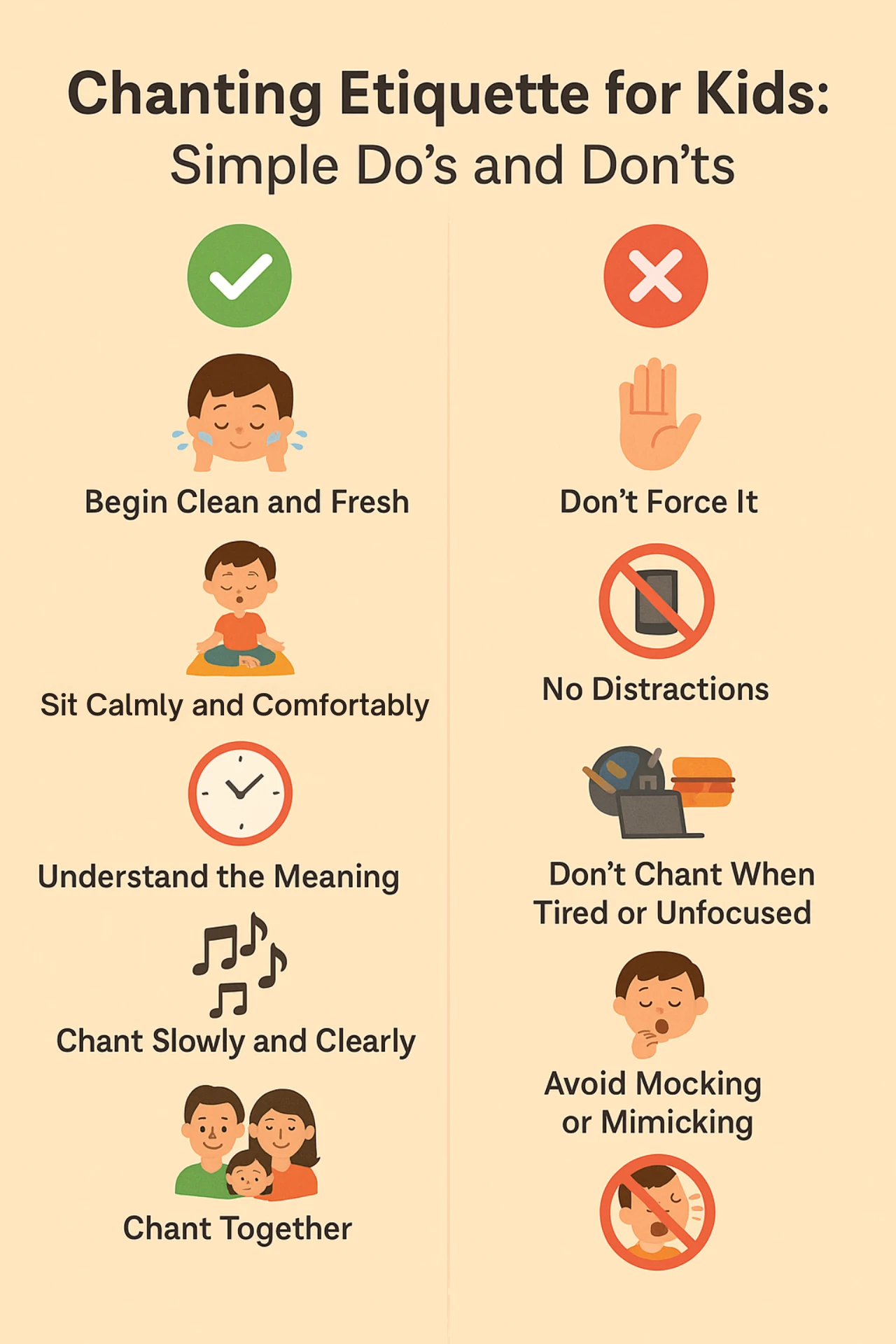
Create a respectful and mindful mantra routine from the start
Teaching kids the right way to chant shlokas isn’t just about pronunciation—it’s also about cultivating awareness, discipline, and gratitude. Here are some simple do’s and don’ts to guide their practice.
✅ Do’s – What Kids Should Follow
- Start Fresh and Clean:
Ask your child to wash their hands and face before chanting. It helps them feel fresh and ready.
- Sit Quietly:
Choose a clean and peaceful place. Morning time is best, facing the east if possible.
- Pick a Regular Time:
Try to chant at the same time every day, just 2 to 5 minutes is enough to build the habit.
- Know What They’re Saying:
Explain the meaning of each mantra in simple words so they can connect with it.
- Go Slow and Clear:
Let them chant slowly and clearly. It’s not a race—they should enjoy the sound.
Chant Together: Make it a family moment! Chanting together can be fun and special.
❌ Don’ts – What to Avoid While Chanting
- Don’t Force It:
Let kids chant because they enjoy it. Keep it fun and stress-free.
- Avoid Distractions:
No TV, mobile, or loud noises while chanting shlokas and mantras. Keep the space calm.
- No Multitasking:
Don’t let them eat, play, or walk around while chanting.
- Skip When Tired:
If your child is sleepy or distracted, it’s okay to skip and try later.
- No Making Fun:
Teach them to be respectful. Chanting is a special time, not for joking or mimicking.
Teaching these etiquette ensures that chanting becomes a mindful and meaningful habit, not just a memorisation task. Even at a young age, children can learn to approach mantras with sincerity and joy.
To explore the science behind it, check out this post Scientific Evidence of Health Benefits by Practicing Mantra Meditation.
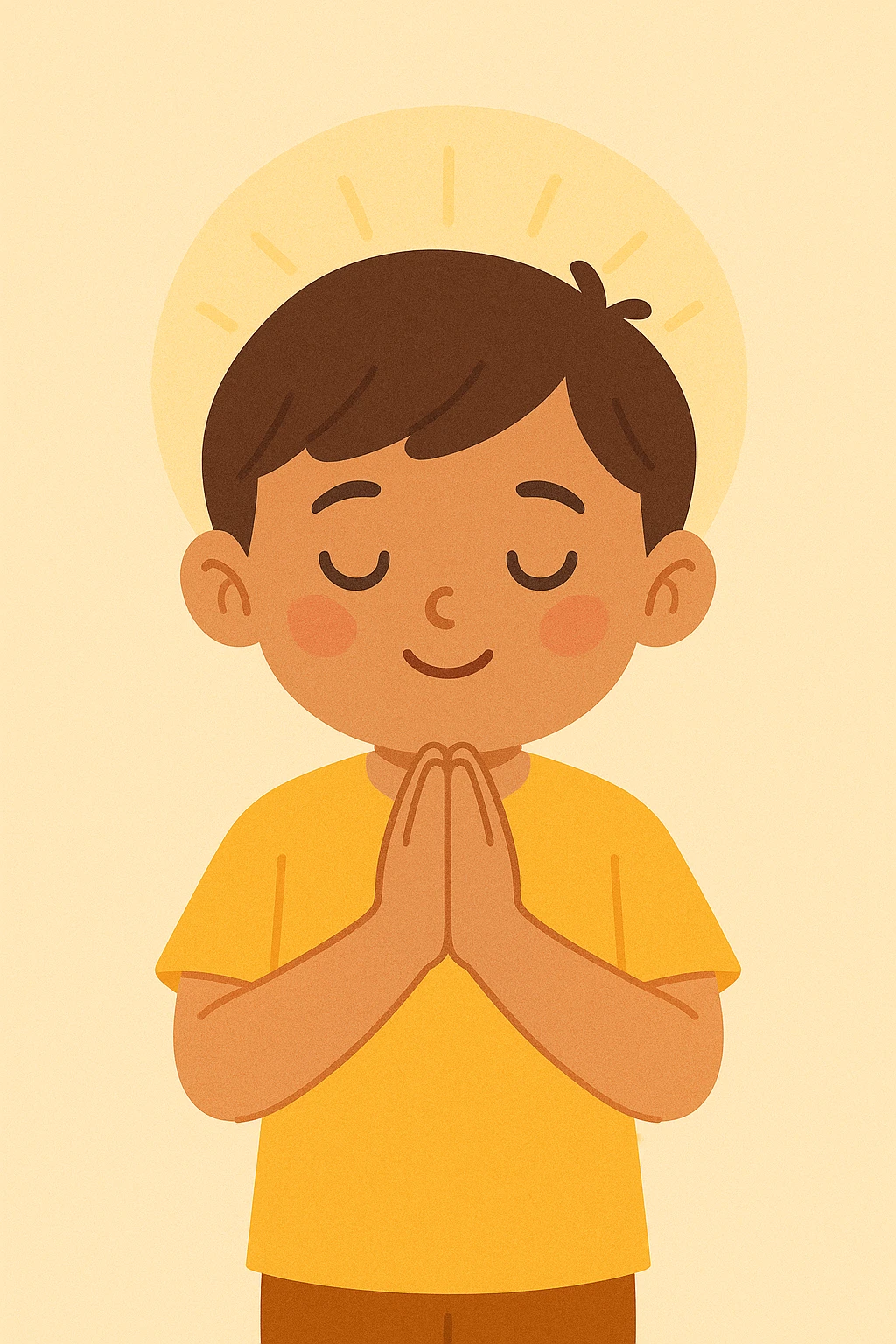
Child offering morning prayer with folded hands
Final Thought
Raising children grow spiritually can be simple, it begins with a verse, a moment of stillness, and a heart open to learning. These 7 morning shlokas and mantras are a gentle way to nurture mindfulness, gratitude, and cultural roots in your child’s everyday life.
FAQs: Everything Parents Need to Know
1. What is the right age to start mantras with kids?
Ans: As early as 3 years old. Start with simple chants and increase gradually.
2. How do I explain mantras to my child?
Ans: Use stories, visuals, and actions to connect each mantra to their everyday life.
3. Do mantras really help with focus and behavior?
Ans: Yes. Regular chanting enhances memory, patience, calmness, and attention span.
4. Can I chant these mantras with my child?
Ans: Absolutely! In fact, shared chanting strengthens parent-child bonding.
5. Where can I get an engaging Shlokas and Mantras book for kids?
Ans: Check out the Shlokas and Mantras Activity Book by Target publications, designed for joyful and easy learning.