


Do you remember the joy of writing your name beautifully in cursive letters back in school? For many Indian parents, cursive writing feels like a nostalgic skill. But in today’s digital age, is it still important for children to learn? Absolutely. Cursive writing not only improves handwriting but also boosts memory, focus, and brain development.
If you are a parent wondering when, why, and how to introduce cursive writing strokes to your child, this blog is for you. We will walk you through everything from the basic cursive writing strokes to A to Z cursive practice, plus answer the most common questions Indian parents ask.
Why Should Children Learn Cursive Writing in the Digital Age?
It is natural to wonder if cursive writing has lost its relevance since nowadays, most children type on screens. But here are some powerful benefits that make it worth teaching:
- Brain Development: Studies show that practising cursive writing engages both sides of the brain, improving concentration and memory.
- Fine Motor Skills: Learning cursive writing strokes worksheets helps children build strong hand muscles and a better pencil grip.
- Better Reading Skills: Children who practise cursive often recognise letters and words faster.
- Boosts Creativity: Flowing cursive writing encourages rhythm, coordination, and creative thinking.
Recent research shows that handwriting in cursive activates more brain regions and improves memory and learning compared to typing alone, offering convincing evidence that teaching cursive still matters. For more detail, see this study on Why Cursive Handwriting is Good for Your Brain.
Parents, ask yourself: Do you want your child to only type on gadgets or also enjoy the timeless beauty of handwriting?

Smiling child practising cursive writing in the workbook
What is the Best Age to Start Teaching Cursive Writing to Kids?
Most children can start between 6 to 8 years old, once they are confident with print handwriting. At this age:
- Their hand muscles are stronger
- They understand letter formation
- They are curious to try new skills
But remember, every child is different. Some may be ready earlier, while others may need more time.
Tip: If your child enjoys colouring books or tracing shapes, q it is a good sign they are ready to try cursive writing.
How to Introduce Cursive Strokes Step by Step
Teaching cursive can feel overwhelming, but breaking it down makes it easy.
Step 1: Start with Basic Cursive Writing Strokes
Begin with lines, loops, and curves. Use basic cursive writing strokes worksheets so your child can practise without pressure.
Step 2: Move to Small Cursive Writing (a to z)
After strokes, introduce small cursive writing a to z. This helps children link letters smoothly.
Step 3: Learn Cursive Writing Uppercase Letters
Next, bring in cursive writing uppercase letters. Start with simple letters like C, L, and O, then move to more complex ones like G and Q.
Step 4: Practise with Cursive Writing Books
Encourage regular practice with a cursive writing practice book. Just 10–15 minutes daily is enough to build fluency.
Step 5: Combine Small and Capital Letters
Finally, let your child try cursive writing A to Z capital letters along with small ones to write full words and sentences.
By following these small steps, children build confidence without feeling rushed. Remember, consistency matters more than speed. Celebrate little milestones, even a neatly written single letter, as these moments keep your child motivated to continue their cursive journey.
What are the Benefits of Cursive Writing for Brain Development?
Here are some science-backed benefits that will convince you:
- Strengthens memory and learning speed
- Enhances spelling skills
- Improves handwriting neatness
- Encourages focus and mindfulness
When children practise alphabet cursive writing, they are not just learning a skill but also training their brains for lifelong learning.
Are There Special Techniques for Left-Handed Kids?
Yes, left-handed children may struggle more with smudging and letter flow. Here are some tips:
- Tilt the notebook slightly to the right
- Position the hand below the writing line
- Use smoother pens or pencils for a better grip
- Practise slowly with cursive writing strokes worksheets designed for beginners
How Long Does It Take for a Child to Become Fluent in Cursive Writing?
With regular practice, most children become comfortable in 3 to 6 months. However, fluency depends on:
- Daily practice time
- The child’s age and interest
- Quality of resources like cursive writing books or worksheets
Patience is key. Celebrate small achievements to keep your child motivated.
Watch this video with your child to learn cursive writing from A to Z—perfect for mastering both lowercase and uppercase letters together.
Types of Cursive Writing Styles Parents Should Know
There are different types of cursive writing, such as:
- Looped Cursive: where most letters are joined with loops
- Italic Cursive: slanted and neat, used in many schools
- Connected Cursive: where letters connect smoothly without extra loops
For beginners, stick to the basic cursive writing strokes before introducing variations.
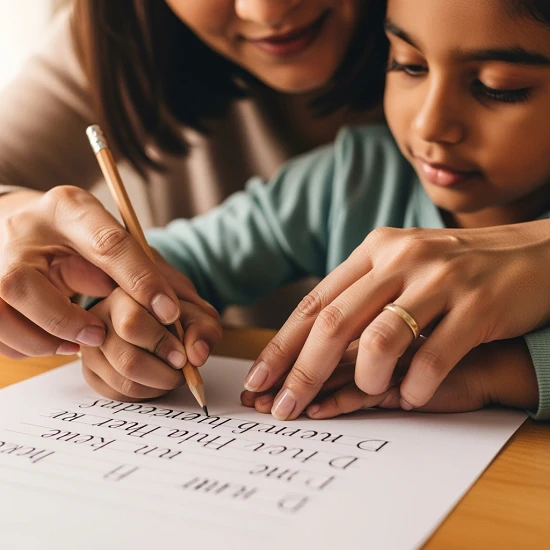
Parent guiding child’s hand in cursive writing practice
Conclusion
Cursive writing is more than just neat handwriting – it is a skill that nurtures your child’s creativity, sharpens their brain, and strengthens their learning journey. In a world where screens dominate, teaching children cursive writing strokes helps them slow down, focus, and appreciate the beauty of expression.
As parents, your encouragement makes all the difference. Whether it is celebrating a neatly written ‘a’ or proudly displaying your child’s first cursive writing, A to Z capital letters, every step counts. Remember, practice and patience are the keys to fluency.
Frequently Asked Questions about Cursive Writing
1. What is the best age to start teaching cursive writing to kids?
Ans: Most children are ready to begin around 6 to 8 years old, once they are confident with print handwriting. At this stage, their hand muscles are strong enough to manage basic cursive writing strokes.
2. Why should children learn cursive writing in the digital age?
Ans: Cursive writing improves brain development, memory, and focus. It also strengthens fine motor skills and helps children become more confident in reading and spelling, even if they spend time on digital devices.
3. How can I introduce cursive strokes to my child step by step?
Ans: Start with cursive writing strokes worksheets, such as loops, curves, and lines. Once your child is comfortable, move to small cursive writing a to z, then uppercase cursive writing letters, and finally full words and sentences.
4. What are the benefits of cursive writing for brain development?
Ans: Practising cursive writing rules engages both sides of the brain, which helps children with learning speed, focus, spelling, and creative thinking.
5. Are there special techniques for left-handed kids learning cursive writing?
Ans: Yes. Left-handed children should tilt the paper slightly to the right, keep the wrist below the writing line, and practise slowly using cursive writing worksheets for beginners to avoid smudging.
6. How long does it take for a child to become fluent in cursive writing?
Ans: With daily practice of around 10–15 minutes, most children become fluent in cursive writing strokes within 3 to 6 months. Progress depends on age, interest, and consistency.