
In today’s fast-paced world, children face emotional challenges we never imagined growing up. From relentless academic competition to the addictive pull of screens—and the growing concerns around social media and mental health—their well-being is constantly being tested.
Did you know? UNICEF reports that 1 in 7 adolescents in India face a mental health condition and many go unnoticed.
The good news? As parents, you can make a world of difference. By spotting early signs and following good parenting tips through simple, consistent actions, you can help your child grow into a resilient, confident, and emotionally balanced individual.
Why Kids’ Mental Health Should Be Your Priority?
In many Indian households, physical health and academic performance take the spotlight. But ignoring mental health can lead to:
- Anxiety and Depression
- Low self-esteem
- Social withdrawal
- Long-term academic struggles
Understanding the benefits of mental health and addressing emotional well-being now ensures your child thrives both in school and life.
7 proven parenting tips for kids’ mental health
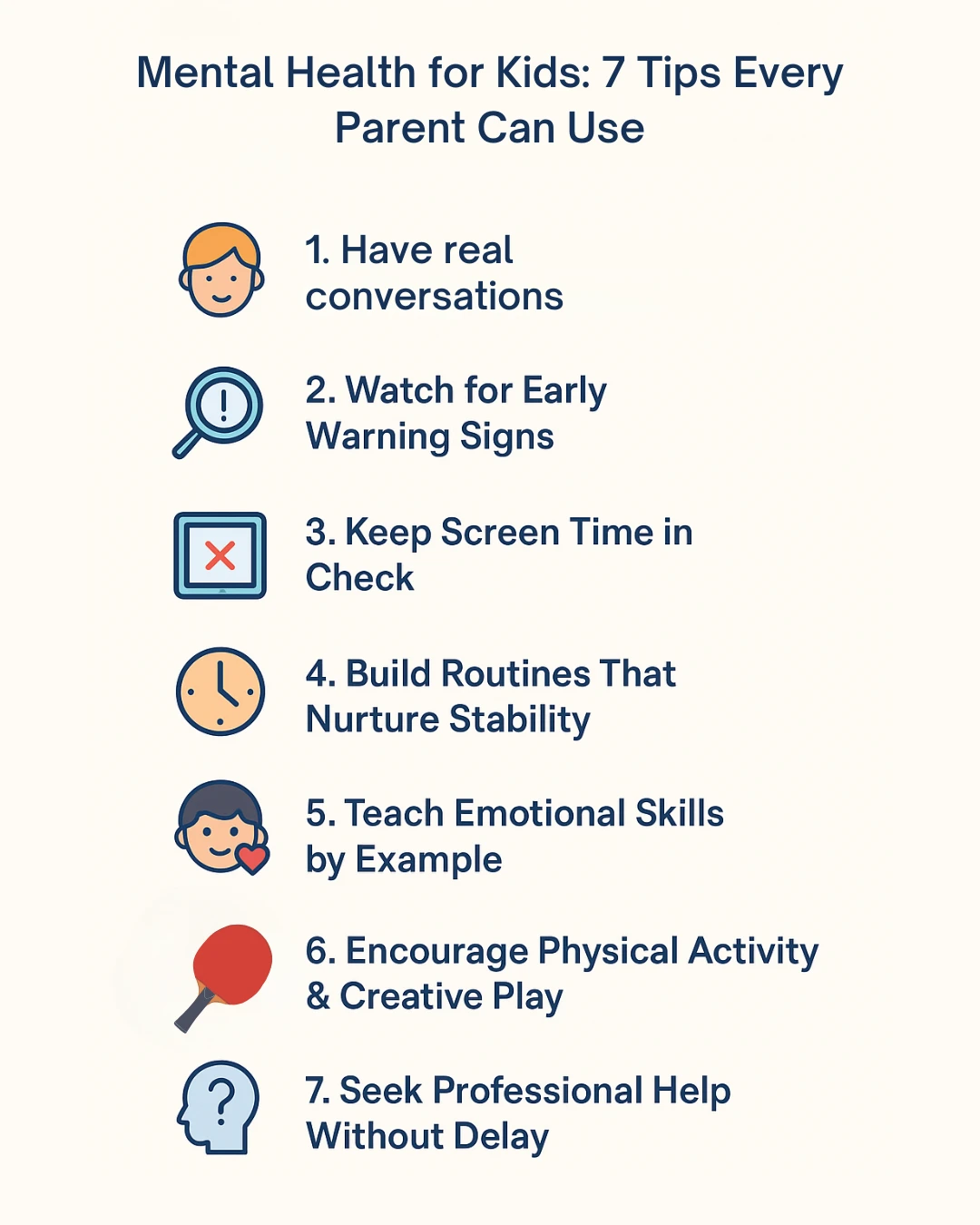
7 Proven Good Parenting Tips for Your Child’s Mental Well-being
1. Have Real Conversations
Replace ‘How was school?’ with 'What was the best part of your day?’.
Active listening without judgment builds trust and makes children feel valued.
2. Watch for Early Warning Signs
Look out for sudden withdrawal, mood swings, trouble sleeping, frequent unexplained aches, and a decline in school performance.
Remember, early intervention can prevent long-term challenges.
3. Keep Screen Time in Check
Too much screen time affects sleep, focus, and mood.
- Follow WHO’s guideline: less than 1 hour/day for younger kids.
- Set device-free zones at home.
- Replace screens with art, puzzles, or activity books.
4. Build Routines That Nurture Stability
Predictable schedules reduce anxiety. Try including mental health exercise or games that provide relaxation in these schedules.
Parenting Tip: Try setting gentle daily routines for meals, study, play, and sleep.
It helps kids feel secure and balanced.
5. Teach Emotional Skills by Example
Children mirror your behaviour, so show them how to handle stress, how to apologise, and how to express gratitude.
Parenting Tip: Kids learn more from what you do than what you say.
6. Encourage Physical Activity and Creative Play
Exercise can lift your mood and keep your brain sharp, while creative activities help you focus and express yourself better. Adding a few mental health games into the mix can make it all more fun and still boost emotional well-being.
7. Seek Professional Help Without Delay
If your child’s distress is persistent, consult a child psychologist, school counsellor, or a pediatrician with mental health expertise in India.
Remember, seeking help is a sign of strength, not weakness.

From stressed to smiling with positive parenting
The Target Learning Ventures Approach to Stress-Free Learning
At Target Learning Ventures, we believe in making learning something kids genuinely enjoy. Our Colouring Books spark creativity, our Activity Books sharpen problem-solving skills, our Story Books boost vocabulary and imagination, and our Creative Learning Tools improve focus and memory, all while reducing stress.
Final Word
Your child’s mental health is as important as their grades. By creating a supportive home environment, encouraging healthy habits, and being an empathetic listener, you give them the best chance to grow into confident, emotionally strong adults.
Strong minds build bright futures, and it starts at home.
Frequently Asked Questions (FAQs) on Mental Health for Kids
1. Why is mental health important for children in India?
Ans: Mental health affects how children think, feel, and behave. Good mental health helps them build resilience, develop healthy relationships, and cope with everyday challenges—skills they’ll carry into adulthood.
2. What are the early signs of mental health issues in kids?
Ans: Look for signs like sudden mood changes, withdrawal from activities they once enjoyed, changes in eating or sleeping habits, frequent complaints of headaches or stomach aches, and difficulty concentrating.
3. How can Indian parents support their child’s emotional well-being?
Ans: Indian parents can support emotional well-being by encouraging open conversations, balancing academics with play, teaching mindfulness through cultural practices like yoga, and fostering a safe, loving home environment.
4. When should parents seek professional help for their child’s mental health?
Ans: If your child experiences ongoing sadness, anxiety, withdrawal from friends and activities, drastic changes in eating or sleeping habits, or a sudden drop in academic performance lasting more than two weeks, it’s time to consult a mental health professional. Early intervention can make a significant difference in recovery and resilience.
5. How do good parenting tips improve a child’s mental health?
Ans: Following good parenting tips like active listening, setting routines, and showing consistent affection—can boost a child’s emotional security and resilience, supporting better mental health.
6. What is a simple mental health exercise for kids?
Ans: A quick deep-breathing exercise—inhale for 4 counts, hold for 4, exhale for 4—can help kids relax, improve focus, and support better mental health.
7. Can a mental health quiz help my child?
Ans: Yes, a simple mental health quiz can help parents spot early signs of stress, anxiety, or mood changes, making it easier to seek timely support.
8. How does social media affect kids’ mental health?
Ans: Excessive social media use can impact kids’ mental health by increasing anxiety, lowering self-esteem, and reducing real-world social interactions. Balanced use and parental guidance are key.
Important Links
| Hidden Risks of Gaming and 5 Healthier Alternatives | Cyber Security for Kids in a Digital World: What Every Parent Must Know |