
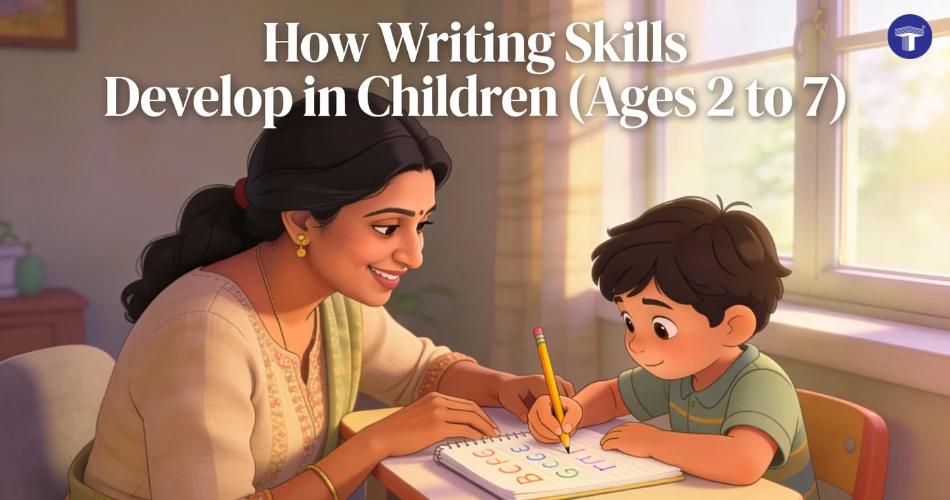
As parents, it is often the smallest moments that stay with us the longest. The first time your toddler holds a crayon, the day your preschooler draws shapes that suddenly feel purposeful, or the quiet pride you feel when your six-year-old writes their name independently. These are not just sweet memories captured in passing. They are early signs of writing skills development in children, a journey that begins far earlier than many parents expect.
Let us gently walk through this beautiful process together.
Writing Skills and Their Role in Early Childhood
Before letters and words come into play, early writing skills support much more than handwriting. They strengthen fine motor control, improve hand-eye coordination, support language development, and build emotional expression.
For Indian parents, especially those preparing children for preschool or primary school, strong pre-writing skills often determine how comfortably a child adapts to classroom learning.
Writing is not about perfection. It is about progress.
Writing Skills Development at Different Ages
Every child develops at their own pace. However, understanding age-appropriate milestones can help parents encourage learning without pressure.
Writing Skills in Children Aged 2 to 3 Years
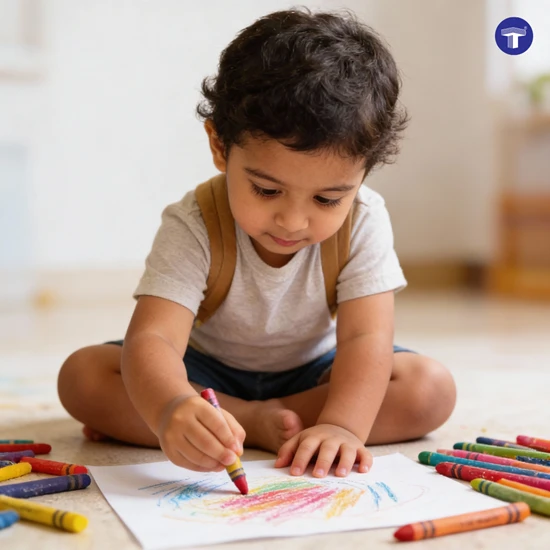
Scribbling is the first step to writing
At this stage, writing appears as joyful scribbling. Children enjoy making marks on paper without any intention of meaning. They usually hold crayons or pencils with their whole fist and focus more on movement than outcome. This phase plays a crucial role in building pre-writing skills for toddlers because it strengthens muscles in the fingers, wrists, and arms.
Parents can support this stage by offering thick crayons, allowing free drawing time, and praising effort rather than results. These early experiences form the base of early childhood writing development.
Writing Skills in Children Aged 3 to 4 Years
Between three and four years, patterns slowly begin to emerge. Children start drawing circles, straight lines, and simple shapes. Pencil grip improves, and there is more intention behind marks on paper. These activities strengthen fine motor skills for writing, which are essential before formal letter formation begins.
Many parents worry if their child avoids writing at this age. In most cases, it is not a lack of interest but muscle fatigue. Short, playful writing sessions are far more effective than long practice hours.
Writing Skills in Children Aged 4 to 5 Years
Preschool years often bring excitement and comparison, especially in Indian settings. During this phase, children begin tracing letters, writing some alphabets independently, and drawing pictures that are recognisable and detailed. This marks the transition from pre-writing to writing skills for preschoolers.
It is important for parents to remember that confidence grows faster when pressure stays low. Comparing handwriting with peers can reduce motivation and self-belief.
Writing Skills in Children Aged 5 to 6 Years
As school readiness becomes a focus, writing skills take a more structured form. Children at this age often start writing their name, forming letters with better spacing, and writing simple words. This phase is critical for handwriting development in children, where consistency matters more than speed or neatness.
Parents can gently encourage daily writing through real-life activities like making small lists, writing greeting cards for festivals or labelling drawings.
Writing Skills in Children Aged 6 to 7 Years
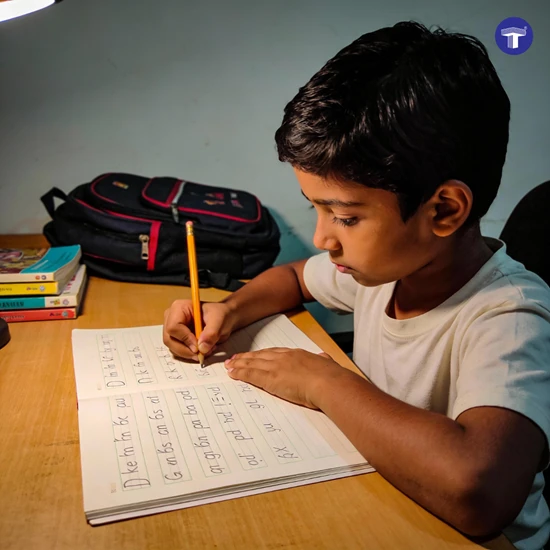
Writing turns thoughts into confident words
By six to seven years, writing becomes a tool for thinking and expression. Children start writing sentences, using spaces between words, and expressing ideas through written language. At this stage, writing skills in primary school children directly influence academic confidence and classroom participation.
Children feel a deep sense of pride when their thoughts appear on paper. Celebrating effort instead of neatness helps maintain that confidence.
Common Concerns Indian Parents Have About Writing Skills
Many parents worry when a child writes slowly, holds the pencil incorrectly or avoids writing tasks. These concerns are natural. Writing development in children depends on physical maturity, regular practice, and emotional support.
Forcing practice often creates resistance. Gentle encouragement, patience, and trust in the process lead to better long-term results.
How Parents Can Support Writing Skills at Home
Supporting writing skills development does not require expensive tools or long study hours. Everyday activities like colouring, cutting, clay play, and storytelling naturally strengthen writing readiness. When children hear stories and later draw or write about them, writing becomes meaningful instead of mechanical.
In Indian households, where learning often happens beyond textbooks, daily routines can easily turn into learning moments.
Final Thoughts for Parents
Writing is not a race. It is a relationship between your child, their thoughts, and their growing confidence.
When parents shift focus from perfect handwriting to joyful expression, children feel safe to learn. And in that safety, skills flourish.
Your patience today becomes their confidence tomorrow.
Frequently Asked Questions
1. What are the first signs of writing skills in toddlers?
Ans: The earliest signs of writing skills development in children include scribbling, holding crayons, and showing interest in drawing.
2. At what age should a child start writing letters?
Ans: Most children begin letter formation between the ages of 4 and 5 as part of writing skills for preschoolers.
3. How can Indian parents improve handwriting at home?
Ans: Daily short practice, playful activities and focusing on fine motor skills for writing help improve handwriting naturally.
4. Is messy handwriting normal in early primary years?
Ans: Yes. Messy writing is common during handwriting development in children and improves with time and guidance.
5. Should parents correct writing mistakes immediately?
Ans: Gentle guidance is better than constant correction. Positive reinforcement supports early childhood writing development more effectively.