
Do you remember struggling with holding pencils as a kid, finding them too big for tiny hands?
Those early attempts at writing weren’t just cute. They were building the foundation for how comfortably and confidently a child would write later. Developing the right pencil grip and control at this stage sets the stage for easier, more legible writing in the years to come.
Children’s precise hand and finger movements for tasks like gripping a pencil are referred as fine motor skills, helping them control writing tools with better stability and ease.
Research found a strong correlation between fine motor skills and handwriting legibility, with fine motor precision having a 60% effect. Also, multiple studies published by the American Journal of Occupational Therapy (AJOT) have shown that early fine motor skill proficiency correlates with better handwriting outcomes in classes 1–2.
This blog shares 10 fun, simple and hands-on activities that you can adopt at home before writing begins, to strengthen your child’s little fingers and improve hand control.
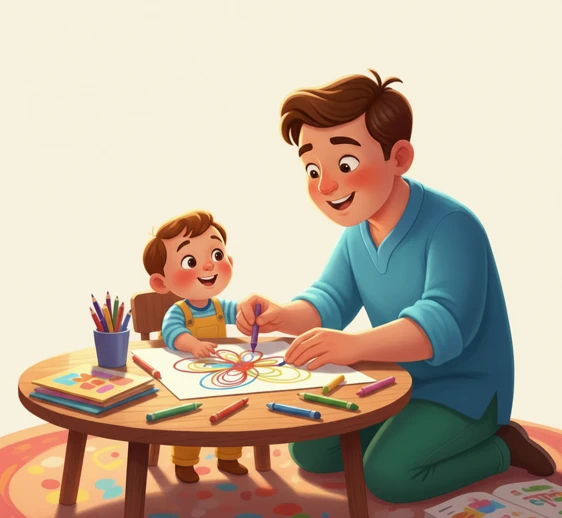
Parent guiding a toddler, helping improve pencil grip
Pencil Grip: The Foundation of Early Writing Skills
A proper pencil grip supports more than just handwriting. It allows children to:
- Write comfortably without tiring their hands.
- Control the pencil for smoother lines and shapes.
- Develop fine motor coordination that also helps with buttoning, tying, or feeding.
An incorrect pencil grip can cause tension and poor posture. That’s why improving your child’s pencil grip early makes writing easier, more enjoyable, and less frustrating.
It’s rightly said, ‘Before a child writes their first letter, they must first learn to move their fingers with purpose.’
Understanding Pencil Grip Development
Children don’t suddenly learn to hold a pencil; it’s a gradual process called pencil grip development.
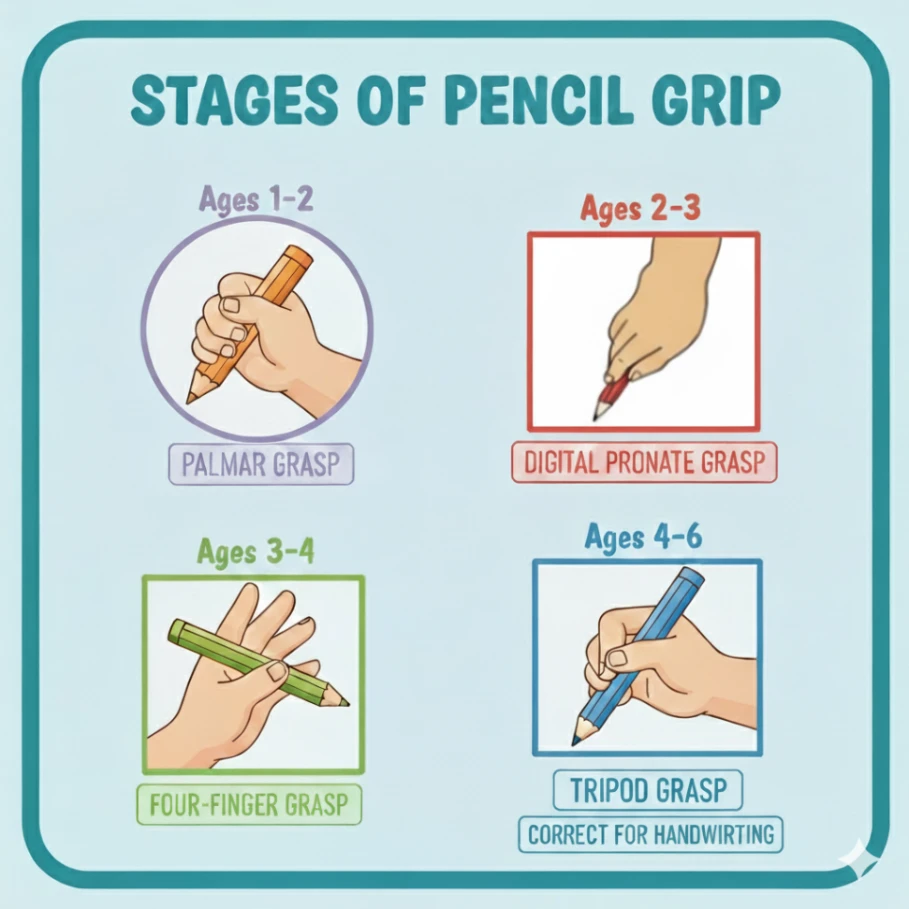
Stages of Pencil Grip Development in Kids
Stages of Pencil Grip:
- Palmar Grasp (1–2 years): The whole hand wraps around a crayon.
- Digital Pronate Grasp (2–3 years): The pencil tilts downward as fingers take control.
- Four-Finger Grasp (3–4 years): Four fingers guide while the thumb supports.
- Tripod Grasp (4–6 years): Thumb, index, and middle finger work together; this is the correct pencil grip used for handwriting.
This fine motor development can be supported with chunky crayons and triangular pencils, keeping your child happily involved.
10 Simple Ways to Improve Your Child’s Pencil Grip Before They Start Writing
These unique, practical activities help strengthen kids’ finger muscles and coordination. They go beyond typical ‘playdough’ ideas to make pencil grip activities exciting and effective.
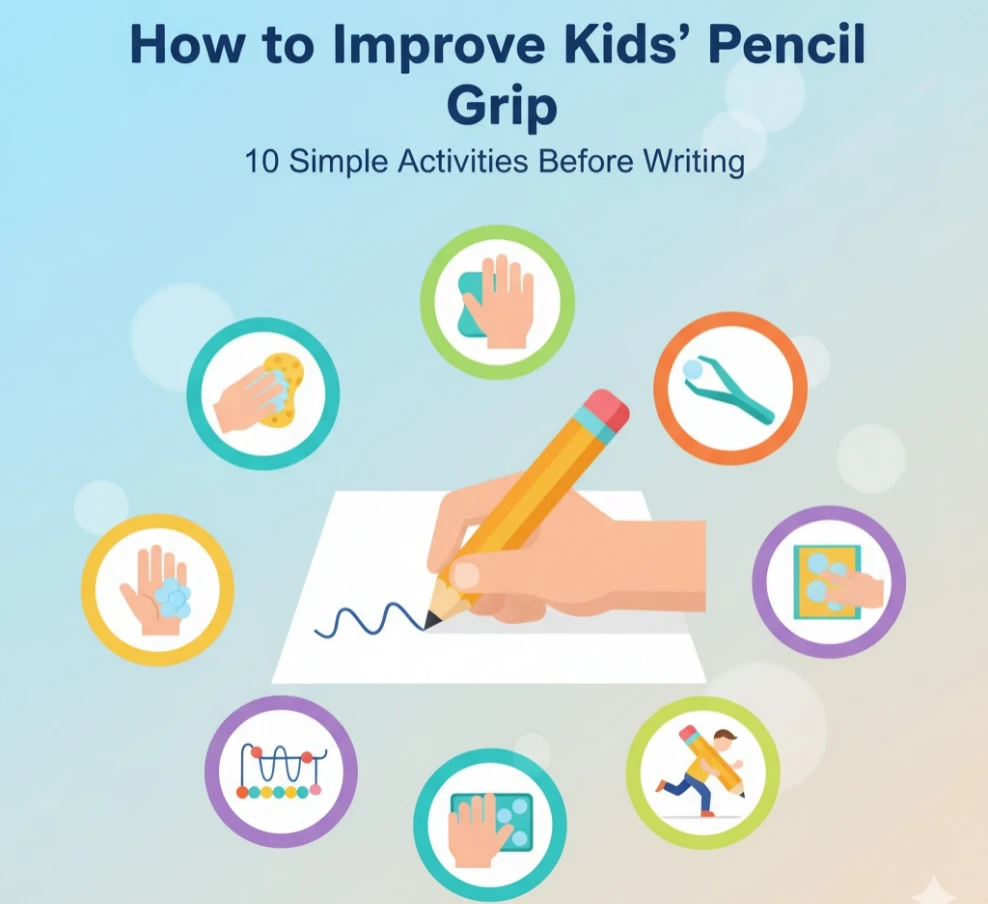
10 creative activities to improve kids’ pencil grip before writing
1. Cotton Ball Rescue Mission
Spread cotton balls on a table and give your child a pair of tweezers or tongs. Ask them to pick up each cotton ball and drop it into a bowl, like a little rescue game.
You can even turn it into a sorting activity by grouping colours or sizes. For example, ask your child to place all the white cotton balls in one bowl and the coloured ones in another, or separate big and small cotton balls into different piles.
Focus: Helps children practise the pincer grasp, strengthen their fingers, and improve hand-eye coordination.
2. Sticker Trails
Draw simple lines, curves, or zig-zags on a sheet of paper and let your child place small stickers along the path. Ask them to follow the lines closely as they stick each one.
Focus: Helps children practise hand control, improve precision, and develop early tracing and pre-writing skills.
Book Pair: Follow up with structured tracing in the 101 Pencil Control Activity Book for 2+ Years Old Kids.
3. Bubble Wrap Burst
Give your child a sheet of bubble wrap and ask them to pop the bubbles using just their thumb and index finger. The popping sound makes it fun while keeping them focused, strengthening tiny hand muscles.
Focus: Builds finger strength and dexterity (skill in performing tasks using the hands) needed for better pencil control.
4. Bead-and-Pipe Maze
Give your child a handful of colourful beads and a few pipe cleaners. Show them how to thread the beads onto the pipe cleaners to make simple shapes, patterns, or even letters. Encourage them to hold the pipe cleaner steady with one hand while threading with the other.
Focus: Helps both hands work together, improves finger strength, and encourages concentration.
Book Pair: After forming letters with beads, trace the same letters in the Alphabet Writing Book.
5. Clothespin Art Challenge
Place a paper plate or cardboard circle in front of your child and ask them to clip clothespins around the edge to create ‘sun rays.’ Once all pins are clipped, let them decorate each one using crayons, stickers, or markers.
Focus: Builds finger endurance, grip stability, and strengthens the small muscles used for writing.
Tip: Decorate pins for extra fun!
6. Salt Tray Writing
Fill a shallow tray with coloured salt or sand and smooth it out. Show your child how to use a finger to draw lines, curves, shapes, or letters on the surface. Shake the tray gently to ‘erase’ and start again.
Focus: Encourages smooth pre-writing strokes, wrist movement, and sensory exploration.
Book Pair: Trace the same letters or numbers in the Numbers Writing Book for practice.
7. Pom-Pom Shooter
Make a small launcher by cutting the bottom off a paper cup and stretching a balloon over the open end. Place a pom-pom inside the cup and let your child pull the balloon and release to shoot it at a target.
Focus: Boosts hand and wrist strength, helping children develop a stable pencil grip while adding a fun element.
8. Sponge Squeeze Race
Give your child a sponge and two bowls, one filled with water and one empty. Ask them to dip the sponge in the water and squeeze it into the empty bowl. You can set a timer or race to see how quickly they can transfer all the water.
Focus: Builds hand endurance, control, and coordination, while making a simple science connection.
9. Button Path Game
Draw a zig-zag or curved path on a piece of cardboard. Ask your child to move buttons along the path using only their thumb and index finger. Encourage slow, smooth movement so they stay on the trail.
Focus: Improves finger precision and consistent grip, necessary for early writing.
10. Pencil Walk Game
Place several pencils on a table and show your child how to ‘walk’ their fingers, thumb, index, and middle, from one end of the pencil to the other. Challenge them to stay balanced without dropping or sliding off.
Focus: Strengthens the exact fingers used for holding a pencil and helps them learn proper finger placement in a fun way.

A smiling preschooler gripping a chunky crayon
Tools and Tips for Correct Pencil Grip
- Choose triangular pencils or soft-grip models to support correct finger placement.
- Offer short crayons or pencils; they naturally promote a proper grasp.
- Keep shoulders relaxed and elbows on the table during writing.
- Encourage short, fun sessions instead of long practice times.
- Praise progress over perfection; confidence comes from consistency.
Combining the right posture with regular pencil grip exercises helps your child build strength without strain.
When to Seek Guidance
If your child still struggles to hold a pencil comfortably beyond age six or shows tension while writing, consult an occupational therapist. Early intervention prevents later handwriting issues.
Conclusion
Strengthening kids’ pencil grip isn’t about repetitive drills or strict routines; it’s about playful, hands-on exploration that makes learning fun. Every squeeze of a sponge, pinch of a clothespin, and trace in sand or salt helps little fingers develop the strength, coordination, and control they need for comprehensive writing.
By guiding children through these engaging activities, parents can ensure their child’s writing journey starts on the right note, with a strong, comfortable grip, growing confidence, and plenty of opportunities to explore creativity. This approach not only builds essential fine motor skills but also turns early learning into an enjoyable, imaginative adventure that sets the foundation for lifelong writing success.
Frequently Asked Questions (FAQs)
1. What causes poor pencil grip?
Ans: Poor pencil grip can result from weak hand and finger muscles, limited fine motor coordination, or a lack of practice with age-appropriate activities that strengthen pincer and tripod skills.
2. At what age should a kid be able to hold a pencil?
Ans: Most children begin holding a pencil with a basic grasp around 2–3 years, and develop a more controlled, tripod grip suitable for writing by 4–5 years.
3. Do fine motor skills help in improving pencil grip?
Ans: Yes, fine motor activities like pinching, squeezing, and threading strengthen the small hand muscles. These skills directly support better pencil grip development and smoother handwriting.
4. What is the tripod grasp, and why is it recommended?
Ans: The tripod grasp positions the pencil between the thumb, index, and middle fingers, resting it on the ring finger. This setup provides balance, comfort, and fluid control for writing.
5. Are pencil grip tools or aids useful for young children?
Ans: Soft or triangular grips gently guide fingers into the right position and encourage comfort. They’re most effective when paired with natural pencil grip activities that build strength.
6. Should left-handed kids use a different pencil grip technique?
Ans: Left-handed children can use the same correct pencil grip, with the pencil tilted slightly left. Ensure enough workspace to prevent smudging and awkward wrist angles.
7. Can poor pencil grip be corrected in older children?
Ans: Yes, through consistent practice and engaging pencil grip exercises. Games like the ‘pencil walk’ or ‘sponge squeeze’ help retrain muscles and improve control over time.