


Many Indian parents wonder how much writing practice is really enough for their children. With schoolwork, homework, tuition, and family routines, it can get confusing. Let us break it down in a simple, practical way so writing feels enjoyable, not stressful.
Why Does Daily Writing Practice Matter?

Daily practice builds writing skills for kids
Before we talk about time, it helps to understand why writing practice is important. Writing builds clear thinking, confidence, and communication skills. Whether children are doing english writing practice, or simple letter writing, these small daily habits strengthen learning.
Now that we know why writing matters, we can look at how much time children actually need.
How Much Writing Time is Ideal for Each Age Group
Children do not need long hours of writing every day. Younger kids usually benefit from 10 to 15 minutes of writing, while older children can comfortably handle around 20 to 30 minutes. The focus should be on consistency rather than pressure.
Since time is only one part of the routine, let us explore what children can write each day.
What Kids Should Write Every Day
Younger kids can start with alphabet writing to build strong basics. Older children can try diary entries, story starters, summaries, or fun topics they enjoy. Parents can also support them with writing practice books for kids, which offer structure and variety.
But here’s where many parents get stuck…
I know the writing part… but how do I get my child to enjoy it?
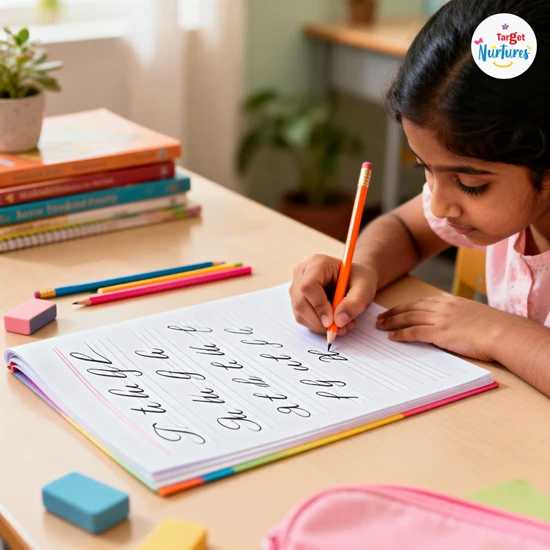
Neat cursive writing practice for kids
Great question. Writing feels easier when it is fun. Use colourful notebooks, small prompts, and topics your child enjoys, such as festivals, food, or cricket. Try simple number writing activities along with playful writing games for kids to keep your child motivated and excited.
When writing becomes enjoyable, it is much easier to follow a routine. So let us look at how to build one.
Tips to Build a Simple Daily Writing Routine
Choose a cosy time each day, keep their favourite writing tools handy, and gently nudge them to put their thoughts on paper.
You can sit beside younger kids so they feel supported. As an addition, you can also aim to improve their handwriting, including cursive writing practice, especially if your child enjoys beautiful letter formation.
As we set up a routine, parents also need to know when writing might feel overwhelming for a child. But what if your child suddenly feels overloaded?
Signs Your Child Is Overwhelmed
If your child avoids writing, gets irritated, or feels tired quickly, it may be a sign that they need shorter sessions. Reduce the time, switch to lighter activities, or try writing practice books instead of long tasks. Writing should always feel comfortable, not stressful.
Once your child feels relaxed again, the long-term benefits begin to show naturally.
Long-Term Benefits of Consistent Writing
Consistent writing builds stronger vocabulary, clearer thinking, and better exam performance. It also increases confidence because children can express themselves more easily. With steady support from parents, children develop strong overall writing skills for kids.
Final Thoughts
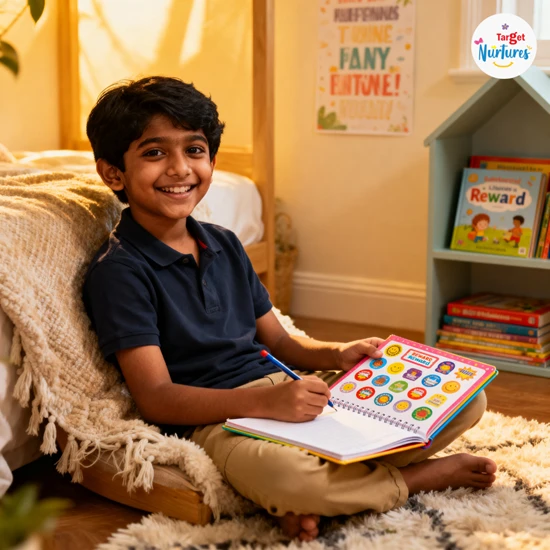
Joyful routines build writing skills for kids
Children do not need long hours of writing every day. What they truly need is short, meaningful, and enjoyable practice. With gentle encouragement and a simple routine, Indian parents can help children build a lifelong love for writing, whether they choose worksheets, books, or everyday writing habits.
FAQs
1. At what age should kids start writing practice?
Ans: Most children begin simple writing activities around the age of 3 to 4, when they start holding crayons, and copying lines. Formal writing practice usually starts at 4 to 5 through letters, patterns, and simple words. The idea is to keep it relaxed so children enjoy the process.
2. How much time should a child spend on writing practice daily?
Ans: Younger children often need just 10 to 15 minutes a day, while older kids can do 20 to 30 minutes. Short sessions work better than long ones because they keep the child focused and interested.
3. What if my child has poor handwriting even after regular practice?
Ans: Handwriting takes time to improve. Encourage slow writing, bigger letter formation, and proper spacing. You can use handwriting worksheets, tracing sheets, or lined notebooks. If handwriting still does not improve, observe your child’s pencil grip, and comfort level while writing.
4. How do I help a child who gets bored easily during writing practice?
Ans: Choose topics your child genuinely likes, such as food, cartoons, festivals, or sports. Use colourful notebooks, short prompts, and small rewards for effort. Keeping the session short and enjoyable often helps children stay engaged.
5. Should left-handed kids practice writing differently?
Ans: Left-handed children can write comfortably with a few adjustments. Make sure the notebook is tilted slightly to the right and that their hand is below the writing line. Give them enough space on the left side of the table so their arm moves freely.
6. How can I improve my child’s pencil grip at home?
Ans: Offer triangular pencils, chunky crayons, or grip aids that guide finger placement. Encourage fun activities like clay shaping, threading beads, or tearing paper because these strengthen hand muscles. A relaxed, correct grip develops naturally with regular practice.