
Raising a toddler is equal parts joy, chaos, and pure comedy. One minute they are cuddly little angels, and the next they are rolling on the floor because you peeled their banana 'wrong'. If you are an Indian parent navigating this stage, you are definitely not alone. Let us decode toddler tantrums using simple psychology and practical solutions that genuinely work.
What Exactly is a Toddler Tantrum? The Truth Behind the Chaos
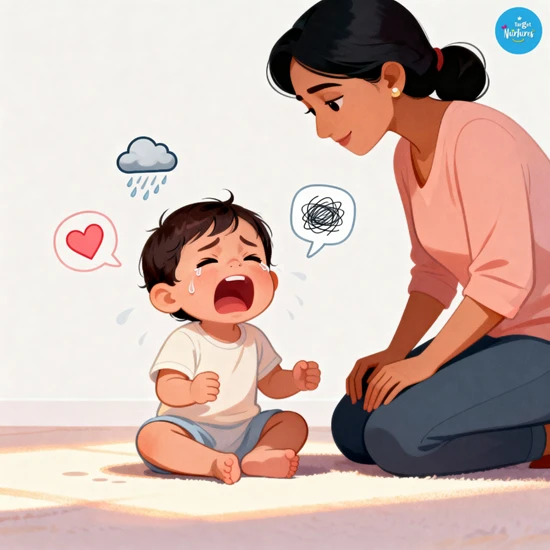
Understanding toddler tantrums with simple tantrum psychology tips
A toddler tantrum is an intense burst of emotion that the toddler simply cannot control. It can look like crying, screaming, falling on the floor, stiffening their body, throwing things, or refusing to move. Indian parents often see tantrums in kids at mealtime, during bathing, while getting dressed, or when saying no to screen time.
When they cannot express what they feel, everything erupts.
Once we understand what triggers toddler tantrums, it becomes easier to explore why toddlers behave this way in the first place.
Why Toddlers Melt Down, the Psychology Indian Parents Must Know
Toddlers between one and four years have big emotions but tiny tools to manage them. Their vocabulary is limited, their impulse control is almost nonexistent, and their brains are still learning how to calm down. Add sensory overload, hunger, or overstimulation from guests, and the meltdown becomes inevitable.
Culturally, Indian households can be noisy, busy, full of people, and full of instructions. Toddler tantrum psychology helps parents understand that these behaviours are rooted in development, not disobedience.
Knowing psychology sets the foundation, although parents often ask what they can do in such situations, which brings us to practical solutions.
Immediate Solutions During a Tantrum: What Parents Can Do Right Now
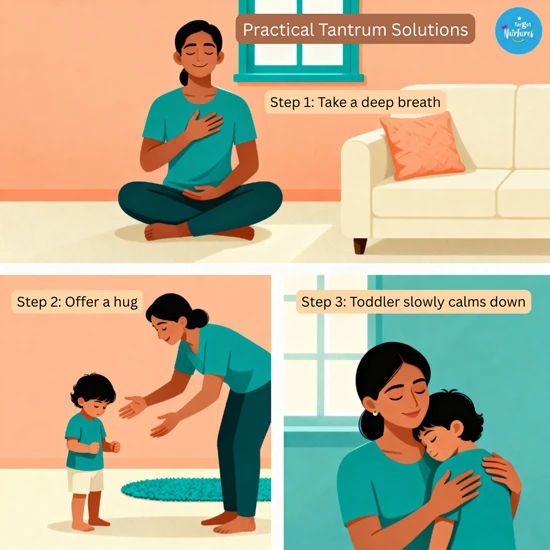
Instant toddler tantrum solutions for calm Indian parenting
Here are simple toddler tantrum solutions Indian parents can use instantly:
- Stay calm, because getting angry will only make them more disobedient.
- Go down to their eye level
- Use short sentences like 'I am here' or 'You are safe'
- Give them space if they want it
- Offer a firm yet gentle boundary, such as 'I will not let you hit me or anyone else'
- Avoid negotiating during the peak of the tantrum
A quick do/don't guide:
Do:
- Acknowledge their emotion
- Keep your tone steady
- Redirect once things settle
Don't:
- Shout
- Laugh at them
- Give in to stop the crying
These in-the-moment fixes help, although the real magic lies in preventing tantrums before they even begin.
Long-Term Strategies: How to Prevent Future Tantrums
Preventing toddler tantrums becomes easier when routines are predictable. Toddlers thrive on structure, consistent meal times, naps, and play schedules reduce stress. Give your child small choices such as 'red T-shirt or blue T-shirt', which builds independence.
Teach your toddler emotional vocabulary using picture books, pretend play, and real-life examples. Positive parenting in India works perfectly as it praises good behaviour, and your toddler will repeat it.
Common Mistakes Parents Make: What to Stop Doing Today
Many Indian parents unknowingly repeat habits that worsen tantrums. These include shouting, comparing the child to cousins, using threats, bribing with sweets, forcing early apologies, or dismissing emotions.
Sometimes the stress comes from multigenerational homes where everyone has a different opinion on child discipline. Mixed instructions confuse toddlers. This is where understanding child discipline methods, child behaviour problems, and calm parenting tips makes a huge difference.
Types of Tantrums, How to Identify What Your Toddler Really Needs
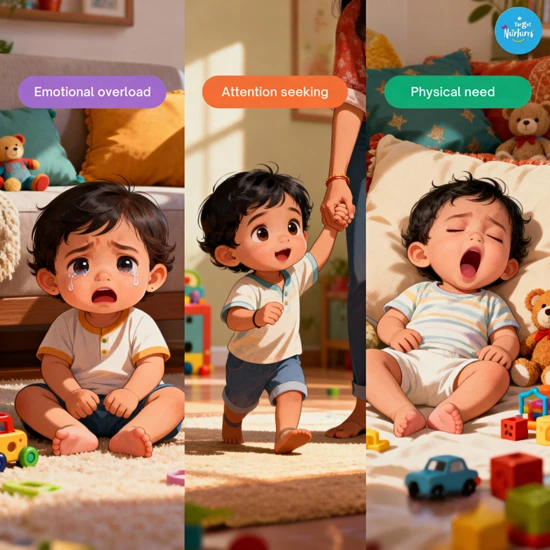
Types of toddler tantrums every Indian parent knows
Not all toddler tantrums are the same. Here are the common ones:
- Emotional overload tantrums caused by big feelings
- Attention seeking tantrums triggered when your child needs instant connection
- Physical need tantrums linked to hunger, tiredness, or overstimulation
Once you spot the type, you can tailor your response, and also reassure your child with healthy emotional practices.
Tantrums in Public Places: Smart Ways to Handle Them
Public meltdowns can feel embarrassing when relatives or strangers stare. Stay calm, pick a quieter corner, and let your child ride through the emotion without pressure. Avoid dragging or scolding loudly, toddlers only panic more.
Prepare in advance for crowded places by carrying snacks, water, a small toy, or setting expectations early. Effective tantrum management for parents helps reduce the frequency of these moments.
Conclusion
Toddler tantrums are not a sign of bad behaviour; they are simply moments when tiny humans feel emotions that are too big for their little bodies. When Indian parents understand the psychology behind these outbursts, everything becomes easier; the guilt reduces, the patience increases, and the connection deepens. With calm responses, consistent routines, and simple long term strategies, tantrums slowly turn into teachable moments. Remember, every meltdown is an opportunity to help your child learn emotional strength. Stay patient, stay present, and trust that you are doing an amazing job.
FAQs
1. Are toddler tantrums more common in boys or girls?
Ans: Yes, boys tend to show slightly more physical tantrums due to slower emotional regulation development, although both experience toddler tantrums frequently.
2. How do sleep regressions affect tantrum behaviour?
Ans: Sleep regressions make toddlers irritable, clingy, and overwhelmed, increasing toddler tantrums significantly.
3. Do food sensitivities or sugar intake contribute to tantrums?
Ans: Yes, certain sensitivities, artificial colours, and excess sugar can increase hyperactivity, which then leads to child behaviour problems and more meltdowns.
4. Is it normal for toddlers to hit or bite during a tantrum?
Ans: Completely normal, toddlers often hit, or bite due to emotional overload. This links to toddler hitting and biting, which parents can manage without panic.
5. Should parents ignore a tantrum completely or stay close by?
Ans: Stay close by. Ignoring them entirely leaves toddlers feeling unsafe. Instead, use a calm presence, which supports better toddler emotional regulation.
6. Do toddlers understand consequences during a tantrum?
Ans: No. During a tantrum, the brain is in survival mode. Discuss consequences only after they calm down, which improves tantrum management for parents long-term.