

For many families, screens have quietly become part of everyday life. A phone handed over during a work call, the television playing while dinner is prepared, or a tablet used to fill waiting time. These moments rarely feel significant, yet over time, they shape a child’s relationship with screens.
The concern is not the screens themselves. The issue lies in unplanned screen time, when devices are used without clear intention, limits, or predictability. Recognising this difference can help parents establish healthier routines and reduce stress, guilt, and daily conflicts.
Unplanned Screen Time Explained: Parents Often Overlook
1. How unplanned screen time differs from intentional screen use
Unplanned screen time for kids refers to screen exposure that happens spontaneously, without clear start and end points, or without a specific purpose. This is different from intentional screen use, such as watching a selected programme together, or using an educational app for a defined period.
Intentional use has structure. Unplanned screen use is scattered across the day, making it harder for children to understand limits.
2. Everyday moments that quietly turn into screen exposure
Many kids' screen habits at home begin in moments parents rarely notice as screen time. For example, a child might watch videos while a parent finishes chores, scroll on a device while waiting for guests, or play games right after online classes without a break.
At first, these moments feel harmless, yet the lack of predictability in screen use can influence children’s focus and behaviour more than is immediately obvious.
Why Predictability Matters More Than Screen Limits
1. How unpredictable screen access trains the brain to seek instant reward
Research around screen time impact on child development shows that unpredictable rewards activate the brain’s dopamine system more strongly. When screens appear randomly, children learn to crave stimulation rather than engage deeply with activities.
It is not about how exciting the content is, but about not knowing when it will appear again.
2. Why children struggle with self-regulation when screens have no routine
Without clear patterns, children struggle to manage their emotions effectively. This often shows up as resistance, restlessness, or difficulty stopping an activity, leading to common behaviour issues due to screen time at home.
Subtle Behaviour Changes Parents Notice but Rarely Attribute to Screens
1. Lower frustration tolerance and increased emotional outbursts
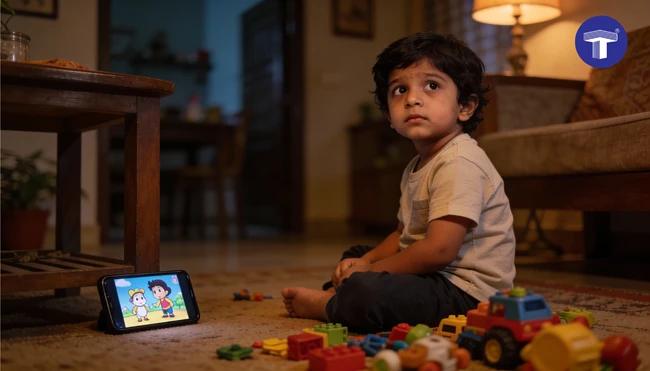
Child distracted during unplanned screen time
Many parents notice behavioural changes due to screen time, such as quicker meltdowns, impatience, or irritability. These shifts are often attributed to personality or mood, rather than daily screen habits.
2. Difficulty transitioning between activities without resistance
Children exposed to frequent, unplanned screen use may struggle with transitions. Moving from play to homework, or from screen to sleep, becomes harder, reflecting attention span issues in kids rather than deliberate defiance.
Learning, Focus, and the Cost of Constant Digital Switching
1. How unplanned screen time disrupts deep focus and reading stamina
When screens interrupt the day repeatedly, children often struggle to maintain focus. This can influence the screen time impact on learning, particularly in areas such as reading, writing, and problem-solving, where sustained attention is essential.
2. Why is this impact stronger in early schooling years
In early education, particularly within the Indian context, children are expected to build foundational skills early. Early childhood development in India depends heavily on attention, repetition, and calm engagement, all of which are affected by scattered screen exposure.
3. What WHO screen time guidelines actually say
Global recommendations, such as the WHO screen time guidelines for kids, provide guidance on age-appropriate limits and healthy daily screen routines.
The Emotional Side of Screen Time Guilt for Parents
Why do screens become an easy solution during exhaustion? For many parents, screens are not a careless choice, but a practical one. Work demands, household responsibilities, and limited support can make managing devices stressful, contributing to screen time guilt for parents, particularly within the context of Indian parenting challenges.
Reducing Unplanned Screen Time Without Daily Conflict
1. Replace spontaneous screen use with predictable rituals
One of the most effective ways to reduce screen time for kids is by introducing predictable routines. Screen free rituals, especially after school, help children settle naturally.
2. How setting expectations works better than sudden restrictions
Clear communication about screen boundaries for children can help minimise power struggles. When children understand what to expect, they are more likely to follow routines willingly.
3. Quiet, engaging activities that support focus and independence
Simple screen-free activities for kids, such as colouring, puzzles, or quiet reading, help children develop patience and independence without overstimulation.
4. Where Learning Happens Naturally Through Play
Parents looking for gentle, realistic strategies can explore these practical tips to reduce screen time for kids, designed to work with everyday family routines.
Final Reflection: Supporting Healthy Screen Habits at Home

Parent and child enjoying screen-free activity
Healthy screen habits develop through support rather than strict control. When screen use is consistent and thoughtfully integrated into the day, children feel secure and less reliant on constant stimulation. What matters most is not perfection, but clarity, consistency, and emotional connection.
Children do not need rigid schedules or abrupt bans. They thrive when their days follow a gentle rhythm, with clear expectations, manageable transitions, and a sense of being understood within their own home.