
In today’s digital age, it can feel like screens are everywhere, from TVs and tablets to phones and laptops. As a parent, you might often wonder: How much screen time is too much for my child?
While technology can boost learning and keep kids entertained, excessive screen time can affect their sleep, behaviour, and overall health. That’s where the World Health Organization (WHO) guidelines come in. These recommendations give parents clear, age-wise screen time limits and practical tips to build healthier digital habits at home.
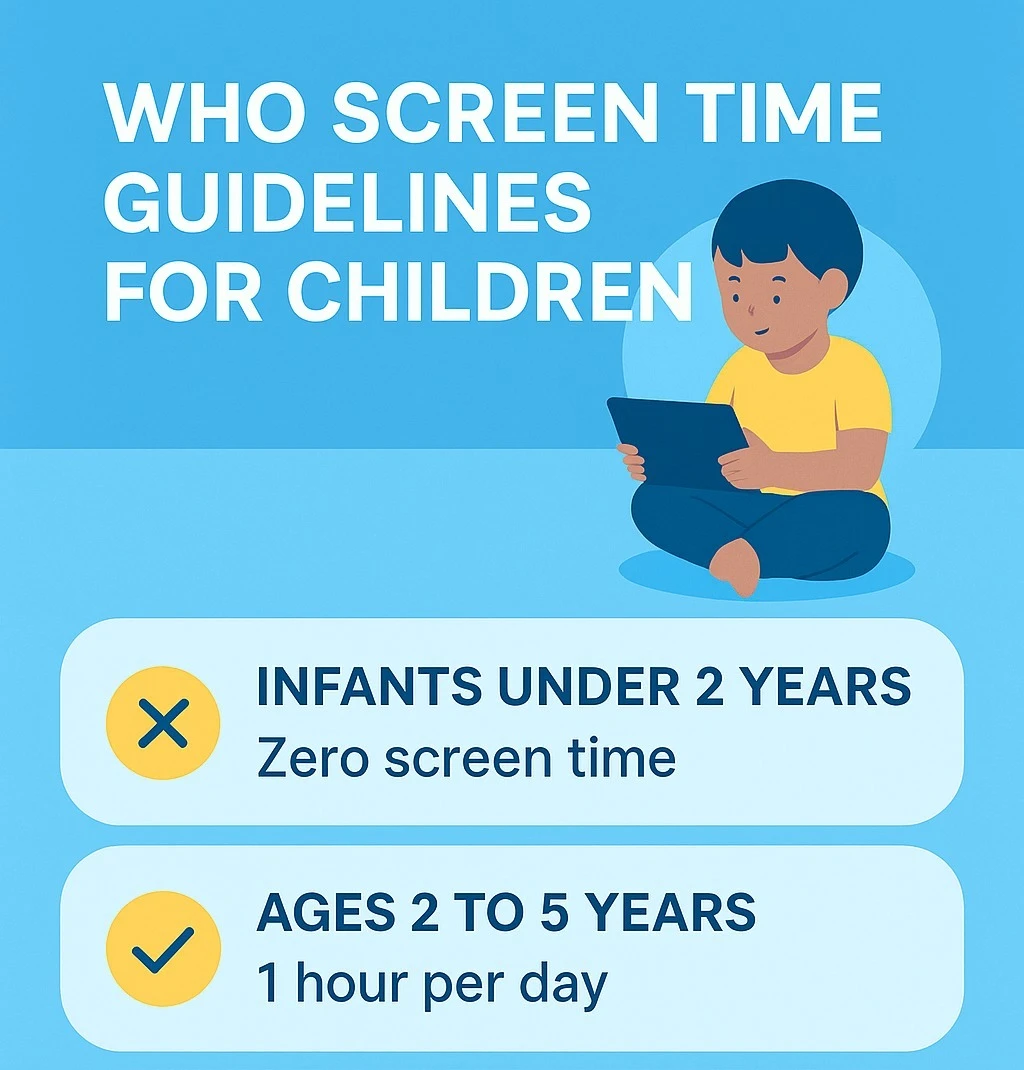
WHO recommended screen time by age group
Don’t worry! With simple and science-backed advice on managing your child’s screen use, this guide has you covered.
What is the Best Screen Time Limit for Kids?
The WHO guidelines highlight that screen time limits should be set according to age. Parents searching for the right daily screen time limit can follow this guidance:
- Infants (less than 1 year): The WHO recommended zero screen time. Babies need physical play, interaction, and bonding time instead.
- Ages 1 to 2 years: According to WHO guidelines by age, children under 1 year should have zero sedentary screen time, while those aged 2 years should not exceed 1 hour per day.
- Ages 3 to 4 years: WHO screen time guidelines suggests that maximum screen time limit per day should not be more than 1 hour for this age group.
Did you know? The Indian Academy of Pediatrics (IAP) also endorses this approach, recommending no screen time for children under 2 years, a maximum of one hour per day for children aged 24–59 months, and under two hours for those aged 5–10 years in order to support healthy development.
Understanding Excessive Screen Time Side Effects on Children
Excessive screen time can also quietly impact a child’s overall growth and well-being. It doesn’t always mean ‘too much TV or mobile games’. It often shows up in everyday struggles that parents notice but may not immediately connect to screen use. For example:
- Children who spend long hours on screens often find it harder to fall asleep, and their focus during studies or playtime tends to shrink.
- Sitting with devices replaces outdoor play, leading to reduced movement and, over time, unhealthy weight gain.
- Excessive screen time can have lasting effects on the eyes and can overstimulate the brain, making children restless, cranky, or struggling to regulate their emotions.
- More time in front of screens often means less face-to-face bonding with family and friends, which is essential for emotional development.
- Excessive screen time can also expose children to online risks. That’s why it’s important to also teach them about cyber security for kids to ensure safe and healthy digital habits.
The good news? Balancing screen use with alternative activities like outdoor games, storytelling, or creative hobbies can help children build healthier habits and a more active lifestyle.
Screen Time Activity Recommendations for Parents
As parents, we all want our children to grow up healthy, curious, and happy. But with screens becoming such a big part of everyday life, it can feel overwhelming to set limits that actually work.
What often helps is replacing ‘don’t use the phone’ or ‘stop watching TV,’ with simple, structured activities that naturally guide children toward healthier habits. Here are a few ideas you can try at home:
- Create screen-free family zones such as bedrooms and mealtimes, where the focus is on connection and conversation.
- Use parental controls thoughtfully to keep content safe and set gentle but clear boundaries.
- Encourage outdoor play, sports, and hobbies.
- Introduce creative learning tools such as colouring books, activity books, or story books for kids. These not only keep children engaged but also support imagination, fine motor skills, and early learning.
- Set a family rule for the maximum screen time per day, so children see it as a shared commitment rather than a restriction.
Healthy screen time limits every parent should know
Final Thought
Screens are part of every child’s world today, but what truly matters is balance. The WHO screen time guidelines are meant to protect childhood, not take it away.
Too much exposure to screens can disturb sleep, affect learning, and change behaviour, while gentle limits open space for creativity, curiosity, and deeper family bonds. As parents, your role is not to shut screens out but to guide children toward healthier choices that nurture both body and mind.
With simple rules, meaningful activities, and shared moments together, we can raise a generation that enjoys technology without losing the joy of the real world.
Frequently Asked Questions
1. How much screen time is safe for toddlers according to WHO?
Ans: The WHO recommends zero screen time for children under 2 years, and no more than 1 hour per day for those aged 2 to 4 years.
2. Why is limiting screen time important for kids?
Ans: Limiting excessive screen time improves sleep, boosts activity levels, and helps children build stronger social and learning skills.
3. Does WHO recommend zero screen time for infants?
Ans: Yes. For infants below 1 year, the WHO recommends no screen use at all.
4. What is the recommended screen time for children aged 6 to 12?
Ans: Children aged 6 to 12 should not have more than 2 hours of recreational screen time per day.
5. Do WHO guidelines differ for school-age children?
Ans: Yes. The guidelines are stricter for younger children, while older children can have more flexibility, but screen time control is still necessary.
6. Are WHO screen time guidelines applicable in India?
Ans: Yes. The WHO screen time guidelines are global and apply to children everywhere, including India.
Important Links
| Hidden Risks of Gaming and 5 Healthier Alternatives | Screen-Free Ways to Play and Bond with Your Baby |
| Easy Origami for Kids – Fun, Benefits & Step-by-Step Guide | Children's Books |