
In most Indian homes, evenings are a lively mix of activities, such as children playing around, laughing, having snacks, doing their school work, or getting ready for dinner and bed. Even amidst these activities, one of the grounding family rituals continues to hold its charm across generations, which is chanting evening shlokas.
Yet even in this chaos, a small daily pause can bring the whole family back to centre.
For Indian parents, devotion is more than a ritual. It’s a way to pass on culture, values, and morals to their children. A simple two-minute chant can have a deeper and lasting impact than rules imposed with strictness. While children may follow rules without grasping the ‘why’ behind them, these chants help them understand the intent and meaning beneath those teachings.
And this is exactly why evening chants hold a special place in Indian households.
Benefits of Chanting Shlokas for Children
The benefits of chanting shlokas are both emotional and developmental: they help children feel calmer, safer and more grounded at the end of the day; and at the same time, they gently boost memory, focus, pronunciation and self confidence without it ever feeling like a task
- Improves memory and pronunciation
- Strengthens breath control and speech
- Builds focus and patience
- Enhances immunity through reduced stress
- Boosts emotional resilience
- Creates a peaceful bedtime routine
When introduced the right way, these daily chants don’t feel like a task; they feel like comfort
Why Evening Shlokas Matter in Indian Homes
Evenings mark a gentle shift from the bustle of the day to the calm of night. This is why chanting mantras in the evening helps children:
- Unwind mentally after a long day
- Feel safe and connected
- Sleep with a calmer mind
- Absorb spiritual and emotional grounding
- Build cultural identity and values
But the magic doesn’t stop at calm; chanting offers deeper developmental benefits, too.
Rules For Chanting Mantras With Kids
There are no hard and fast rules for chanting mantras. It usually varies from culture to culture. But some of the following common notions are generally followed while chanting mantras:
No Footwear:
Teach kids to remove their shoes before chanting. It shows respect and helps them feel more grounded.
Choose a Calm Spot:
Pick a quiet corner or near a diya, a small temple, or even by the window. The calm surroundings make it easier to focus.
Stay Clean and Fresh:
Encourage kids to wash their hands and face before chanting. It helps them feel ready and refreshed.
Sit Comfortably:
Sit cross-legged together on a mat or floor. Comfort matters more than posture. The goal is stillness, not stiffness.
Chant Together, Not Alone:
Chanting as a family makes it fun and reassuring. Kids learn by listening and joining in, not by being tested.
Focus on the Sound, Not Perfection:
Let them enjoy the rhythm and melody of the words. Don’t worry about exact pronunciation at first; that will come naturally.
Avoid Distractions:
No snacks, screens, or chatter during chanting time. Make it a mindful moment together.
End With Gratitude:
After finishing, sit quietly for a few seconds and thank the universe, God, or simply the moment of peace.
Make It a Habit:
Chanting mantras at the same time each *evening*— even for a few minutes — helps children build calmness, focus, and a deeper connection to their roots.
Once the routine feels natural, you can begin with a few simple and meaningful shlokas.
Top 5 Easy Evening Shlokas For Kids
1. Om Mantra for Inner Peace
ॐ
Om
Meaning:
The primal sound of the universe; the vibration from which all creation begins.
Benefits:
Chanting Om soothes the mind, reduces stress, and enhances focus. It regulates breathing, brings inner calm, and creates a sense of safety and positivity. As one of the most powerful evening mantras for positive energy, it prepares children to unwind, reflect, and transition peacefully into rest.
Video: OM SANTI l ॐ शांति मंत्र - @Chantingommantra
2. Om Shanti Mantra
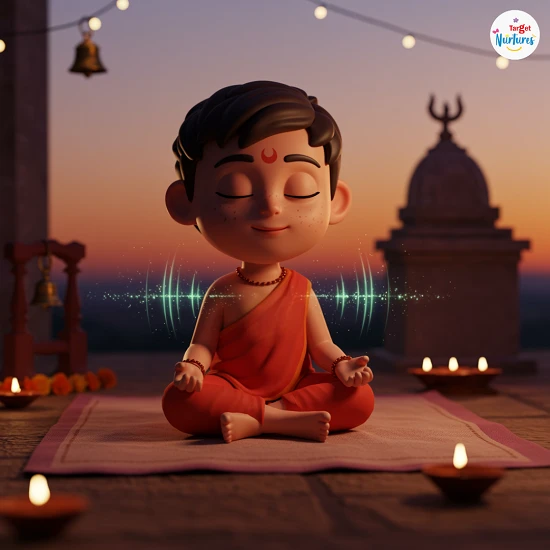
Kid chanting Om mantra, calm mind, better focus.
ॐ शान्तिः शान्तिः शान्तिः
Om Shanti Shanti Shanti
Translation:
Om Peace, Peace, Peace
Meaning:
A prayer asking for peace of body, mind, and soul.
Benefits:
Calms anxiety, brings emotional balance, and prepares children for sleep.
From inner peace, we move to recognising the power within us.
Video: Om Shanti Shanti Shanti | The Ancient Mantra for Inner Peace - @CosmicResonance-k4r
3. Karagre Vasate Lakshmi
कराग्रे वसते लक्ष्मी
करमध्ये सरस्वती,
करमूले तु गोविन्दः
प्रभाते करदर्शनम्
Karagre Vasate Lakshmi
Karamadhye Saraswati,
Karamule Tu Govinda
Prabhate Kara Darshanam
Translation:
On the fingertips resides Goddess Lakshmi,
On the palm lives Goddess Saraswati,
At the base rests Lord Govinda,
We honour our hands each morning and evening.
Meaning:
Our hands have the power to create, learn and do good.
Benefits:
Builds gratitude, self-belief, and confidence.
Once children learn to value themselves, it becomes easier to value others, too.
Video: Karagre Vasate Lakshmi - Powerful Laxmi Shloka - @Everest Bhakti
4. Sarve Bhavantu Sukhinah
सर्वे भवन्तु सुखिनः
सर्वे सन्तु निरामयाः
सर्वे भद्राणि पश्यन्तु
मा कश्चिद् दुःख भाग्भवेत्
Om Sarve Bhavantu Sukhinah
Sarve Santu Niraamayaah
Sarve Bhadraanni Pashyantu
Maa Kashcid-Duhkha-Bhaag-Bhavet
Translation:
May all be happy,
May all be healthy,
May all witness goodness,
May none suffer.
Meaning:
A prayer for the well-being of the world, teaching kindness, and empathy.
Benefits:
Develops compassion and emotional intelligence.
With kindness in their hearts, children also need hope and positivity around them.
Video: Om Sarve Bhavantu Sukhinaha || सर्वे भवन्तु सुखिनः सर्वे सन्तु निरामया - @gaytripariwarfanclub
5. Om Namah Shivaya
ॐ नमः शिवाय
Om Namah Shivaya
Translation:
I bow to Lord Shiva
Meaning:
A simple prayer to honour the divine within and around us.
Benefits:
This mantra calms the mind, reduces fear, and brings a feeling of protection and peace. One of the most powerful evening mantras for positive energy, it helps children feel safe, centred, and ready for restful sleep.
Soft to chant, deep in meaning; a gentle hug for the mind at the end of the day.
Video: Om Namah Shivaya - @Spiritual_Melodiez
Evening vs Morning Mantras For Kids
- Morning mantras energise and prepare the mind for the day
- Evening mantras, Hindu chants for sunset calm, soothe, and help reflect
When balanced well, they nurture both active and restful energies in children.
How Indian Parents Can Make Chanting Fun

Chanting mantras, taught gently to kids
If you’re wondering how to make it fun, try this:
- Let them chant once as a whisper, once loud, once ‘super soft’ like a lullaby
- Make the mantra a sing song tune they can hum easily
- Chant together while watching the sky change at sunset
- Let their favourite toy ‘lead’ the chanting for the day
Because at the heart of chanting isn’t perfection, it’s togetherness.
Final Thought For Indian Parents
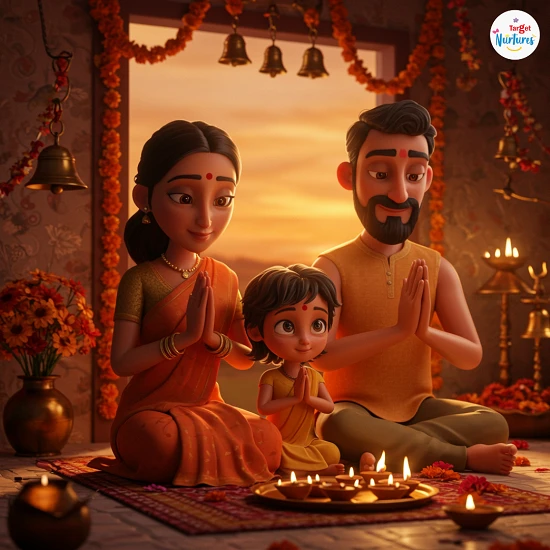
Indian family evening prayer, mantra chanting, peaceful routine
Chanting evening shlokas for kids is more than a tradition. It is:
- A moment of bonding
- A lesson in values
- A dose of emotional resilience
- A daily gift of inner peace
And while kids may begin by repeating the words, over time, the words begin shaping them.
Start small. Keep it gentle. Make it heartfelt.
One day, you’ll realise, it wasn’t just the child learning the mantra; it was the mantra shaping the child.
If you enjoy introducing evening shlokas in a way that feels gentle and engaging, the Shlokas and Mantras Activity Book for Kids can be a simple companion to make chanting and learning more playful and hands-on.
FAQs
1. Why should children chant evening mantras every day?
Ans: It reduces stress, improves focus, and helps children sleep calmly with positive thoughts.
2. How can parents teach mantras to kids in an easy and fun way?
Ans: By chanting together with rhythm, music, actions, and zero pressure.
3. What is the right time to recite evening prayers for kids?
Ans: During sunset, diya time or just before bedtime.
4. Are there any simple Sanskrit mantras for children to start with?
Ans: Yes, ‘Om Shanti’, ‘Sarve Bhavantu Sukhinah’, and ‘Shubham Karoti Kalyanam’ are easy and powerful.
5. Can evening mantras help children sleep better?
Ans: Yes, they calm the nervous system and reduce bedtime restlessness.
6. What’s the difference between morning and evening mantras for kids?
Ans: Morning chants energise; evening chants bring calm and closure to the day.
7. Should kids understand the meaning of the mantras they chant?
Ans: Yes, knowing the meaning of shlokas makes them feel connected and builds emotional understanding.