
Raising children in today’s digital world feels like walking a tightrope. While social media connects us in amazing ways, it also exposes kids to dangers we never faced as children. One of the most worrying concerns is social media addiction.
For kids, scrolling endlessly may seem harmless, but the effects of social media addiction can slowly damage their emotional, physical, and academic well-being.
As parents, our responsibility is to spot the warning signs early and help them build a healthy balance before it’s too late.
What is Social Media Addiction?
Social media addiction is not just ‘spending too much time online’. It’s a compulsive behaviour where children feel restless, anxious, or incomplete without checking their feeds. Social media addiction is not just ‘spending too much time online’. It’s a compulsive behaviour where children feel restless, anxious or incomplete without checking their feeds.
A recent India Today report highlights how stricter parental controls and permissions can help protect children under 18 from such risks.
Global studies and social media addiction statistics highlight that kids are spending more hours on devices than recommended. In fact, the rise of affordable smartphones has led to a rapid growth of social media addiction in India, making it a pressing issue for Indian families. For more insights, you can read our detailed blog on WHO screen time guidelines for kids.

Warning signs of social media addiction in kids
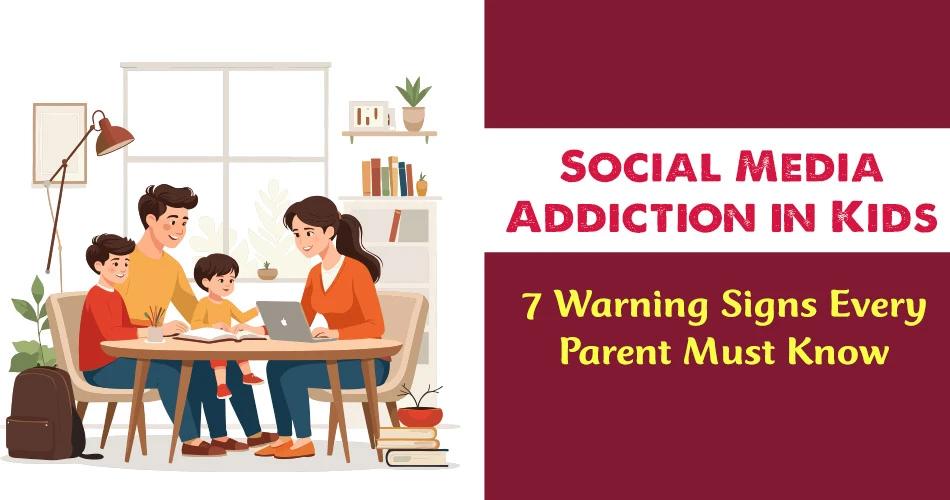
7 Warning Signs Parents Cannot Ignore
Here are clear signs of social media addiction you must watch out for:
- Constant screen checking: They refresh apps every few minutes.
- Irritability when restricted: Denial of screen time triggers meltdowns.
- Neglect of studies: Schoolwork and hobbies lose priority.
- Disrupted sleep: Late-night scrolling replaces healthy rest.
- Withdrawal from family: Prefers screens over conversations or play.
- Obsession with likes: Their self-worth depends on online validation.
- Secrecy: Hiding screen activity or using devices behind closed doors.
If you notice multiple signs, it’s time to act and prevent long-term side effects of social media addiction such as anxiety, poor self-esteem, and social withdrawal.
Watch: Social Media's Impact on Self-Esteem. This short film by Dove, ‘Reverse Selfie,’ captures how social media pressures can distort children’s self-image and confidence.
Why Does Social Media Addiction Happen?
There are several social media addiction causes:
- Platforms are designed with endless scrolling and dopamine-triggering notifications.
- Peer pressure makes children fear ‘missing out’ on trends or chats.
- Lack of outdoor play or hobbies pushes kids to virtual entertainment.
The psychology of social media addiction explains that these triggers work like rewards, pulling children back repeatedly. Left unchecked, the effects of social media addiction can become as harmful as substance dependency.
According to experts at Johns Hopkins Medicine, social media can deeply affect the mental health of children and teens, making it crucial for parents to recognise early warning signs.

Fatigue in children linked to social media addiction
How to Overcome Social Media Addiction in Kids
Parents often ask: ‘But how do I manage this at home?’ The truth is, there is no single answer. Instead, you can combine different solutions to social media addiction:
- Set clear boundaries: Define tech-free zones like bedrooms and study tables.
- Create routines: Fixed times for schoolwork, play, and screens.
- Talk openly: Discuss why balance matters instead of enforcing only restrictions.
- Model healthy habits: Kids mirror parents, so limit your own scrolling.
This is how you can start to control social media addiction before it escalates.
If you’re wondering how to stop social media addiction, remember that complete disconnection isn’t always practical. Instead, focus on gradual changes that help children self-regulate. Start early so they learn how to avoid social media addiction in the long run.
Watch: Combatting Social Media Addiction in Children. This helpful video explains practical ways to manage screen time and guide children towards healthier habits.
Screen-Free Alternatives for Kids
Replacing screens with engaging activities is the most practical way to avoid social media addiction. Here are some alternatives your child will enjoy:
- Creative arts: Painting, colouring books, craft kits, and doodling.
- Reading time: Introduce age-appropriate books or picture story collections.
- Outdoor sports: Badminton, cycling, cricket, or football with friends.
- Music and dance: Encourage singing, dancing, or learning an instrument.
- Life skills: Simple cooking, gardening, or helping in the kitchen.
- Puzzles & board games: Sharpen focus and problem-solving skills.
- Writing practice: Journaling, handwriting, and activity books for pencil control.
These activities not only keep children engaged but also improve creativity, focus, and confidence. Unlike screens, they provide real satisfaction without negative consequences. At Target Learning Ventures, we truly believe in the power of screen-free learning activities that nurture a child’s overall development, laying strong foundations for a healthier, happier future.

Social media addiction brings hidden challenges for children.
Measuring the Severity
Professionals sometimes use the social media addiction scale to measure how serious the problem is. As a parent, you don’t need clinical tools, but staying aware of social media addiction facts can help you intervene before things spiral.

Togetherness nurtures what technology often takes away silently.
Final Thoughts
The truth is simple: social media addiction is real, and it’s silently stealing our children’s childhoods. But with awareness, limits, and engaging screen-free alternatives, parents can help their kids thrive in the real world.
Don’t wait for a meltdown or a failed exam to notice the issue. Take action now—because every hour spent off the screen is a gift of growth, joy, and connection for your child.
FAQs
1. What age group is most at risk of social media addiction?
Ans: Children aged 10 to 16 are most vulnerable, but even 6 to 9 year olds can show dependency if exposed early.
2. How can parents help children avoid social media addiction?
Ans: Balance is key. Encourage hobbies, set limits, talk openly, and use family activities to reduce reliance on screens.
3. What are the effects of social media addiction on studies?
Ans: It reduces focus and concentration, directly affecting grades, and overall learning.
4. What role do schools play in prevention?
Ans: Schools can spread awareness, promote offline hobbies, and guide children on safe digital use.
5. Are there professional treatments?
Ans: Yes. Therapists and counsellors can guide children through digital detox and behaviour therapy if needed.