
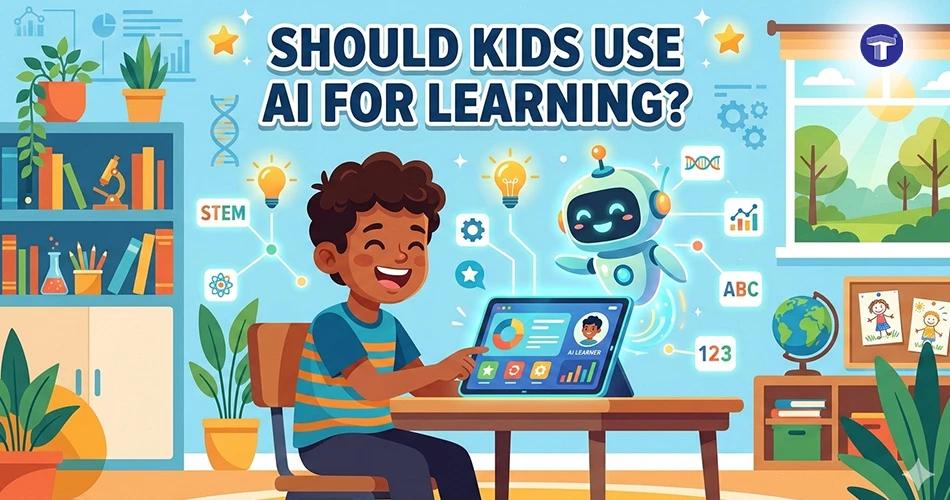
Artificial intelligence is becoming part of everyday life, and children are noticing it too. From asking questions to voice assistants to using AI tools for homework help, many kids are beginning to explore AI while learning. This often leaves parents wondering: should kids use AI for learning, and if yes, how much is healthy?
AI for kids can be helpful when used thoughtfully. It can answer questions quickly, explain ideas in simple ways, and spark curiosity in children who love asking 'why' and 'how'.
Some benefits AI offers in education for kids include:
- Quick answers to kids’ curious questions
- Simple explanations for complex topics
- Interactive learning experiences for kids
- Encouragement to explore new subjects
However, like any tool, AI works best when children use it with guidance and balance.
Should Kids Use AI for Learning? Finding the Right Balance
Parents often worry that children might rely too much on AI for answers. While this concern is valid, AI does not have to replace traditional learning methods.
-
Treat AI as a learning helper
AI should be seen as a guide that explains ideas rather than a shortcut that gives ready-made answers. Encouraging children to ask follow-up questions can make learning more meaningful.
-
Encourage curiosity beyond the screen
When a child asks AI about animals, space, or countries, parents can extend the discussion through conversations, drawings, or related picture books that deepen understanding.
Finding the right balance ensures that AI supports learning rather than replacing important thinking skills.
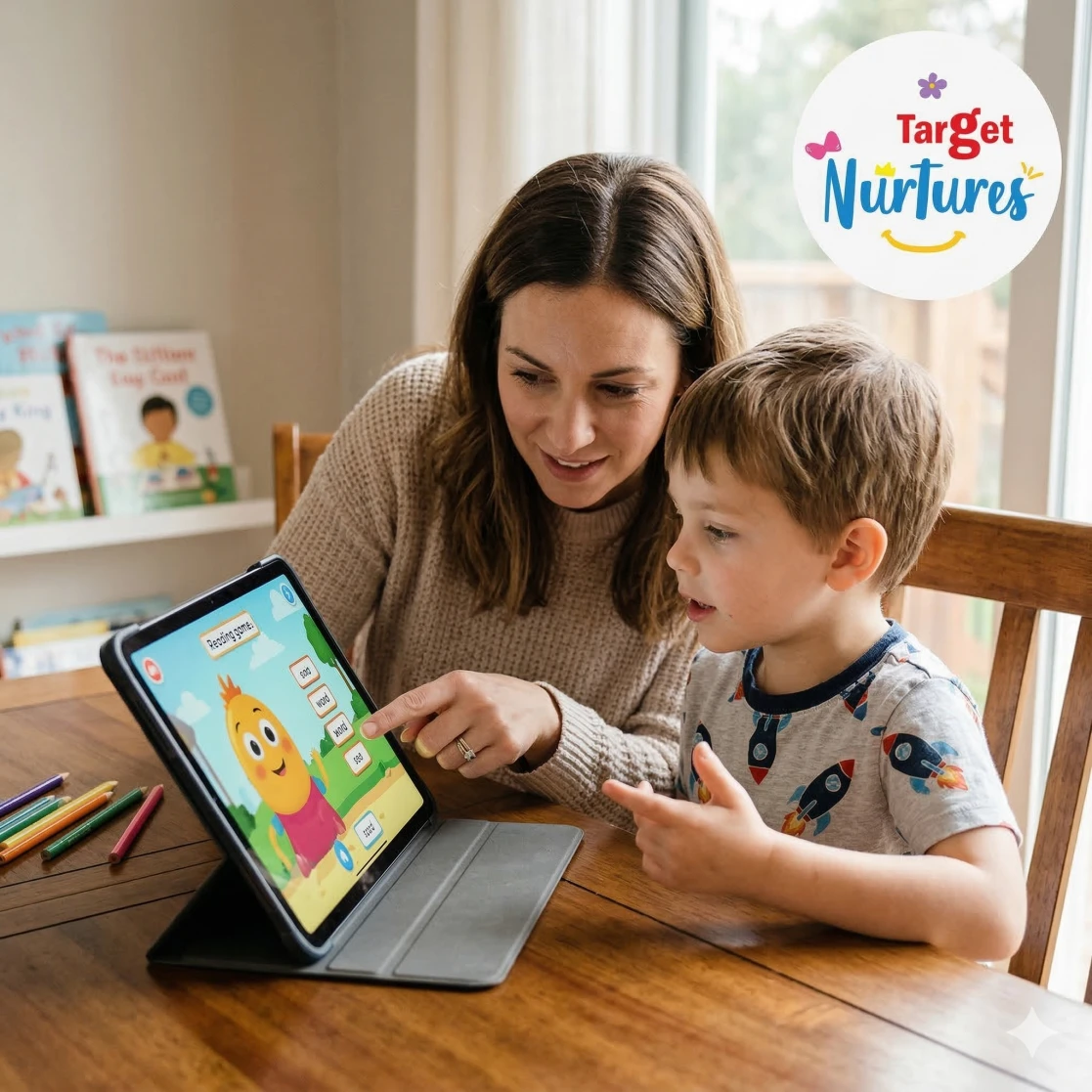
A Parent Guiding a Child While Exploring AI Learning Tools Together
Combining AI Tools With Books and Traditional Learning
One of the most effective ways to use AI for kids’ learning is to combine it with traditional resources.
-
Use AI to introduce topics
Children may ask AI questions like 'Why do whales live in oceans?' or 'How do volcanoes erupt?' These quick answers can spark curiosity about new concepts.
-
Deepen learning through books
Once curiosity begins, children often enjoy exploring colourful Knowledge books, picture encyclopedias, or Activity-based learning materials that explain topics in greater detail.
-
Encourage reading alongside technology
Using books alongside AI ensures that children build reading habits while still benefiting from modern tools. This balanced approach strengthens both curiosity and comprehension.
Traditional resources continue to play an important role in building knowledge, while AI adds an extra layer of exploration for toddlers.
Fun Learning Activities Kids Can Try Using AI
When used creatively, AI can also support engaging learning activities for children.
-
AI-powered quiz games
AI can generate simple quiz questions about animals, countries, or planets. These mini quizzes make learning interactive and enjoyable for kids.
-
Creative storytelling with AI
Children can ask AI to help create short stories about animals, space adventures, or historical heroes. Parents can then encourage kids to illustrate the stories in drawing sheets.
-
Exploring new topics together
Kids may ask AI questions about dinosaurs, oceans, or famous landmarks. Parents can extend these discoveries by showing related pictures or reading short explanations from General Knowledge books.
-
Question-of-the-day learning
Families can introduce a 'question of the day' activity where children ask AI about something they are curious about, and then discuss the answer together.
These simple activities help children see AI as a tool for exploration rather than just a shortcut for answers.
Conclusion
AI is quickly becoming part of the learning environment for children. Instead of avoiding it completely, parents can guide kids to use AI thoughtfully and responsibly.
When combined with reading, creative activities, and everyday conversations, AI can become a helpful tool that supports curiosity and discovery. With the right balance, children can enjoy the benefits of technology while continuing to build strong learning habits.
Frequently Asked Questions
1. At what age can children start using AI learning tools?
Ans: Children can begin exploring simple AI learning tools around primary school age with parental guidance. Supervision ensures they understand how to ask questions and interpret answers responsibly.
2. Can AI replace books in children’s learning?
Ans: AI should not replace books. Reading books helps children develop imagination, vocabulary, and concentration, which are essential skills that technology alone cannot fully provide.
3. Is AI safe for children to use for school learning?
Ans: AI can be safe when used with parental supervision. Parents should guide children on responsible use, verify information together, and encourage independent thinking while using AI tools.
4. How can parents monitor children’s AI learning?
Ans: Parents can monitor AI learning by staying involved, discussing answers together, encouraging curiosity, and ensuring children use AI for exploration rather than simply copying ready-made responses.