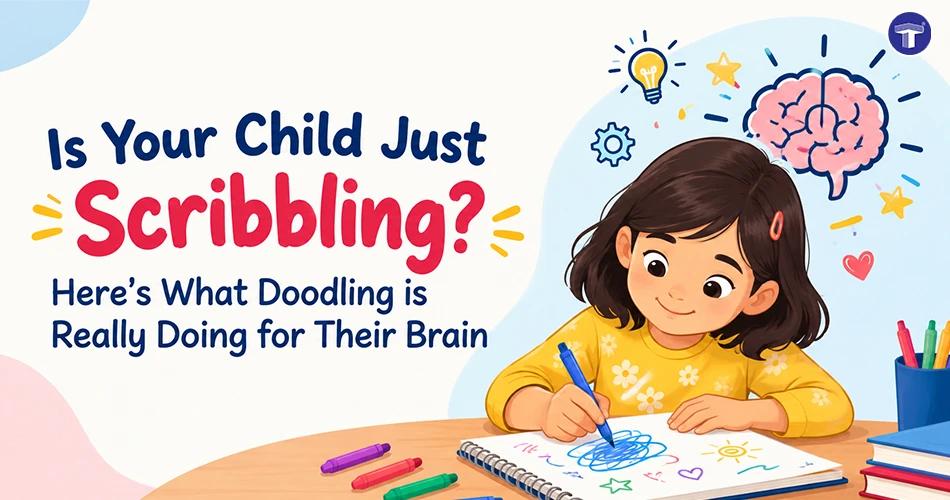
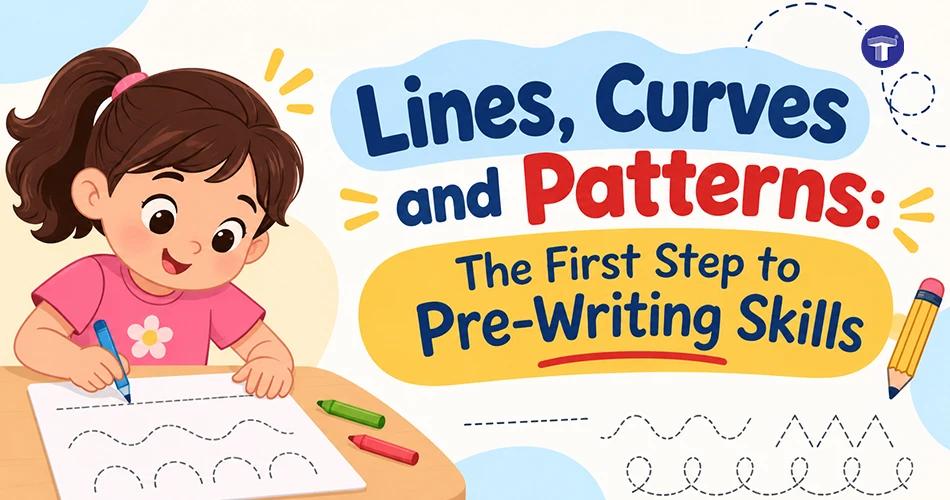
Does your little one love drawing endless lines across a page? Perhaps their favourite masterpiece is a compilation of wobbly circles or zigzag lines that run off the paper. Those playful marks are actually the beginning of pre-writing skills.
Before children form letters, they explore movements that help their hands follow a path. And with a few everyday games, pre-writing activities for preschoolers can feel more like a playful adventure than a formal lesson.
Why Lines, Curves, and Patterns Matter for Pre-Writing Skills
- From random scribbles to purposeful strokes: At first, children start with scribbling and doodling, with crayons travelling wherever little hands take them. Gradually, with fine motor development, children notice they can control the movement of a line.
- How pre-writing strokes prepare hands for letters: A straight line can become part of L; a circle can become O. All of this comes to rescue when the children start writing words.
Straight Lines First: Building Pre-Writing Skills
1. Up, Down and Across: Line Tracing for Kids
Let your toddler try drawing rain falling from clouds, a ladder with horizontal lines, or a straight road leading home. Begin with big strokes. Alphabet tracing books also supplement line tracing activities for kids.
2. Connect the Dots: A Playful Starting Point
Place two large dots on paper and invite your child to build a bridge between them. Not only does this build hand-eye coordination, but also matching skills from early on.
3. From Straight to Slanting: Exploring Diagonal Lines
When straight lines feel familiar, introduce a mountain slope or a slide. Diagonal strokes can be trickier, so offer plenty of space and let your child experiment at their own pace.
Pre-Writing Skills through Curves and Waves
Round and Round: Curved Line Tracing for Kids
1. Circles, Loops, and Spirals: Follow the Shape
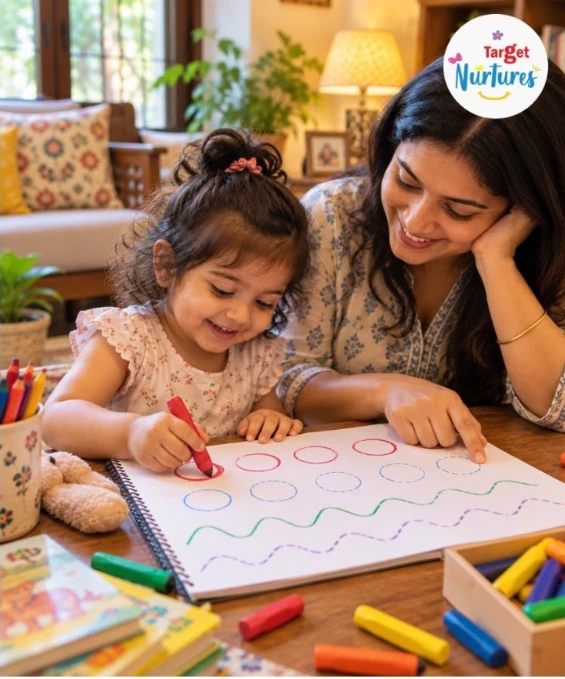
Draw bubbles and balloons together. Let your child trace a big circle in the air before trying one on paper. Curved line tracing encourages smooth hand movements and makes ordinary drawing wonderfully imaginative.
2. Waves and Rainbows: Making Curves Playful
Ask your child to model a paper boat sailing over wavy water or colour a rainbow. Help them draw clouds with wavy strokes, improving their drawing skills along the way.
3. Why Curves Help with Early Letter Shapes
Letters such as C, O, and U require curved movements. Practising these shapes through play makes the movements more familiar, although there is no need to rush into formal handwriting.
Zigzags and Repeats: Pre-Writing Patterns
1. From Lines to Zigzags: Pattern Tracing for Kids
Now combine the strokes! Make a mountain trail using slanting lines, then add a winding river. Pattern tracing for kids gives children chances to explore different movements while repeating the strokes.
2. Trace and Repeat: Memory and Confidence through Familiarity
Children often enjoy repeating something they recognise. Repetitions are easier to remember and recall, helping in a child's memory skills and brain development.
Fun Pre-Writing Activities at Home
1. Draw in Sand, Flour, or Rice
Spread a thin layer of flour or rice in a tray and invite finger-drawn lines and circles. Supervise closely and choose materials appropriate for your child.
2. Make Roads, Rivers, and Rainbows
Provide your child with a plain drawing book. Draw a straight road and turn tracing into a story, asking them to drive a toy car along the road, or make a curvy river flowing from zigzag mountains.
3. Trace, Colour and Create with Activity Books
When your child enjoys guided pages, age-appropriate tracing activity books and preschool activity books can offer fresh pictures and colourful illustrations.
Conclusion
In a child's early development years, every line, curve, and pattern acts as a small discovery. Together, these movements support pre-writing skills while giving children room to explore and create.
So, keep the crayons handy and encourage those wobbly masterpieces. Your child's writing journey does not begin with perfect letters. It begins with the joy of making a mark.
Important Links
Frequently Asked Questions
1. Are pre-writing activities fit for a two-year-old?
Yes. Many toddlers enjoy scribbling and making marks. Offer large paper and safe crayons, keeping activities playful rather than expecting accurate shapes or lines.
2. What if my child refuses to hold a pencil?
Try finger painting, chalk, or drawing in sand instead. Different materials allow your child to explore movements without making pencil grip a stressful task.
3. Are tracing worksheets necessary for preschoolers?
No. Worksheets are optional. Drawing freely, playing with dough and making marks on different surfaces can also support the coordination needed for early writing.
4. Should I correct my child’s pencil grip immediately?
Not usually. Pencil grasp develops gradually. Encourage simple drawing activities and seek occupational therapy advice if holding tools causes persistent difficulty.