Wherever there are 2 (or more) kids and some food or toy to be shared, one of them is bound to shout ‘That’s not fair!’ It's when parents realize the importance of teaching fairness to young kids. It can feel like a big job after a long day, but you really don’t need a lesson plan for this. Small, playful moments at home do most of the work.
Read along to find some easy fairness activities for young kids, plus a few gentle ways to handle the tricky bits.
Why Teaching Fairness to Young Kids Matters
Fairness is one of the first rules children care about. A 2012 study in Psychological Science found that 19-month-olds expected two puppets to get equal shares of toys. So your little one is already observing and wondering. The sooner the kids learn the sense of fairness, the easier forming friendships and learning social skills become.
Fairness Activities for Young Kids to Try at Home
Little ones learn best through play instead of strict schedules, so let’s keep things light. Try these five ideas one by one and notice the positive change in them.
-
Sharing Snacks and Taking Turns
Let the children be the ‘divider’ at snack time. One divides the grapes and the other gets to pick first. They will count very carefully, making numbers fun for them! While taking turns, use a sand timer, because the timer will always decide fairly, unlike humans.
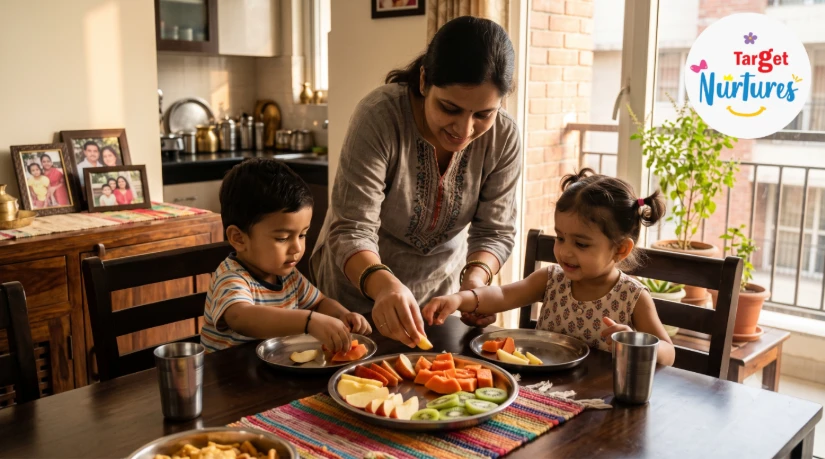
Toddlers learning fairness through shared snacks
-
Fair Play Games
Simple board games and pretend-play teach rules without any lecture. Then gently appreciate the good bits: ‘You waited for your turn. That was fair.’ Keep these rounds short so their little attention spans stay happy.
-
Storytime Lessons on Fairness
Pause mid-story and ask, ‘Was that fair to the little bear?’ This way you can understand your toddler's take on fairness. A cosy pile of picture books and story books makes these chats easy to start.
-
Fair Shares through Chores
Toddlers must be encouraged to perform little jobs like putting socks in a basket. Maintain a sticker chart to record who did what, and a new colouring book can be given as a sweet appreciation for displaying teamwork.
-
The Fair Sharing Pizza Game
Cut a paper pizza into pieces. Ask your child to distribute it between two teddies, then three. Talk to them about what happens when one slice is bigger to show how to ensure fairness.
Fair and Equal are not always same
Here is the dilemma that confuses every parent. Fairness does not always mean the same as equality. If your infant needs multiple naps and your 3-year-old toddler does not, the rules differ. Try this: ‘When you used up your pencil, you got a new pencil. Your sister did not need one at that time. That was fair.’
Modelling Fairness at Home
Your child watches you, observes your reactions, and models your behaviour. Let them see you queue patiently, take turns choosing the film, or admit when you have been unfair. A small apology in case of unfair actions teaches fairness to young kids more than any formal lecture. Children copy what they see far more than what they hear.
Conclusion
Teaching fairness to young kids starts from an early age for all the right reasons. Once ingrained, fairness becomes part of their nature rather than just a rule they should follow. This skill will help your toddler make friends and build better social connections.
Pick one or two activities this week and see what your little one makes of them. A shared snack, a story, and a little patience go a long way.
Important Links
Frequently Asked Questions
1. What age should I start teaching fairness to young kids?
You can begin teaching fairness to young kids around age two, using simple turn-taking and sharing games. Keep it playful and short with lots of repetition.
2. Why does my toddler keep saying ‘that’s not fair’?
It usually means they are noticing differences in your conduct. Stay calm, talk to them, and explain simply what happened. This phase in toddlerhood passes soon.
3. How do I teach fairness between siblings?
To teach fairness to siblings, avoid comparing them. Give each child one-to-one time, let them take turns choosing, and praise teamwork whenever you spot it.
4. Should I make my child share things?
Forcing a behaviour can build resentment in a child’s mind. Offer them choices and praise sharing. Children share more when they feel they are in control.
5. What if my child cries when they lose a game?
This is normal. Stay calm and sympathize by saying ‘It’s hard to lose.’ Appreciate their efforts rather than just results.