Does your toddler request the same song five times before breakfast? You might know every word by heart, but your little one is discovering something new each time. Nursery rhymes make everyday moments feel playful and familiar.
Beyond the giggles, these catchy verses also support your child’s language development and memory. Here is why those simple tunes deserve a regular spot in your toddler's daily routine.
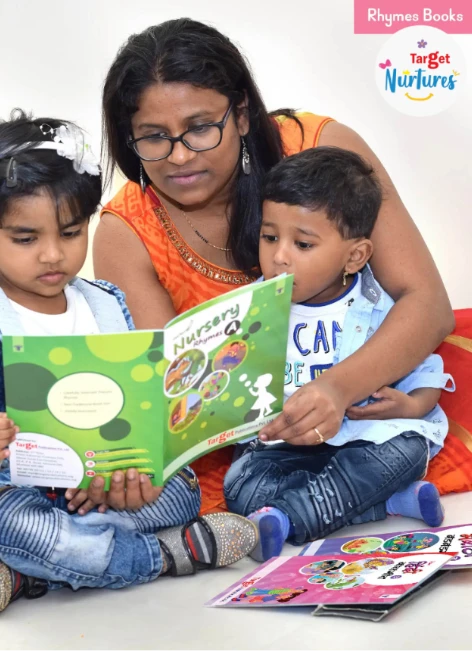
Toddlers enjoying nursery rhymes to build language and memory
More than Just Songs: The Hidden Benefits of Nursery Rhymes
Rhythm and repetition in rhymes invite children to join in. Familiar endings make them feel comfortable with words, even before clear speech begins.
-
How Rhyming Words Develop Phonological Awareness
When children hear matching sounds like ‘cat’ and ‘hat’, they begin noticing how words sound alike, eventually predicting the next word in a rhyme. This is called phonological awareness, an early literacy skill.
A study following 64 children found an association between nursery rhyme knowledge and later reading and spelling. It suggests a useful connection, not a guaranteed outcome.
-
Understanding Sounds, Syllables, and Word Patterns
Try clapping on each beat in ‘Humpty Dumpty’. Children gradually notice that longer words contain smaller sound parts. Repeated endings in a rhyme and familiar rhythms help the little ones predict sounds, even when they cannot explain the pattern yet.
-
From Repeating Words to Forming Simple Sentences
Copying Familiar Words: Your toddler might begin with repeating the ending words of a sentence, then attempt a whole phrase. And just like that, it won't be far when they begin their sentence formation journey.
| Activity | How to Identify |
| Listen | Your child hears the rhyming tune and starts recognising its rhythm. |
| Repeat | Familiar words become easier to identify and repeat after several enjoyable repetitions. |
| Recall | Eventually, your child may guess the next word without prompting. |
Listening, Repeating, Recalling: The Three Steps of Rhyme Learning
Fun Nursery Rhyme Activities for Kids
-
The Missing Word Game: Encouraging Memory Recall
To improve your child's memory skills, sing ‘Twinkle, twinkle, little…’ and wait. Let your child complete ‘star’ or simply point upwards. Their enthusiasm would show that they are following along.
-
Sing and Act: Combining Nursery Rhymes with Actions
Add simple movements like opening and closing your hands for ‘Twinkle Twinkle’. Movements offer another cue for understanding the words.
Follow their lead: If your toddler invents an action, copy it. Shared silliness keeps their attention and encourages participation.
-
Picture-to-Rhyme Matching: Connecting Words with Visuals
Open an illustrated picture dictionary and show your child some pictures of a star, a sheep or a duck. Now open a nursery rhyme book and ask them to match a nursery rhyme to it. This not only supplements their vocabulary but also their matching skills.
-
Rhyme Time at Bedtime: Building a Daily Learning Routine
Simple and flexible daily routines work best for toddlers. Whisper, hum or repeat a rhyme during bedtime, creating a predictable moment together. During the next bedtime reading session, your child may start anticipating each line.
-
Using Illustrated Nursery Rhyme Books for Interactive Learning
Illustrated nursery rhyme books make familiar words easier to connect with objects and actions. Go through a few pages daily and see how your child identifies the images and matches them easily with words.
Conclusion
Nursery rhymes do not need a dedicated time or a perfect singing routine. A familiar voice, a little repetition, and a few funny actions can turn ordinary playtime into meaningful learning moments.
So, when your toddler asks for that favourite rhyme again, happily sing along. Those simple nursery rhymes are quietly helping language and memory grow, one joyful verse at a time.
Important Links
Frequently Asked Questions
1. At what age can babies start listening to nursery rhymes?
Babies can enjoy gentle singing from birth. Your voice, facial expressions, and soothing rhythm make the experience comforting, even before they understand words.
2. Are action rhymes suitable for children who are not talking yet?
Yes. Pointing, clapping, and copying movements in action rhymes let children participate without speaking. These playful responses are valuable ways to communicate and share attention.
3. Should I sing nursery rhymes in my home language?
Absolutely, familiar songs in your home language support connection and everyday communication. Hindi rhyme books and Marathi rhyme books can be of assistance here.
4. What if my toddler loses interest halfway through a rhyme?
That is perfectly normal. Try a shorter verse, change the actions, or return later. Following their interest keeps singing enjoyable as well as fruitful.
5. When should parents introduce nursery rhymes to their child?
Parents can introduce nursery rhymes from birth. Gentle singing helps babies recognise familiar sounds, while toddlers gradually begin imitating words, actions, and rhythms.