
Every Indian parent eventually faces this moment.
One day, your child looks up and says, ‘Everyone has a phone. I want one too!’
Suddenly, you are questioning everything from parenting choices to your own screen habits.
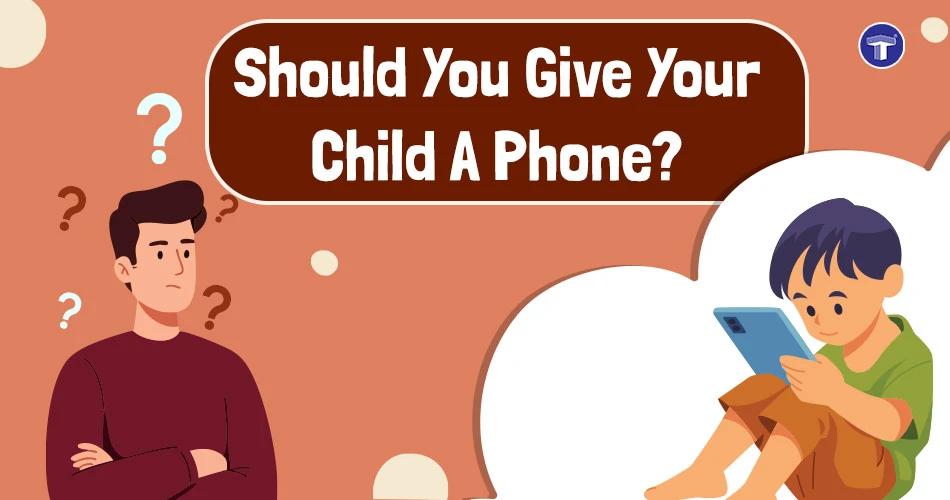
So, what age is right to give a child a phone? And more importantly, how does smartphone usage actually affect preteens and teenagers?
Let’s talk about it without judgement, panic, or tech guilt.
What is the Right Age to Give a Child a Phone?
Short answer:
Most children do not need a personal smartphone before their early teens.
Longer answer:
The ‘right’ age depends on developmental readiness, not peer pressure or convenience. A phone affects a preschooler very differently than a teenager, and lumping all children together is where confusion begins.
Let’s break it down by age.
Preschoolers (Ages 2 to 5): Why Phones Are a Bad Idea
For preschoolers, smartphones are not harmless distractions. At this stage, a child’s brain is still wiring basic skills like speech, emotional regulation, and social interaction.
Excessive screen exposure in early childhood has been linked to:
- Delayed speech and language development
- Shorter attention spans
- Increased temper tantrums when screens are removed
- Reduced eye contact and social engagement
- Early signs of social anxiety in group settings
Many parents notice that children who rely on screens struggle to self soothe without them. This happens because screens overstimulate the brain, making normal activities feel boring in comparison.
At this age, children need faces, voices, play, and boredom, not devices.
Practical guidance:
Preschoolers should not have personal phones. If screens are used at all, they should be shared, limited, and supervised.
Early Primary Years (Ages 6 to 9): Exposure Without Ownership
As children grow, curiosity increases. This is often when parents introduce screens for learning or entertainment. The risk here is not occasional use, but unsupervised, and habitual use.
At this stage, excessive screen time can:
- Affect emotional regulation
- Increase impulsive behaviour
- Reduce patience and frustration tolerance
- Interfere with peer play and imagination
Children in this age group still struggle to understand online boundaries, making them vulnerable to inappropriate content.
Practical guidance:
This is not the age for a personal smartphone. If needed, allow controlled access through a family device and make sure they follow screen time guidelines strictly.
Preteens (Ages 10 to 12): Proceed With Caution
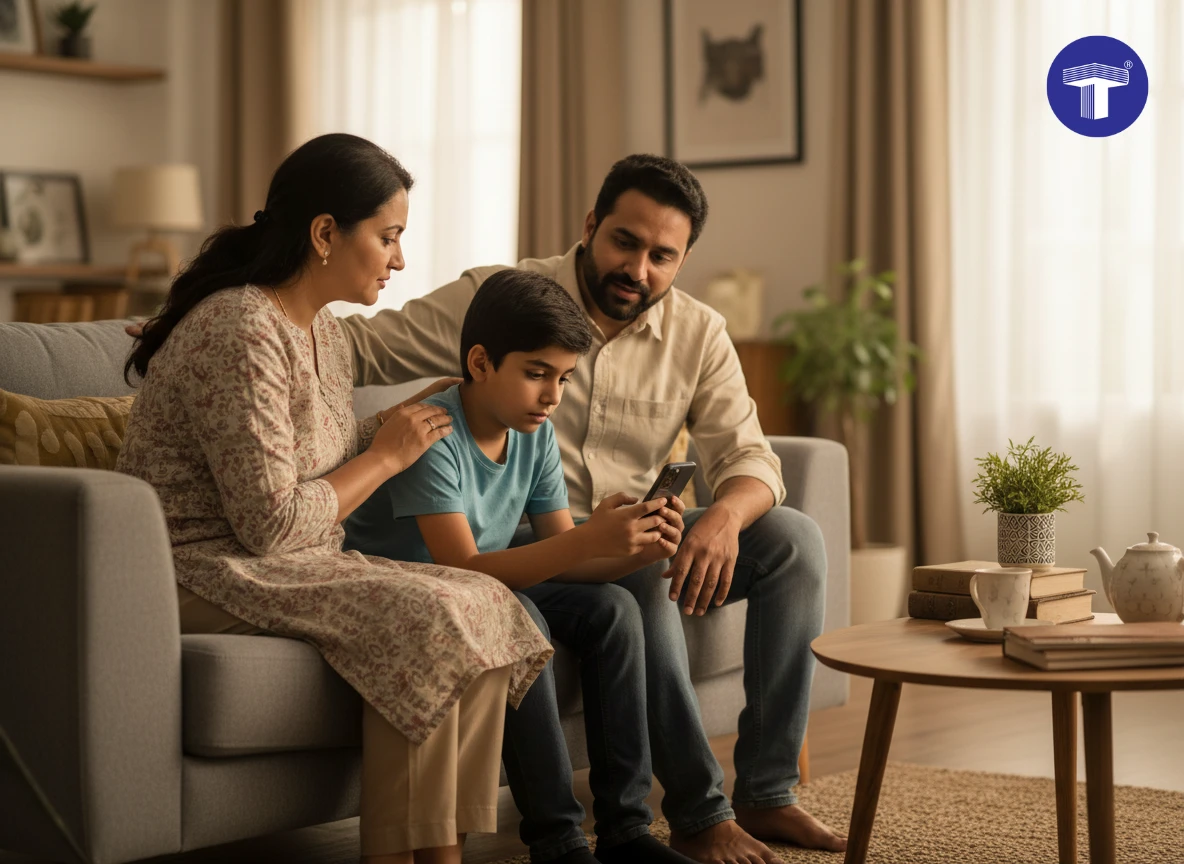
Parent guiding child on phone usage
This is where the question becomes harder.
Preteens may genuinely need a way to stay in touch, especially with changing school schedules and extracurricular activities. However, their emotional maturity is still developing, even as their screen exposure increases.
At this stage, increasing screen time effects on children often begin to appear:
- Mood swings linked to device use
- Reduced interest in offline activities
- Early dependence on validation through screens
Practical guidance:
If a phone is introduced, consider a basic phone or a smartphone with strong parental controls. Social media is not essential at this age.
Teenagers (Ages 13+): Focus on Boundaries, Not Just Age
By the teenage years, the question is no longer whether they should have a phone, but how they use it.
While phones help teens stay connected, poor boundaries can intensify:
- Anxiety and low self esteem
- Sleep disruption
- Social media comparison and pressure
This is where clear phone rules for teens matter more than the device itself.
Practical guidance:
Teens need structure, not surveillance. Parents should monitor their child’s phone transparently, focusing on conversations rather than control.
Why Parents Feel Conflicted
Many parents sense something is off but struggle to articulate it. The truth is, phones are introduced too early not because children need them, but because adults are overwhelmed.
Benefits of Smartphones for Children
Before we label phones as villains, let’s also acknowledge the positives.
Communication and Safety
For many parents, phones are about safety first. Location sharing, emergency calls, and staying connected offer peace of mind. There is a clear difference between giving a phone for safety versus entertainment, and intention matters.
Learning and Exposure
When used mindfully, phones can support learning and creativity. However, balance is key when considering recommended hours of screen time.
Social Connection
For teens, phones help maintain friendships, especially during transitions like changing schools.
The Risks Parents Should Be Aware Of
This is where things get tricky.
Mental Health and Behaviour
Research increasingly highlights smartphone addiction in teens and its link to anxiety, low self esteem, and mood swings. Many parents notice clear signs that a teen is addicted to their phone, such as irritability when access is restricted or a loss of interest in offline activities.
Sleep and Physical Health
Late night scrolling affects sleep quality. Over time, excessive screen use raises concerns about smartphones affecting child development and physical wellbeing.
Social Media Pressure
The social media impact on teens is significant. Comparison culture, cyberbullying, and validation seeking can negatively affect confidence. There are clear negative impacts of social media on teens, especially when boundaries are missing.
Do Smartphones Affect Academic Performance?
A common question parents ask is whether delaying smartphone ownership helps academics. Evidence suggests that limiting distractions can improve focus. Reduced screen exposure supports attention, routine, and learning, especially in younger children.
Schools also play a role. Many parents reconsider phone access based on school policies, which answers whether schools influence when parents decide to give children phones.
Practical Phone Rules for Indian Families
Instead of banning phones completely, a well-supervised approach works far better. Creating clear phone rules for children together helps set expectations while encouraging responsibility. Following screen time guidelines consistently, avoiding phones during meals and bedtime, and discussing online safety openly can build trust. As parents, you should monitor your child’s phone usage, but do it transparently rather than spying. Activating parental controls on devices can further support safe and age-appropriate use.
Final Takeaway for Parents
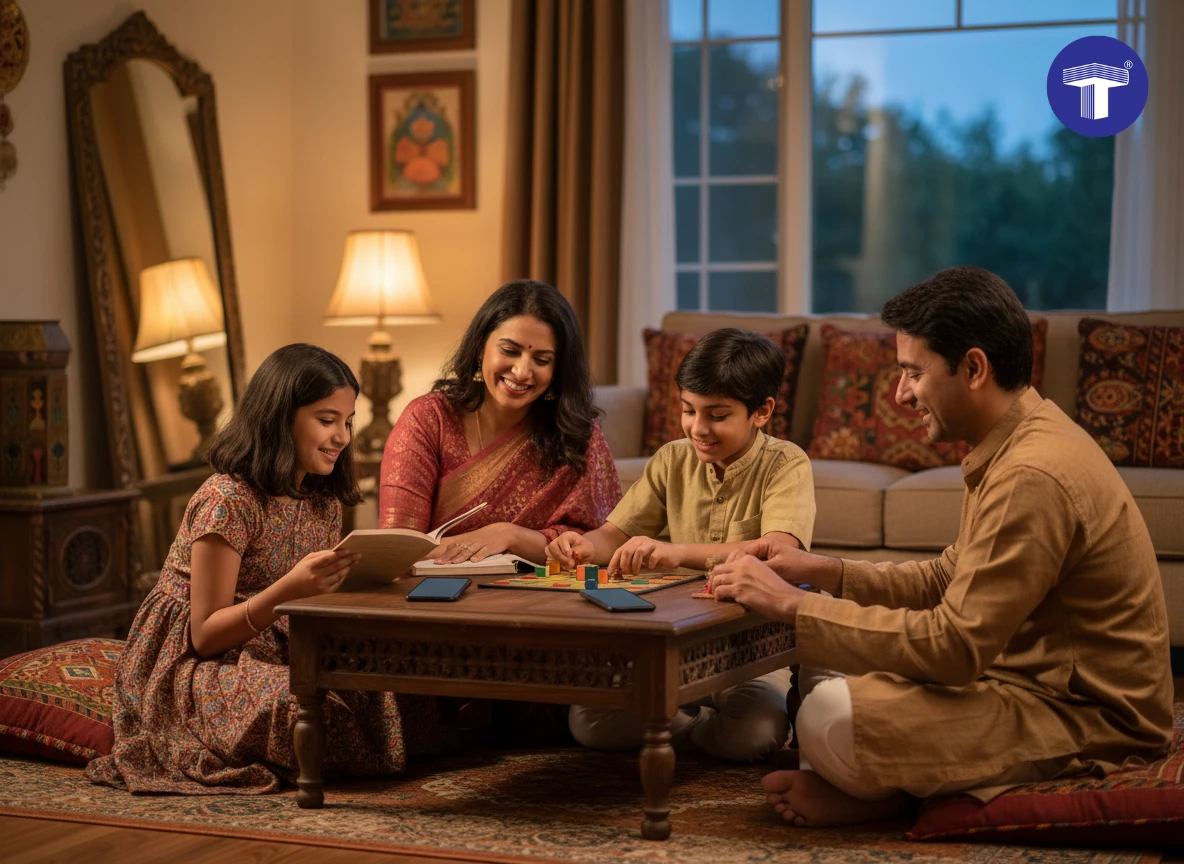
Healthy screen habits in Indian families
If you’re asking yourself what age is right to give a child a phone, the safest guideline is this:
- Preschoolers: No phone
- Early primary: Shared with limited access only
- Preteens: Delay if possible, restrict heavily
- Teens: Focus on boundaries, balance, and mental health
The goal is not to raise children who avoid technology, but children who are not emotionally dependent on it.
FAQs
1. Can delaying smartphone ownership improve a child’s academic performance?
Ans: Yes, delaying smartphone ownership can improve focus, attention span, and study habits. Reduced access to constant notifications and social media helps children concentrate better in class and during homework. Studies on screen time effects on children suggest fewer digital distractions often support stronger academic performance.
2. Is there a difference between giving a smartphone for safety versus entertainment?
Ans: Yes, there is a clear difference. Phones given primarily for safety focus on calls, messaging, and location tracking, while entertainment driven use increases risks of smartphone addiction in children. Setting a clear purpose for phone use, along with firm boundaries, helps limit excessive usage, and makes it easier to follow kids and screen time guidelines.
3. Do schools influence when parents decide to give children phones?
Ans: Yes, schools often influence parental decisions. Policies on device usage, digital learning requirements, and classroom distractions shape when parents feel a phone is necessary. Many families delay ownership when schools discourage phones, helping manage the impact of smartphones on children and classroom focus.