Your toddler has just handed you a sheet covered in wobbly lines. You smile, but secretly
wonder, ‘What am I looking at?’ If this sounds familiar, those little scribbles deserve a
second look.
Scribbling in children is not simply a messy pastime. Every swirl, dot, and zigzag offers a
chance to explore movement, ideas, and feelings. So, what is doodling really doing for your
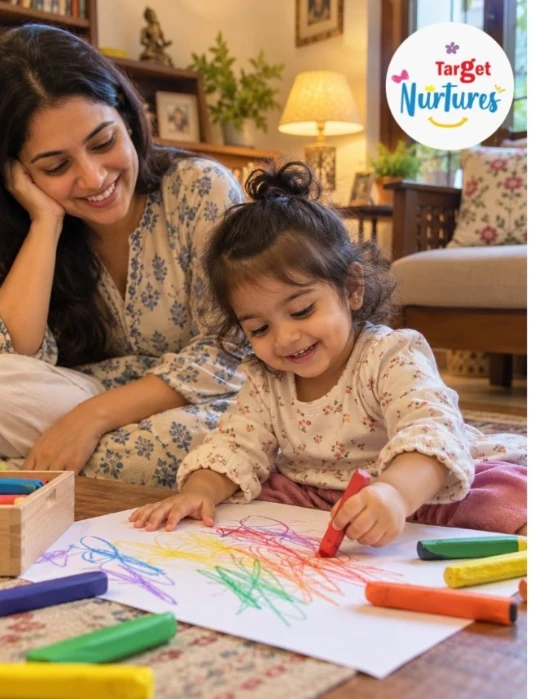
Toddler Enjoying Scribbling and Creative Doodling
The Science Behind Scribbling
When little hands move a crayon across paper, the eyes, the muscles, and the brain work together. Children notice the scribbles they make and experiment with repeating or changing them. A circle might start as a simple movement and later become a balloon. That's a fascinating leap from exploration to meaning.
A 2015 study of children's early drawings examined 13 examples from children aged up to three and described how scribbles can communicate intentions and experiences. It was an exploratory analysis, not a proof that every mark has a hidden meaning.
Hidden Benefits of Doodling for Kids
-
Scribbling Builds Fine Motor Skills
Watch how your child holds a crayon, presses down on paper, and changes direction. These small adjustments help practise hand control and coordination. Chunky crayons and large sheets of paper can make fine motor activities for toddlers feel wonderfully effortless.
-
Doodling Sparks Creativity
Is that doodle a snake, a river or a rocket? There is no single correct answer. Free doodling invites children to invent possibilities. Jumbo colouring books can introduce interesting and new shapes, while blank pages leave room for their own unexpected creations.
-
Scribbling Encourages Problem-Solving
Perhaps your toddler wants to draw a long tree trunk, but the pencil keeps slipping. They try a different pencil grip, slow down, or begin again. Such tiny experiments encourage flexible thinking and problem-solving abilities in kids without the pressure of getting everything right.
-
Doodling Helps Express Emotions
Sometimes children cannot find the exact words to describe a sunny day or a frightening moment. Drawing offers another way to share experiences. Let your child draw anything that they can think of at that moment and gently ask what it means to them.
-
Doodling and Attention Span
Doodling and scribbling offer endless possibilities for a child to explore, luring them to stay at it for a bit longer. To bring out their true creativity, follow their interest rather than demanding a finished picture. Doodling increases a child's attention span, but it does not automatically improve attention or memory.
-
Scribbling as a Pre-Writing Skill
Before toddlers start writing letters, they begin with loops, strokes, and playful marks. These movements support pre-writing skills and help children discover that doodles can carry messages.
The National Association for the Education of Young Children recognises early drawings and symbolic markings as part of emergent writing. Simple alphabet tracing books can complement, not replace, free scribbling.
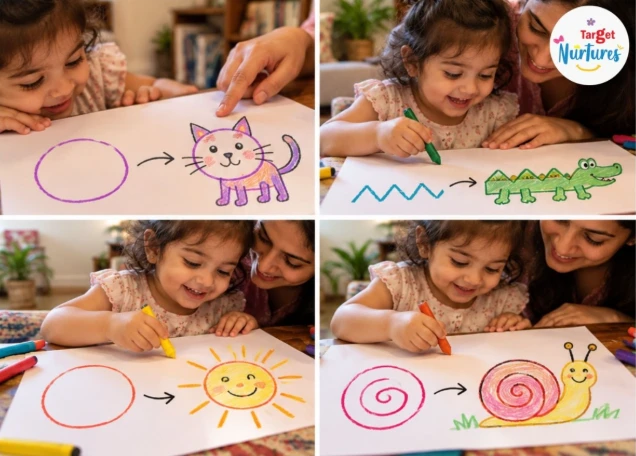
Parent and Child Exploring Fun Doodling Activities
Fun Doodling Activities for Preschoolers
-
Scribble and Tell
Hand over paper and crayons to your little one, then invite them to explain their masterpiece. ‘Who lives in this picture?’ or ‘What happens next?’ can open a delightful conversation.
-
From Doodles to Pictures
Draw a loose circle or zigzag and ask, ‘What could this become?’ Let your child add details, colours, or funny characters. Illustrated picture books can offer fresh inspiration. The surprise is half the fun!
Conclusion
The next time your child presents a page of mysterious squiggles, remember that scribbling and doodling in children can support motor practice, imagination, communication, and early writing. Their picture does not need to look perfect to be valuable.
Keep the crayons handy, make space for a little mess, and enjoy listening to stories that stretch boundaries. Your little help throughout will surely go a long way.
Important Links
Frequently Asked Questions
1. At what age do toddlers start scribbling?
Many children begin scribbling around 12 to 18 months, although timing varies. Make sure to offer age-appropriate crayons when your child shows interest in drawing.
2. Should I teach my toddler to hold a pencil correctly?
Minor corrections are welcome, but never force them to adopt a certain pencil grip. Young children develop different grips as hand control improves. Offer comfortable drawing tools and seek professional advice if you notice persistent difficulty.
3. Is scribbling on walls normal for toddlers?
Yes, toddlers may doodle on surfaces without understanding boundaries. Calmly redirect them towards large paper sheets or a washable drawing board in a designated space.
4. How long should a preschooler spend doodling?
There is no fixed daily target. Follow your child's interest, offer the right tools under supervision, and allow breaks whenever they become tired, bored, or distracted.