
Have you ever noticed your child forgetting where they kept their toy or struggling to recall a simple instruction? These small moments are completely natural, but they often make parents wonder how they can improve memory in kids in a gentle and effective way.
The good news is that memory development in children does not require strict routines or pressure. With the right mix of play, activities, and everyday habits, parents can support their child’s memory while keeping learning fun and stress-free.
Brain-Boosting Activities to Improve Memory in Kids
Brain-Boosting Activities to Improve Kids’ Memory
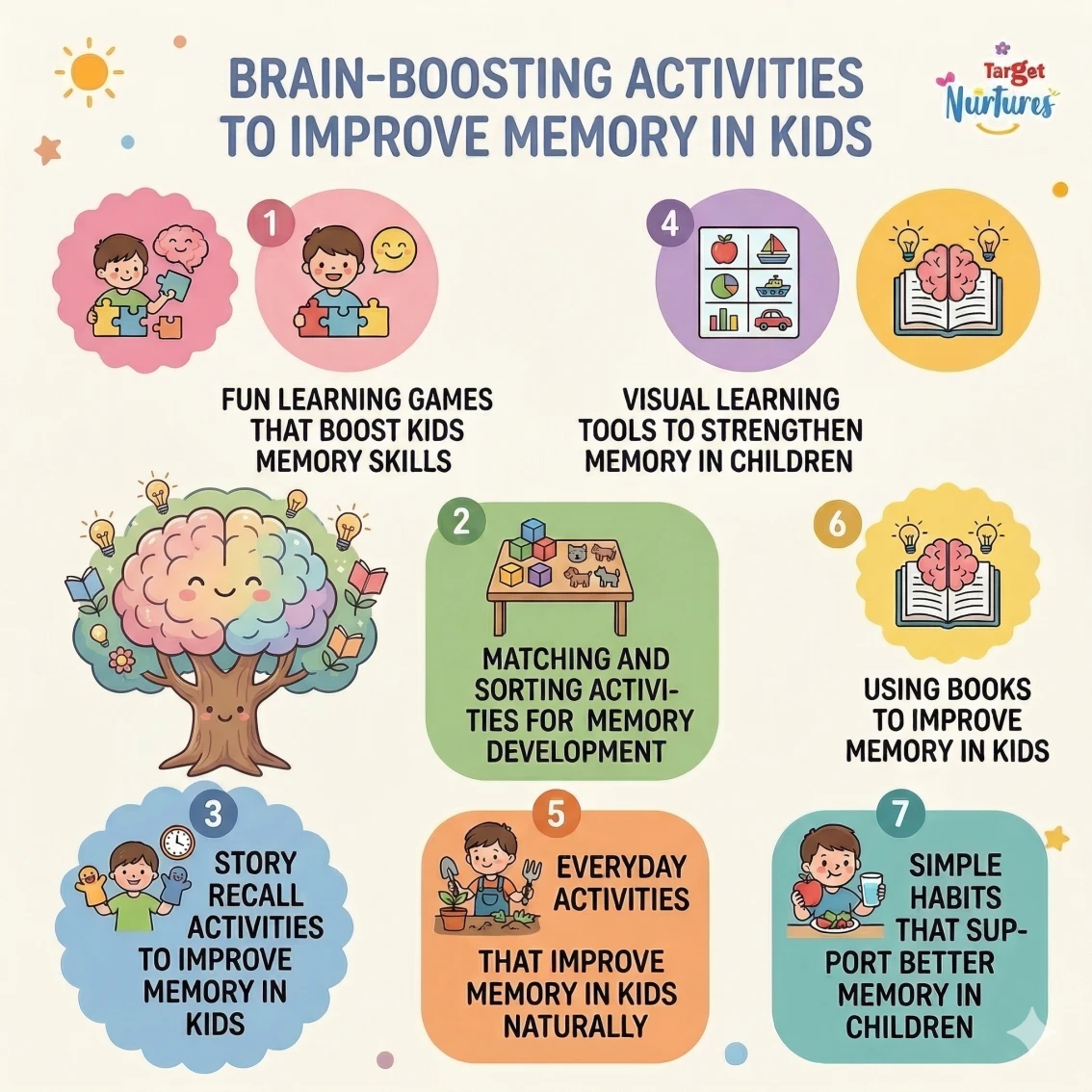
1. Fun Learning Games that Boost Kids’ Memory Skills
Playful learning activities make memory-building enjoyable and keep children actively engaged while strengthening their recall skills.
-
What changed?’ game
Place a few objects in front of your child, remove one, and ask them to identify what is missing.
-
Object recall games
Show a set of items briefly and ask your child to name what they remember.
-
Action-based memory games
Perform a short sequence of actions like ‘clap, jump, spin’, and ask your child to repeat it in the same order. This helps improve your child’s memory and coordination.
2. Matching and Sorting Activities for Memory Development
Matching colours, shapes, or objects encourages children to recognise patterns. Sorting animals, toys, or food items into groups helps them remember similarities and differences, which supports memory development in a playful way.
3. Story Recall Activities to Improve Memory in Kids
Reading short stories and asking children to recall what happened next helps improve memory in kids. Parents can gently prompt with questions like ‘Who was in the story?’ or ‘What did the character do?’
Using simple storybooks or activity-based reading materials often makes these moments more engaging and easier for children to follow.
4. Visual Learning Tools to Strengthen Memory in Children
Children remember better when they see things clearly. Flashcards and colourful charts help them connect images with information. Visual learning materials help children retain information effortlessly.
5. Everyday Activities That Improve Memory in Kids Naturally
Daily routines and small everyday moments can quietly support memory development in kids, making learning feel natural and effortless.
-
Following simple instructions
Asking children to complete small tasks like ‘bring your shoes’ or ‘keep your toy here’ helps them remember steps.
-
Repetition through daily habits
Repeating simple actions like naming objects or revisiting concepts strengthens your kid’s memory skills over time.
-
Talking about the day
Asking children what they did during the day encourages them to recall events and organise their thoughts, boosting their memory.
6. Using Books to Improve Memory in Kids
Books play a gentle yet important role in memory development.
Exploring picture charts, repeating simple lines, and using interactive learning kits help children memorise words and ideas. Many parents find that thoughtfully designed learning books naturally improve kids’ memory through repetition and engagement.
7. Simple Habits That Support Better Memory in Children
Along with activities, a few simple daily habits can gently support memory development in children and make a noticeable difference over time.
-
Proper sleep routines
A well-rested child can focus better and retain information more easily.
-
Calm learning time
Short, distraction-free learning moments help children absorb information effectively.
Conclusion
Improving memory in kids does not have to feel like a task. With simple brain-boosting activities, playful games, and everyday conversations, children can slowly develop stronger memory skills in a way that feels fun and comfortable.
When learning feels enjoyable, children stay curious and more willing to participate. Over time, these small and consistent efforts help build confidence, improve recall, and support overall memory development in a natural and meaningful way.
Frequently Asked Questions
1. What are the best activities to improve memory in kids?
Ans: Simple activities like memory games, storytelling, matching exercises, and daily recall conversations help improve memory in kids while keeping learning fun and engaging at home.
2. How long does it take to improve a child’s memory?
Ans: Memory improvement is gradual and depends on consistency. With regular activities, healthy habits, and encouragement, parents may notice small improvements in recall over a few weeks.
3. Can screen time affect memory in children?
Ans: Excessive screen time can reduce attention span, which may impact kids’ memory. Balanced screen use helps maintain better focus and memory development.
4. How can I tell if my child has good memory skills?
Ans: Children with good memory can recall instructions, recognise patterns, and remember stories. Observing these behaviours during daily activities can give parents a clear idea of memory development.
5. How can parents support their child’s memory development?
Ans: Parents can support memory development by engaging in daily conversations, playing simple memory games, and creating a calm learning environment that helps children retain information naturally.