
Colouring is often seen as a quiet pastime, something to keep children busy for a while. But for young kids, colouring is much more significant than filling shapes with colours. It is one of the earliest ways children learn to sit, concentrate, make choices, and express themselves without pressure.
Parents of pre-primary kids are constantly on a quest for screen-free activities that command genuine attention. But here’s the solution: colouring, when approached creatively, can evolve into a sophisticated tool for enhancing a child’s concentration and calmness. It helps turn a simple box of crayons into a high-engagement alternative to digital devices.
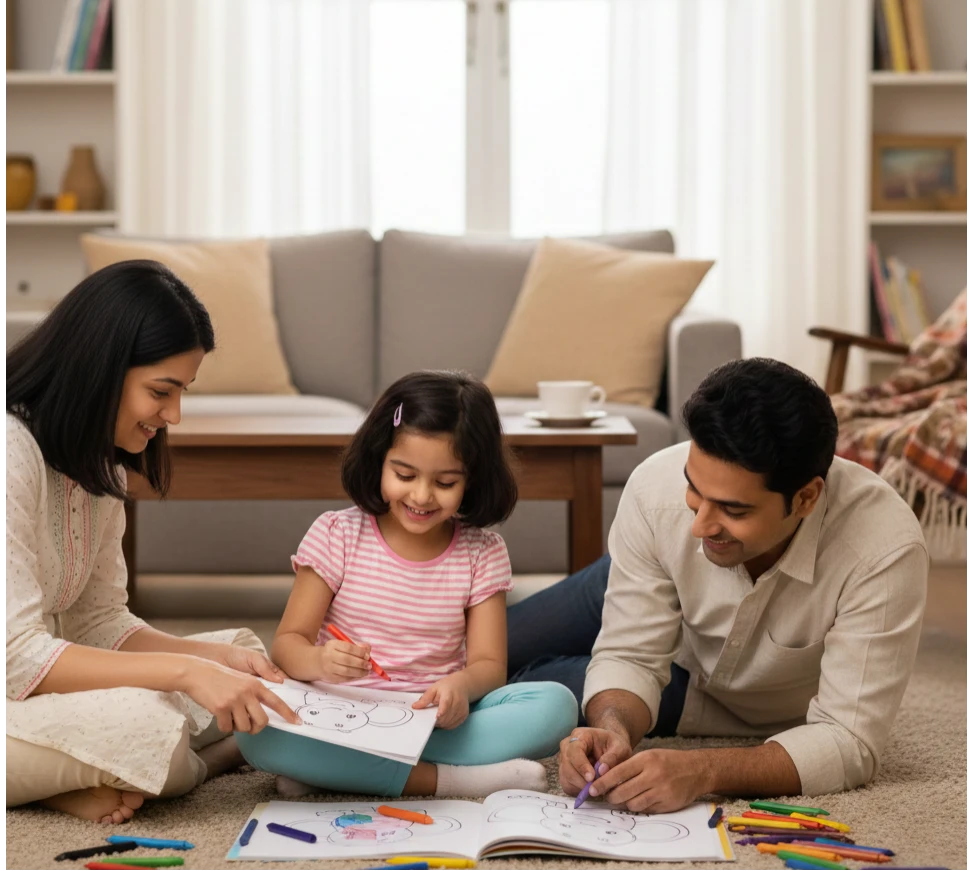
Parents guiding their child to practice creative colouring at home
This blog explores how colouring supports attention development and shares creative colouring activities. By practising these at home, parents can easily help children stay engaged for longer periods.
Beyond Crayons: How Colouring Helps Improve Focus and Engagement in Kids
In a study titled ‘Fine Motor Stimulation of Children Through Colouring Activities in Early Childhood,’ it was found that colouring activities help improve patience, self-control, and focus in children through observing and critical thinking. Here are some other benefits of colouring activities for kids:
-
Encourages Longer Attention Spans
Colouring helps children sit with one activity for longer without feeling rushed or distracted.
-
Builds Hand–Eye Coordination
Filling spaces and staying within lines connect what children see with how their hands move.
-
Improves Attention to Detail
Choosing colours and filling small areas teaches children to notice shapes, patterns, and boundaries.
-
Strengthens Task Completion Skills
Finishing a colouring page gently introduces the idea of starting, continuing, and completing a task.
-
Prepares Children for Classroom Learning
These quiet and engaging moments lay the groundwork for sitting, listening, and learning independently.
8 Creative Colouring Activities for Kids to Try at Home
Below are 8 creative colouring activities for kids designed to keep young kids interested while gently improving focus and engagement.
1. Theme-Based Colouring
- Choose colouring pages based on themes your child already loves, such as animals, vehicles, fruits, or nature.
- Familiar themes help children stay interested and reduce distractions while colouring.
Book suggestion: The Colouring Books Box Set offers relatable, child-friendly themes.
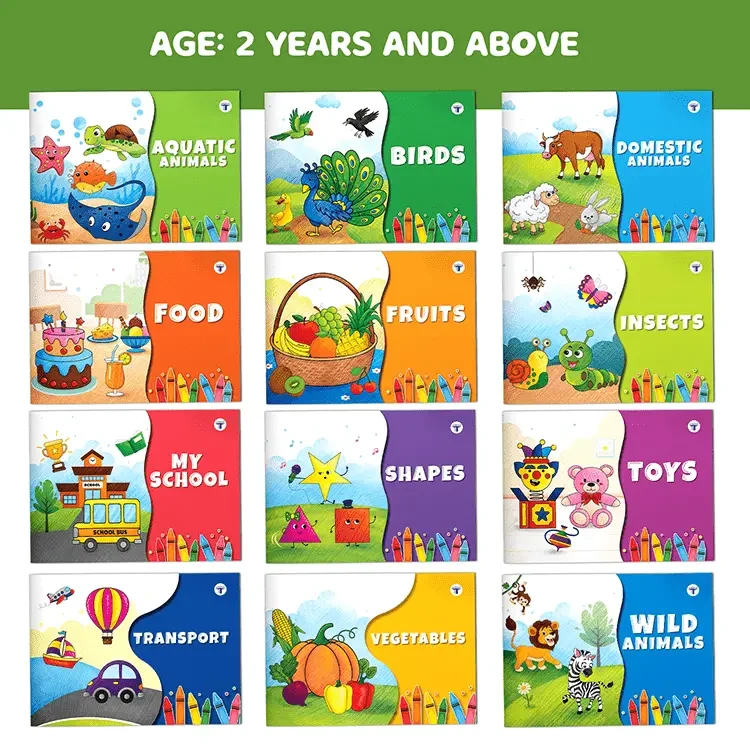
Target’s Theme-based Colouring Books Box Set (Pack of 12)
2. Colour-by-Story Pages
- Create a simple story around the picture and ask your child to colour characters or objects as the story progresses.
- Linking colouring with storytelling keeps children mentally engaged for longer periods.
3. Texture Colouring
- Let children colour over textured materials like leaves, cotton, or sand outlines placed under paper.
- The different surfaces make colouring more exciting and encourage exploration.
4. Colour and Trace Combo Sheets
- Ask your child to trace a simple line or shape before colouring the picture.
- This adds structure to the activity while keeping it playful and varied.
Book suggestion: The How to Draw Everything Book: Step-by-Step Drawing Guide pairs well with this approach.
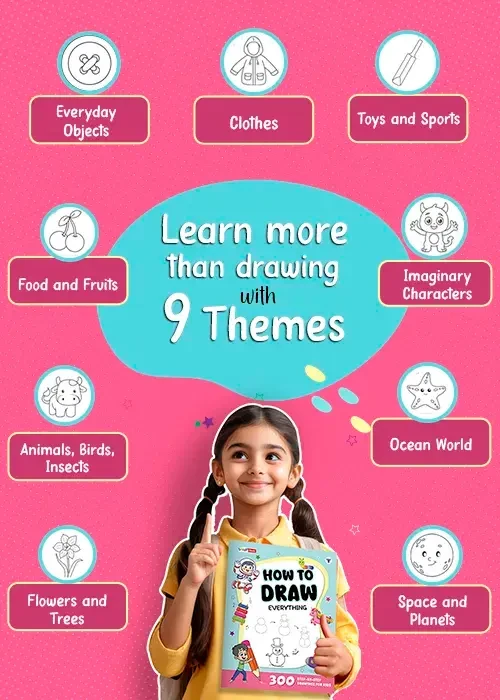
Target’s Step-by-Step Drawing and Colouring Guide for Preschoolers
5. Sticker-Guided Colouring Pages
- Place a few stickers inside or near shapes on a colouring page and ask your child to colour the remaining space around them.
- Working around fixed stickers encourages careful colouring and helps children slow down and stay focused.
6. Magic Reveal Colouring
- Draw shapes using a white crayon and let your child paint over them with watercolours.
- The surprise of hidden shapes appearing as they paint builds curiosity in children towards colouring.
7. Pattern and Repeat Colouring
- Create simple repeating patterns such as dots, stripes, or shapes for children to colour.
- Repetition naturally helps children stay focused and organised.
8. Large Floor Colouring
- Tape large sheets of paper on the floor.
- Ask your child to sit or move around and colour freely using big strokes and movements.
Book suggestion: Target’s Blossom Jumbo Colouring Books will work well for this setup.
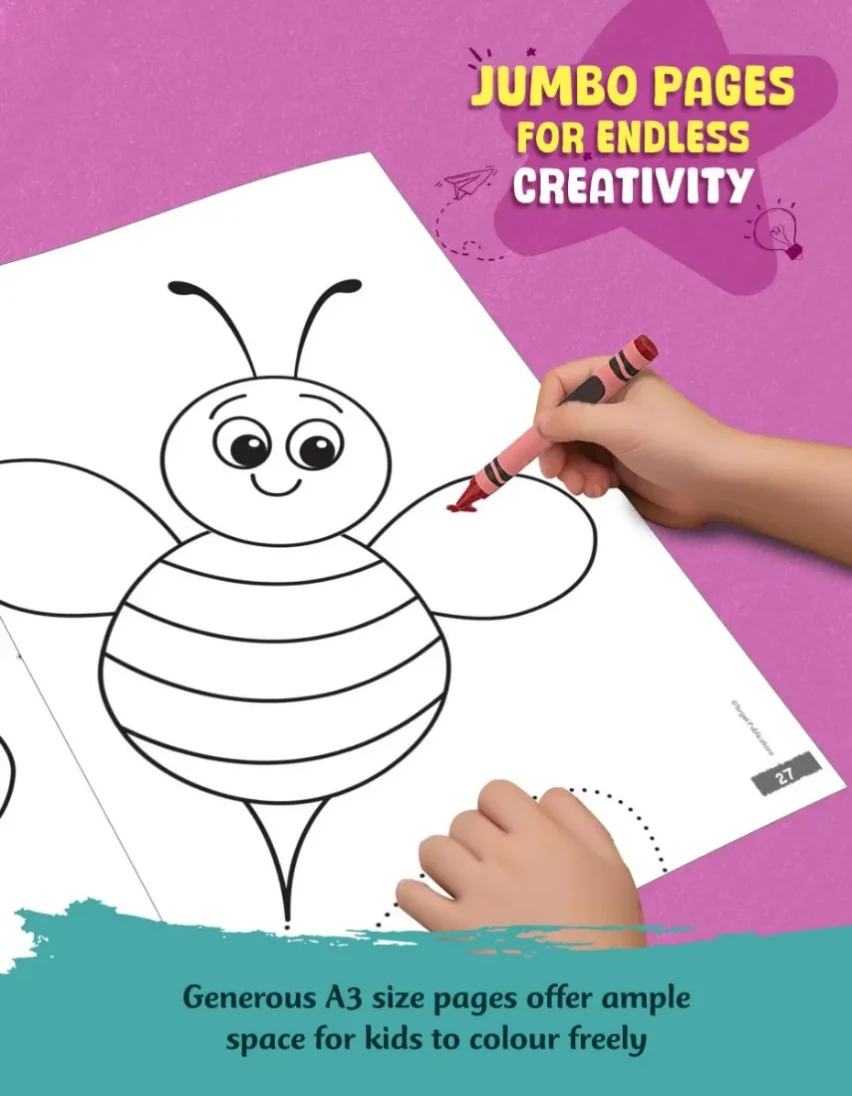
Target’s Large-Format Colouring Book for Kids
Age-Wise Colouring Ideas for Children
Different age groups benefit from different colouring activities for kids, designed to match their focus and developmental stages.
Ages 2.5–3 Years
- Use big shapes and thick crayons
- Free colouring without rules
- Focus on enjoyment, not neatness
Ages 3–4 Years
- Simple pictures with clear outlines
- Short colouring sessions
- Encourage naming colours while colouring
Ages 4–5 Years
- Introduce patterns and themed sheets
- Colour-and-trace combinations
- Slightly longer sitting time
Ages 5–6 Years
- More detailed pictures
- Calm colouring challenges
- Encourage finishing the colouring of the entire page
Matching colouring activities to age keeps kids engaged without frustration.
Common Colouring Mistakes Parents Should Avoid
Even simple colouring activities can lose their impact if handled incorrectly.
- Correcting every line or colour choice
- Expecting children to finish every page at a very young age
- Forcing long colouring sessions
- Giving too many tools at once
Colouring should feel relaxed and enjoyable, not like a task to complete.
Conclusion
Kids’ colouring activities don’t need to be fancy to make a difference. With a little creativity, simple colouring activities help children slow down, improve focus, and stay engaged.
For parents, these moments go beyond art; they offer time to connect, observe, and celebrate little progress. When colouring is pressure-free, kids naturally remain focused and enjoy the process.
Often, basic colouring tools like crayons and paper create the strongest foundation for early learning.
Frequently Asked Questions (FAQs)
1. Does colouring really help improve focus in kids?
Ans: Yes, kids’ colouring activities encourage sustained attention and controlled hand movement, which naturally improves focus over time.
2. At what age should kids start colouring?
Ans: Children can begin colouring around 2–2.5 years using thick crayons and large shapes, focusing on exploration rather than accuracy.
3. How long should a colouring session be?
Ans: For young kids, a 5–10-minute creative colouring session is ideal. Short sessions help maintain engagement without causing fatigue.
4. Is colouring better than screen time?
Ans: Colouring is a screen-free activity that encourages creativity, focus, and calmness, unlike passive screen engagement.
5. What colouring tools are best for young kids?
Ans: Thick crayons, washable markers, and triangular pencils are best for small hands and early control while colouring.