
In a world where screens compete for a child’s attention, it is easy to forget the magic of bedtime moral stories, especially those that have been passed down through generations.
Indian moral stories are more than just entertainment. They are lessons wrapped in adventure, humour, and heart. From the wisdom of the Panchatantra to Akbar Birbal short stories in Hindi with moral, these stories continue to teach children values that remain relevant in today’s fast-paced world.
If you are wondering which short Indian moral stories to share with your child, here we have listed five timeless treasures. Each one carries a moral that speaks to children today just as it did to us when we were young.
1. The Monkey and the Crocodile: Panchatantra
Summary: A clever monkey befriends a crocodile and offers him fruit every day. The crocodile’s wife, craving the monkey’s heart, manipulates her husband to betray his friend. The monkey uses his wit to escape and teaches a lasting lesson about trust.
Moral: Choose friends wisely and never betray trust.
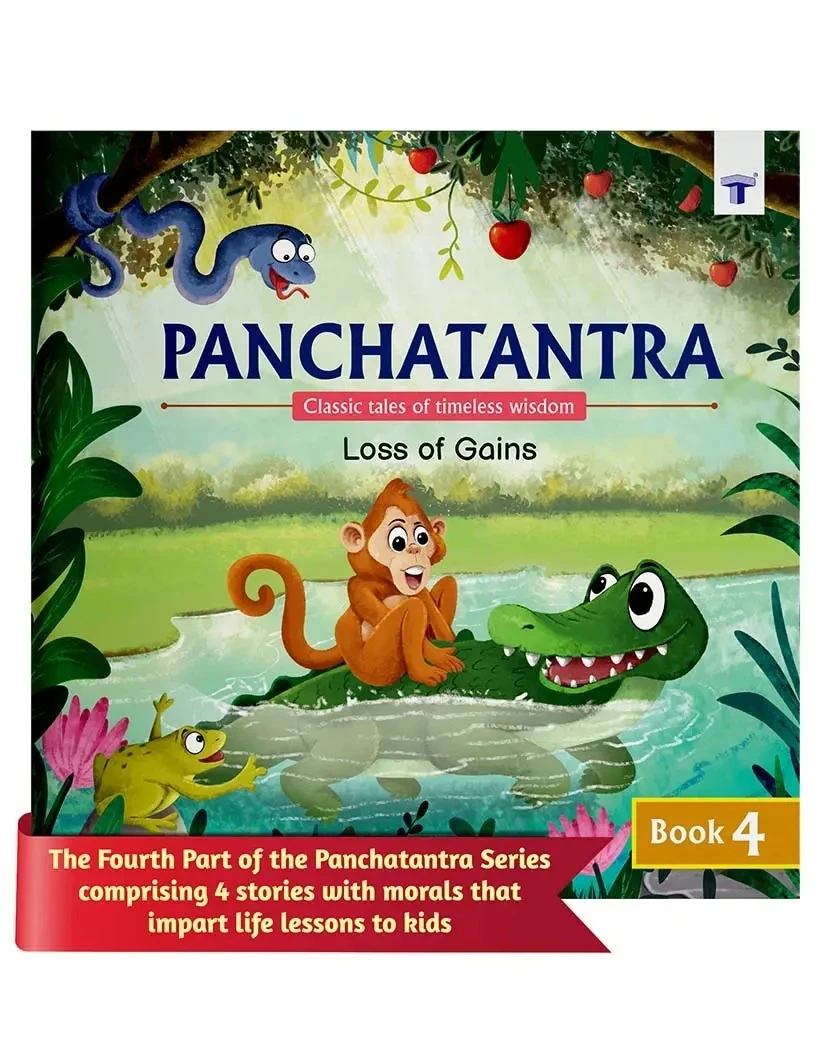
Panchatantra Story Book
Modern Parenting Connection: In a time where children form friendships online, this Panchatantra short story in English or Hindi reminds them to value loyalty and be cautious about who they trust.
2. The Thirsty Crow
Summary: On a hot summer day, a thirsty crow finds a pot with very little water. It drops pebbles in one by one until the water rises high enough to drink.
Moral: Patience and persistence can solve even the hardest problems.
Modern Parenting Connection: This short Indian moral story about a thirsty crow is ideal for teaching children problem-solving skills and showing them that quick solutions are not always the best answers.
3. Tenali Raman and the Thieves
Summary: Knowing thieves were targeting his home, Tenali Raman pretended to store valuables in a well. The thieves spent the entire night drawing water to find nothing and left exhausted.
Moral: Intelligence and quick thinking can overcome force.
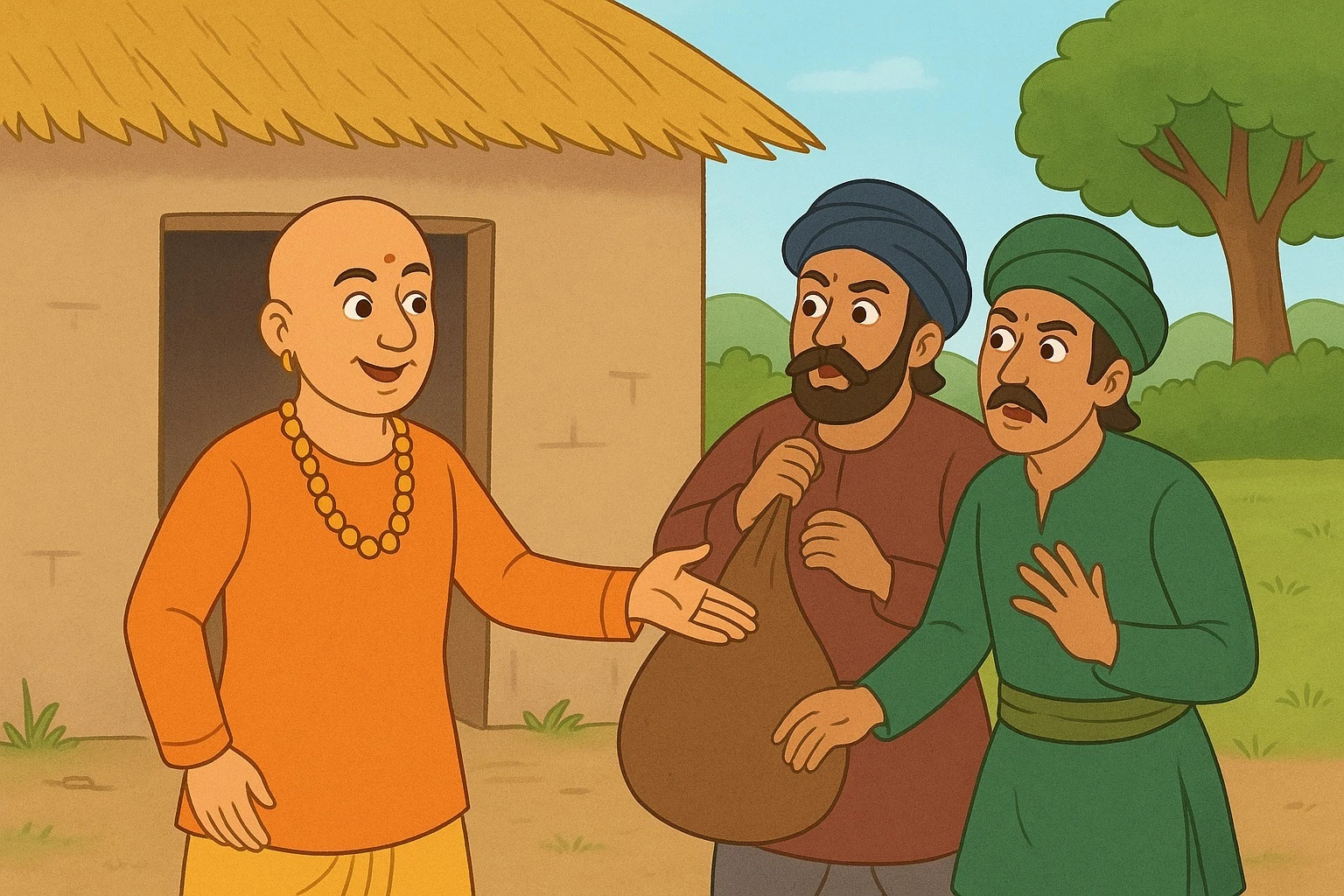
Tenali Rama and the Thieves Story
Modern Parenting Connection: In today’s competitive world, being resourceful is just as important as working hard. It is an evergreen lesson from short Indian mythological stories.
Fun Fact: Tenali Raman stands alongside Akbar Birbal short stories in Hindi, English, and other local languages as one of the most loved moral stories of India.
4. The Lion and the Clever Rabbit: Panchatantra
Summary: A lion terrorises the jungle. The animals send a rabbit to sacrifice himself, but he delays the lion by tricking him into attacking his own reflection in a well.
Moral: Intelligence wins over brute strength.
Modern Parenting Connection: Encourages children to think strategically instead of reacting without thought.
5. The Blue Jackal
Summary: A jackal falls into a pot of blue dye and becomes the jungle’s ‘king’ because of his unusual colour. His pride ends when he howls like a jackal, revealing his true identity.
Moral: Pretence does not last. Be yourself.
Modern Parenting Connection: In a world of social media filters and peer pressure, this short bedtime moral story reminds kids to value authenticity and self-worth.
6. Akbar and Birbal’s Clever Reply
Summary: One day, Emperor Akbar asked Birbal a tricky question: ‘How many crows lived in the city?’ Without hesitation, Birbal gave a specific number. When Akbar asked how he could be so sure, Birbal calmly explained that if anyone counted differently, it would be because some crows had flown in from nearby places or flown away. Akbar admired his clever response.
Moral: Presence of mind and confidence helps in handling even the most difficult questions or situations.
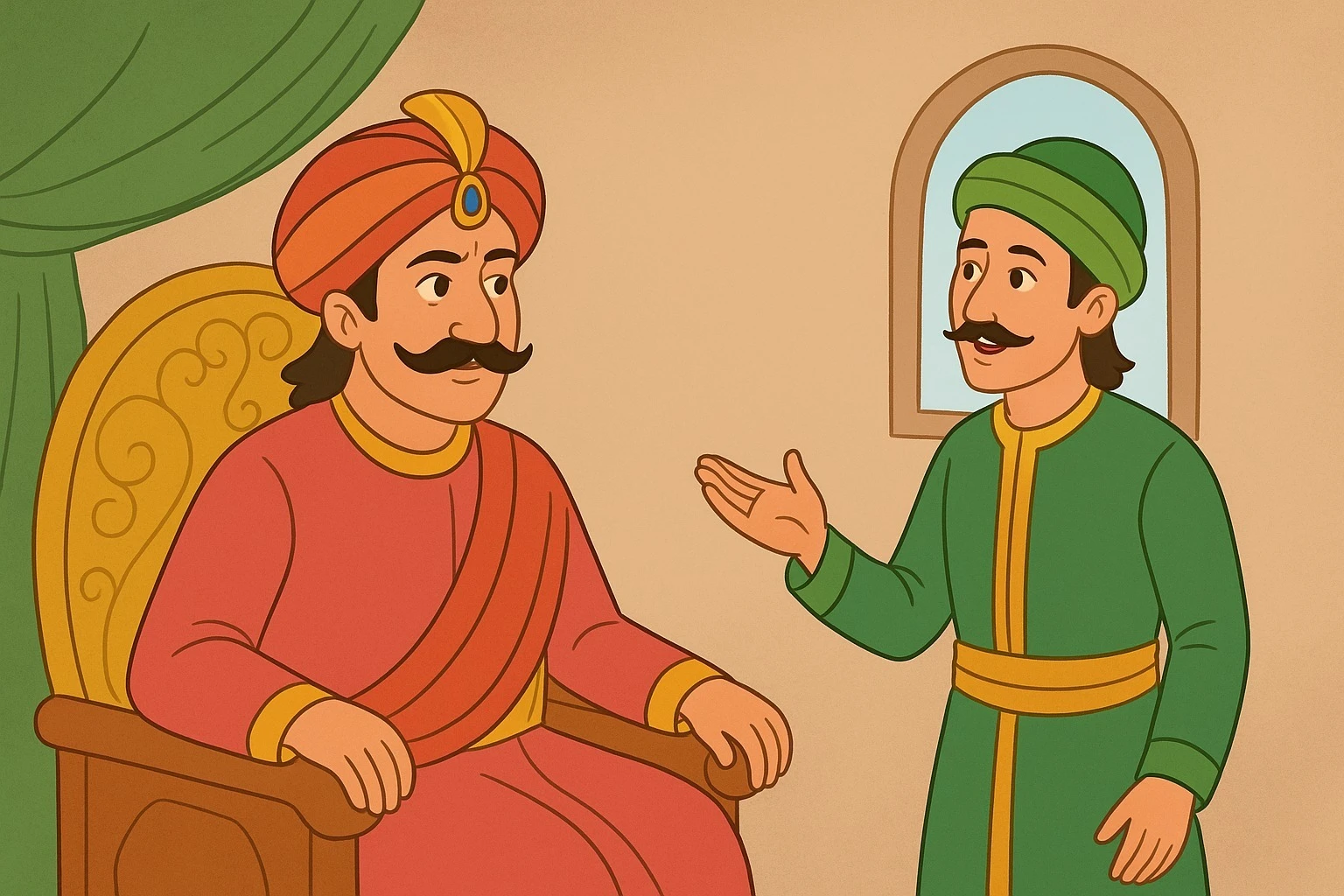
Akbar and Birbal Story
Modern Parenting Connection: The Akbar Birbal short story available in Hindi, English, or local language teaches children that quick thinking and self-assurance are just as important as knowledge.
Tips for Parents
Tip 1: Share a moral short story in Hindi once a week.
Whether it’s a Ramayan short story in Hindi or an Akbar Birbal short story in Hindi with moral, telling stories in the mother tongue strengthens cultural roots.
Tip 2: Use visuals for younger kids.
For toddlers, a Hindi short story with picture works best. It makes storytelling interactive and boosts imagination.
Tip 3: Make storytelling a ritual.
Bedtime is the perfect moment for moral bedtime stories. Sharing a bedtime moral story in English or short bedtime moral stories in Hindi before sleep helps kids absorb values while bonding with parents.
Why Indian Moral Stories Still Matter in Modern Parenting
From stories in Hindi with moral values to Indian short stories in English, these stories do more than entertain. They build emotional intelligence, empathy and resilience. When shared regularly, they can have the following effect:
- Strengthen the bond between parent and child
- Encourage curiosity and imagination
- Preserve cultural heritage in a way children can relate to
Final Thoughts
The next time your child asks for a bedtime story, skip the cartoon videos and choose one of these Indian short stories with moral values. You will be giving them a piece of heritage and a life lesson they will remember for years to come.
Frequently Asked Questions
1. Why are Indian moral stories still important for children?
Ans: They teach timeless values such as honesty, kindness and perseverance while helping children connect with India’s cultural roots.
2. Which Indian moral stories teach the best life lessons?
Ans: Panchatantra, Akbar-Birbal, and folk tales such as The Thirsty Crow and The Blue Jackal are excellent choices for moral learning and enjoyment.
3. Do moral stories help in improving a child’s emotional intelligence?
Ans: Yes. Moral stories help children develop empathy, understand consequences, and improve their problem-solving skills through relatable examples.
4. What is the best age to introduce moral stories to children?
Ans: You can start as early as three years old with simple short Indian moral stories and gradually introduce more complex tales as they grow.
5. What values can children learn from Indian folk tales?
Ans: Children can learn honesty, kindness, patience, respect, hard work and the importance of helping others from Indian folk tales. These stories also teach problem-solving and good decision-making.
6. How do Indian moral stories compare with modern children’s books?
Ans: Indian moral stories focus on cultural values, life lessons and traditional wisdom, often told through simple plots and animal characters. Modern children’s books may use colourful illustrations, fantasy and contemporary settings, but many still aim to teach similar values in a more visual and fast-paced way.