
Ever watched your little one try to pick up a tiny piece of cereal with those tiny fingers? Yes, it’s adorable, but it’s fine motor development in action! Fine motor skills involve the small muscles of the hands, fingers, and wrists, which help toddlers do everyday tasks like holding a spoon, turning pages, and eventually writing.
As a parent, understanding fine motor development can help you support your child most naturally and joyfully. The best part is that you don't need fancy equipment; just a little know-how and some playful activities will suffice.
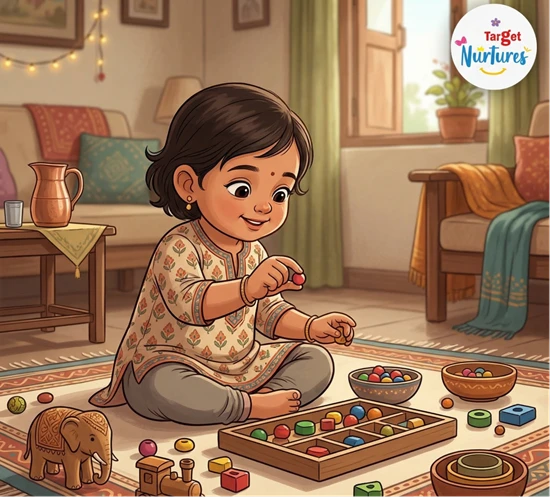
Toddler Practising Fine Motor Skills at Home
Fine Motor Development Milestones by Age (0–5 Years)
This is the heart of what every parent wants to know: 'Is my child on track?'
Below is a simple breakdown of fine motor development milestones by age. Remember, every child is unique, and these are general guides, not strict rules.
| Age | Fine Motor Development Milestone |
| 0–6 Months | Grasps objects placed in hand; moves fists to mouth |
| 6–12 Months | Picks up small items; uses pincer grasp |
| 1–2 Years | Turns book pages; scribbles; builds a 2-3 block tower |
| 2–3 Years | Opens jars; strings large beads; draws basic circles |
| 3–4 Years | Cuts with scissors; draws simple shapes; dresses with help |
| 4–5 Years | Writes some letters; uses a fork/spoon well; buttons clothes |
Research highlights that fine motor skills assessed in preschool can predict a child's reading, mathematics skills, and GPA outcomes up to eight years later, yet another reason to take fine motor skills seriously!
Fun Ways to Support Fine Motor Skills at Home
Supporting your toddler's fine motor skills doesn't have to be complicated; it just has to be fun. Here are some simple ways to get started.
1. Everyday Activities that Boost Fine Motor Skills
- Pouring water or rice into the containers
- Tearing and crumpling paper
- Squeezing sponges or playdough to build grip strength
- Stringing beads or threading laces
- Zipping bags or buttoning clothes independently
Even simple kitchen activities like stirring or spreading butter on toast count! The idea is to make fine motor skill-building a part of everyday life, not a separate 'lesson'.
2. Best Tools to Support Fine Motor Development
The right tools make all the difference, building blocks, puzzle sets, sorting toys, and art kits that naturally build grip and hand-eye coordination.
A good activity book or learning kit can work wonders, too, giving little hands a fun, structured workout, encouraging your kid’s fine motor development.
- Large-piece puzzles for toddlers
- Lacing and threading boards
- Play-dough sets with tools
- Peg boards and stacking rings
- Colouring books and thick crayons
3. Playtime that Builds Fine Motor Skills in Toddlers
Unstructured free play is just as valuable as guided activities in building kids’ fine motor skills. Let your toddler explore textures, shapes, and tools at their own pace. You'll be amazed at how much they pick up naturally.
Storybooks with interactive elements, like lift-the-flap or touch-and-feel pages, are a brilliant quiet-time option that sneaks in fine motor skill development practice too.
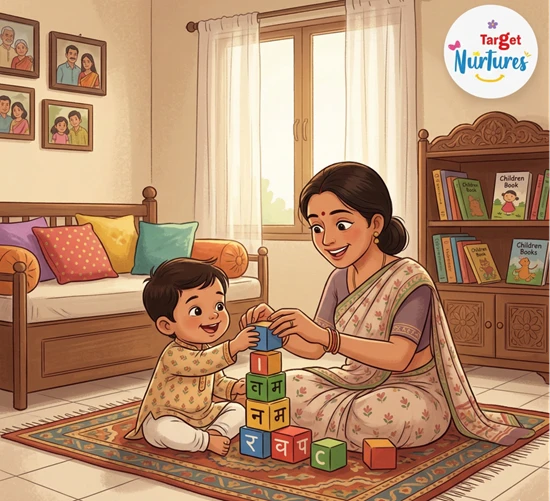
Parent and Toddler Fine Motor Play Activity
Conclusion
Fine motor development in kids might seem like a small thing, but it lays the foundation for their writing, self-care, and even confidence. Supporting your toddler doesn't have to be complicated or time-consuming; just play, explore, and be present.
Trust your child's fine motor development cues, and don't hesitate to consult your paediatrician if milestones seem delayed. You're already doing a wonderful job as a parent. Here's to many more tiny triumphs!
Frequently Asked Questions (FAQs)
1. At what age should fine motor skills develop in toddlers?
Ans: Fine motor skills begin developing at birth and progress through age 5. Significant milestones occur between ages 1 and 3, covering grasping, scribbling, and basic self-care skills.
2. What are the signs of fine motor delay in toddlers?
Ans: Fine motor delay in kids includes difficulty holding objects, avoiding drawing or colouring, trouble with buttons or zips, and reluctance to use fingers for small tasks beyond what's age-appropriate.
3. Can screen time affect fine motor development?
Ans: Excessive screen time may reduce hands-on play, which is crucial for fine motor growth. Balancing screen use with physical and playful activities is highly recommended by child development experts.
4. Should I be worried if my toddler uses only one hand?
Ans: A strong hand preference before age 2 can sometimes indicate developmental concerns. It's best to consult your paediatrician if you notice consistent one-sided use.
5. How does fine motor development connect to writing readiness?
Ans: Writing requires strong hand muscles, grip control, and hand-eye coordination, all built through fine motor development. Children with solid fine motor skills tend to adapt to writing more naturally and confidently.