
If your little one can go from giggling to a full meltdown in under ten seconds, you are not alone. Handling big emotions of toddlers is one of the most talked-about parenting challenges, and one of the most exhausting.
This blog covers what is really happening in your toddler's mind, practical daily habits to support their emotional development, and simple tools to handle those big-feelings moments.

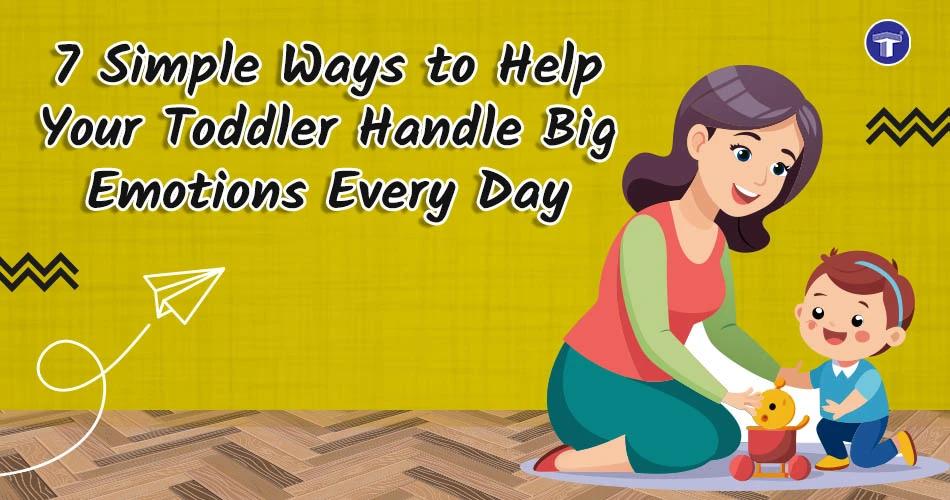
A parent comforting a toddler expressing big emotions
Understanding Toddler Emotional Outbursts
- The Brain is Still Under Development: A toddler's prefrontal cortex, responsible for impulse control, is still developing.
- Big Feelings, Small Body: Toddlers feel emotions just as intensely as adults but lack the vocabulary and tools of expression.
- It is a Sign of Trust: Toddlers tend to have their biggest meltdowns around the people they feel safest with. Their emotional outbursts show that they trust you with their hardest feelings.
7 Daily Habits to Help Toddlers Manage Big Emotions
1. Stick to a Predictable Routine
Toddlers thrive on predictability. Knowing what comes next reduces their anxiety and the chance of emotional overwhelm.
2. Narrate Emotions Out Loud
When you notice a big feeling in your kid, name it: 'You're feeling frustrated because the block fell, aren't you?' This builds a child’s emotional vocabulary in a natural way.
3. Create a Calm-Down Corner
A cozy spot at home with soft textures or a favourite toy gives your toddler a safe space to decompress. Stock it with early-learning activity resources that help them calm their minds.
4. Use Books and Play
Storytime creates a low-pressure space to explore big emotions. Storybooks and play-based learning tools with characters navigating feelings help toddlers make sense of their inner world.
5. Validate First, Fix Later
When a meltdown hits, a simple 'I see you're really upset, that's okay' goes a long way. Sometimes your calm presence is the most effective tool in handling a toddler’s big emotions.
6. Model Your Own Emotional Regulation
Children learn more from watching than from being told. Simply acknowledging and sharing your own emotions sets an example of expression for them.
7. Make Reconnection a Daily Ritual
After any big emotional moment, reconnect warmly. A hug or simply sitting together reinforces emotional support for toddlers, building long-term trust and security.
Teaching Toddlers to Name their Feelings
One of the most powerful things you can do is teach toddlers to name emotions. This skill, often called 'name it to tame it', helps children begin to regulate what they can identify.
- Keep the Emotional Vocabulary Simple: Start with four core feelings: happy, sad, angry, and scared. Slowly introduce words like 'frustrated,' 'nervous,' or 'excited.'
- Use Everyday Moments: Point out emotions in picture books. These playful moments build emotional intelligence in toddlers without any formal lesson.
Important Links
| How to Teach Moral Values to Kids at Home | How to Build Good Habits in Kids: A Parent’s Guide |
| What to Do When Your Child Is Bored at Home | How to Help Kids Make Friends: 6 Simple Tips for Parents |
Conclusion
Your toddler's big emotions are a sign of a developing, feeling little human. With a few simple daily habits and a lot of patience, you can help them build emotional resilience that will serve them for life.
Frequently Asked Questions
1. At what age do toddlers start to regulate their emotions?
Ans: Most toddlers begin developing basic emotional regulation skills between ages 3 and 4, with significant improvement by early school years.
2. Is it normal for a 2-year-old to have daily tantrums?
Ans: Yes, daily toddler emotional outbursts are completely normal at age 2. The brain's self-control centre is simply not yet developed.
3. How long should a toddler's meltdown last?
Ans: Most toddler meltdowns last 5 to 15 minutes. Staying calm and present helps your child recover from big emotions faster.
4. What is the best calm-down strategy for toddlers?
Ans: Deep breathing, a cozy calm-down corner, and a warm hug are among the most effective toddler emotional-regulation activities.