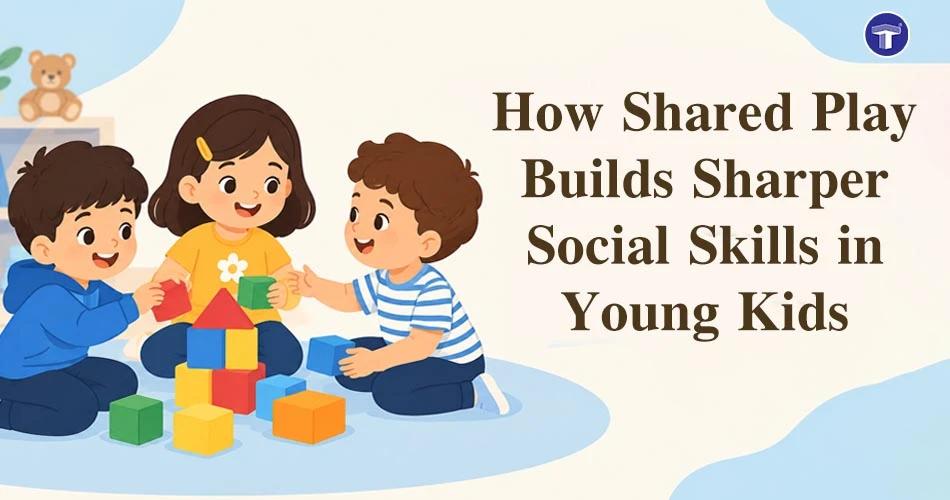


Does your little one drift off mid-lesson, start drawing on their notebook, or suddenly need a snack the moment books come out? Then you are not alone.
Most parents wonder why kids lose focus while studying, and it is one of the most common concerns we hear. Simple fixes do exist. But before getting to solutions, let us understand what is really going on in that busy little mind of theirs.
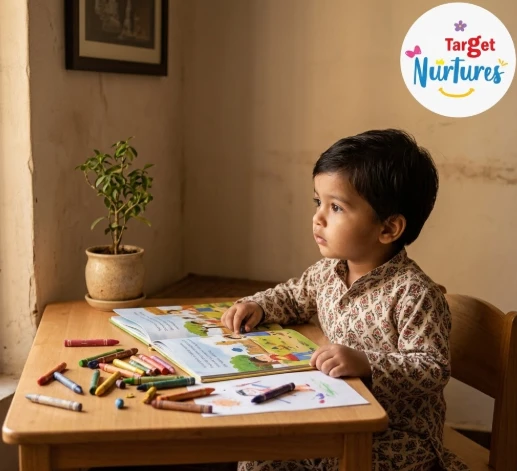
A distracted toddler at a desk with scattered books and crayons
Reasons Behind Short Attention Spans in Young Children
Children are not being difficult. It’s not their fault that their brains get distracted too easily. Here is what usually drives the distraction:
- Developmental stage: Toddlers have naturally short attention spans. Developmental experts generally agree that young children can focus for just a few minutes at a time, and that is completely normal.
- Overstimulation: A noisy room or a cluttered desk overwhelms a young child fast.
- Hunger or tiredness: A tired or hungry child simply cannot concentrate, which is even true for adults.
- Low interest: If an activity feels too hard or boring, little ones opt out of it quickly.
- Screen time habits: Fast-paced screens train young brains to expect constant stimulation, making active learning feel dull.
Simple Study Habits that Actually Improve Focus in Kids
You do not need fancy tools or a strict schedule. These five simple changes can make a real difference:
1. Create a Calm, Clutter-Free Study Spot
A tidy, dedicated study corner signals focus time. Keep it simple: a small table, good light, and engaging study material.
2. Use a Timer to Build Focus Gradually
Start with 10 minutes of study, then a 5-minute break. Slowly stretch study time as your child grows.
3. One Task at a Time
Build the habit of finishing one thing before moving to the next. It prevents children from losing focus on the current task and drifting off to another activity.
4. Add Movement Breaks
A quick stretch or short walk resets a child’s brain. Movement acts as a fuel for the next round of focus for your child.
5. Make Learning Hands-On and Fun
Puzzles, sorting games, and activity-based tools keep children focused far longer. Hands-on learning feels like play and children naturally stay at it.
How Play-Based Learning Helps Improve Children’s Attention Span
Play-based learning is one of the best ways young children develop focus. When absorbed in play, children practise sustaining attention without even realising it.
- Builds persistence: When a child wants to finish a puzzle, they endure through difficulty on their own.
- Encourages problem-solving: Learning through play encourages the child to take control of their actions and solve minute problems.
Important Links
Conclusion
Children are not expected to sit still for long stretches. Their curiosity, their wiggles, and even their distractions are signs of healthy, developing minds. What they need is not more pressure; it is the right environment and approach.
Small changes, done consistently, make a big difference in helping a child avoid losing focus while studying.
Frequently Asked Questions
1. At what age do children start to focus better while studying?
Ans: Focus in most children improves noticeably between ages 5 and 7, as their prefrontal cortex develops and a daily routine is established.
2. How long should a toddler study at a time?
Ans: For children aged 3 to 5, 5 to 15 minutes per session works best. Short, frequent sessions are far more effective than longer ones.
3. Can screen time really affect my child’s ability to concentrate?
Ans: Yes. Excessive screen-time lowers tolerance for slower tasks, making it harder to focus during reading or study time.
4. Should I be worried if my child cannot sit still while studying?
Ans: Not usually. Restlessness in kids is developmentally normal. But if it is significantly, do consult a paediatrician for guidance.
5. Does play really help children focus better in studies?
Ans: Absolutely. Play builds attention, persistence, and problem-solving skills, especially effective for improving children’s concentration.