
You might wonder about the right way to start the early education of your child at home. But, what you need is already right there: your voice, a few good books, and the willingness to get on the floor and play.
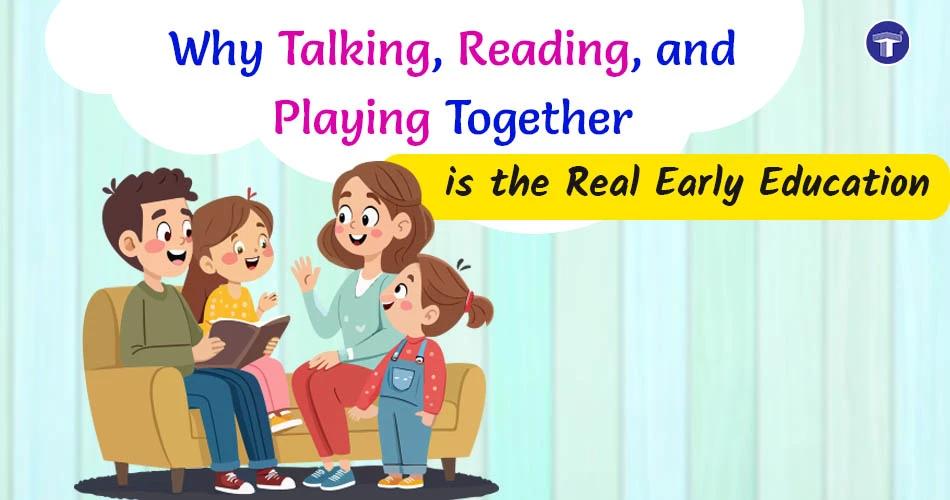
Talking, reading, and playing together is the real early education, and it begins the moment your child is born. Every silly conversation, every bedtime story, and every game of peekaboo is quietly shaping your little one's brain in ways that matter deeply.
Early Learning Through Talking and Playing Together
The First Classroom of Your Child
Before school, before tutors, your home is your child's first and most influential learning space. Every corner of it teaches something. Bath time, mealtime, and grocery runs are not just chores; they're mini lessons.
Long before a formal teacher enters the picture, you are the one who shapes how your child sees the world. A nurturing home environment directly supports your child’s cognitive growth, language development, and emotional intelligence.
Why Talking to Your Toddler Every Day Builds a Stronger Brain
1. More Words Heard = More Words Learned
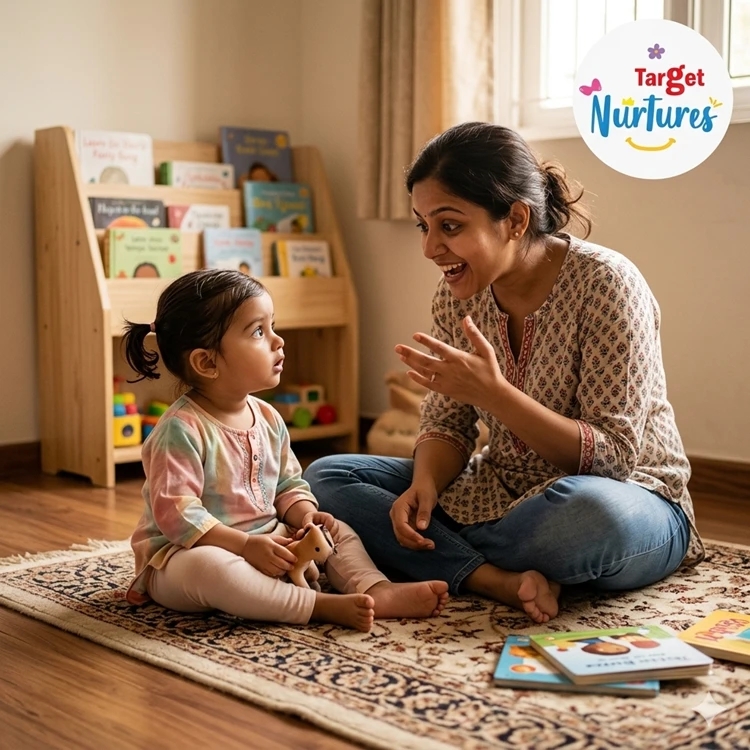
Research shows that toddlers who hear more words in their early years develop stronger vocabulary and language skills. Describe your day: what you saw, what you did, and how you felt.
2. Narrating Your Day is a Superpower
'Now we're washing hands,' 'look at that big red bus!': this simple habit, called 'sportscasting,' builds vocabulary faster than you might expect.
3. Ask Questions
Asking questions encourages your child to think and respond, even in babbles. It sets the foundation for communication.
How Reading Aloud Helps Children
1. Language Development
Reading aloud to children regularly introduces them to a richer vocabulary than everyday conversation alone.
2. Stories Build Imagination and Empathy
While reading engaging stories, when children follow a character, they try to understand feelings and perspectives, shaping how they interact with others.
3. The Right Books at the Right Age
Board books and picture books that are thoughtfully designed support a child’s stage of development.
The Learning Power of Playing Together with Your Child
1. Play is a Child's Language
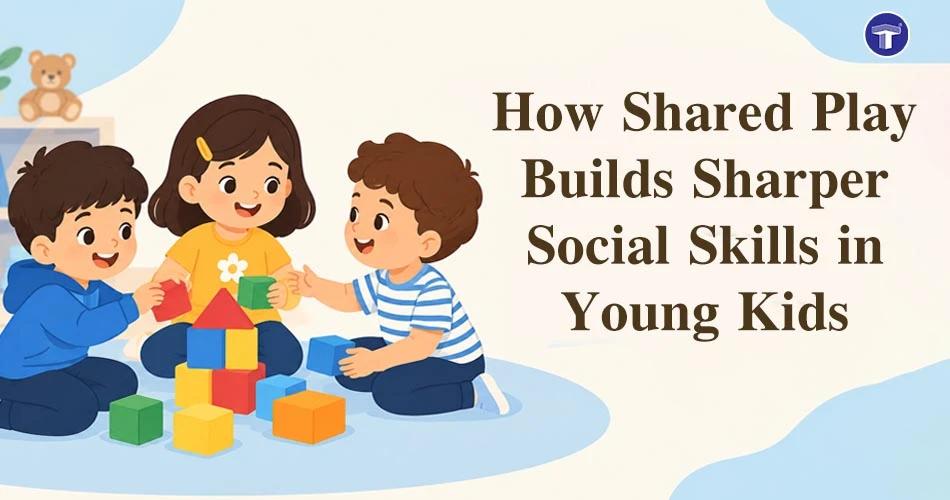
For toddlers, play is not just fun, it is how they explore cause and effect, practise language, and develop motor skills all at once.
2. Playing Together Strengthens Your Bond
When you join in, whether it's building blocks or pretend cooking, your child feels seen and valued.
3. Choose Toys that Invite Imagination
Open-ended toys like blocks and simple puzzles encourage creative thinking. Also, activity-based learning tools help reduce passive screen time.
Conclusion
Talking, reading, and playing together are not just sweet parenting moments, they are the foundation of your child's early education. You do not need to be perfect or have everything figured out.
The love you pour into these everyday interactions is already doing the work. So, keep chatting through the day, reach for that bedtime story, and say yes to one more round of peekaboo. This will surely build a stronger brain, a warmer heart, and a curious mind, one joyful moment at a time.
Frequently Asked Questions (FAQs)
1. At what age should I start talking to my baby?
Ans: You can start from birth. Even newborns benefit from hearing your voice, as it builds early neural pathways for language and communication.
2. How many books should I read to my toddler each day?
Ans: Even one book daily makes a difference. Consistency matters more than quantity. A short, joyful session is always better than a long, forced one.
3. What if my toddler does not sit still for reading aloud?
Ans: That is completely normal. Try shorter books, point at pictures, and make it interactive. Movement-friendly storytelling works well for active toddlers.
4. Is screen time okay if it is educational?
Ans: Minimal, co-viewed screen time can be acceptable. However, live interaction through talking, reading, and playing together always provides richer learning benefits.