
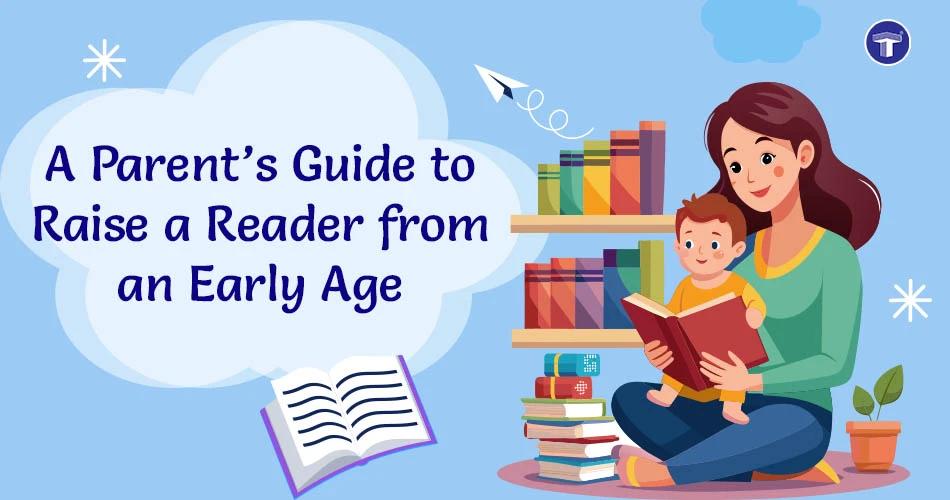
Every parent wants their child to love books. But raising a reader does not happen overnight. It starts with small, joyful moments shared between you and your little one.
A few simple habits can nurture love of reading in your child for lifetime, starting today.
Why Early Reading Matters More Than You Think
Benefits of reading to your child include enhancement of their imagination, emotional intelligence, and attention span.
- Language skills grow faster: Regular reading builds stronger vocabulary and communication skills.
- Emotional connection deepens: Story time creates a safe and engaging routine your toddler looks forward to.
- School readiness improves: Early exposure to reading gives children a head start in school.
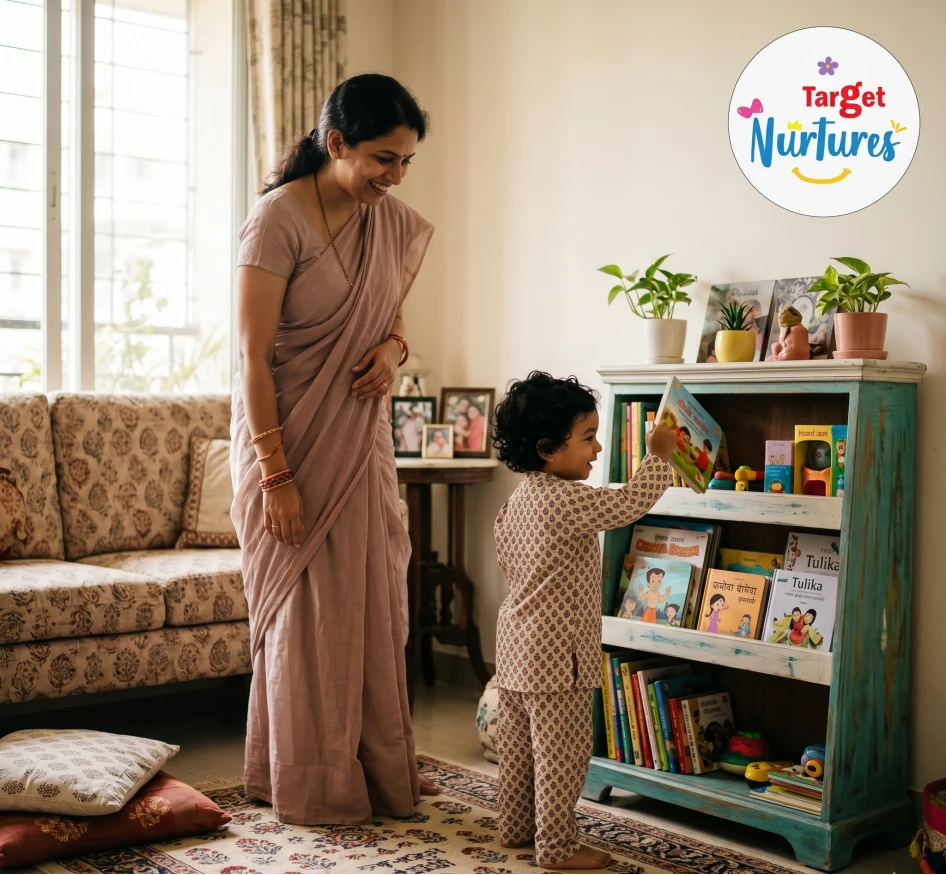
A Toddler Bookshelf to Raise a Reader at Home
The Best Age to Start Reading with Your Child
There is no ‘too early.’ Start reading to your baby from birth itself. They start absorbing your voice, your rhythm, and your warmth.
| Age Group | Best Book Type | What It Builds |
| 0 – 6 months | Board books with bold colours | Visual tracking, voice recognition |
| 6 – 18 months | Lift-the-flap, touch-and-feel | Sensory development, curiosity |
| 18 months – 3 years | Short repetitive storybooks | Language, memory, prediction |
| 3 – 5 years | Picture books with storylines | Comprehension, imagination, focus |
Simple Daily Habits that Raise a Reader
When building a habit, consistency is the real secret. Even ten minutes a day, done lovingly, can build a reading habit that lasts.
- Make it a ritual: A bedtime story session everyday helps create a comforting and predictable reading routine for your toddler.
- Keep books accessible: Low shelves mean your toddler can pick up a book independently.
- Model reading yourself: When children see you reading, they want to do the same.
How to Make Reading Fun, not a Chore
What if my child just wants to run around? Completely normal.
Here is how to keep it light.
- Use voices and expressions: Bring characters to life. Your toddler will giggle and want to listen more. Also, this encourages them to act out the stories.
- Never force it: If they are not in the mood of reading, simply put the book down. Reading should feel like a treat.
- Connect books to play: After reading about animals, bring out toy animals. This way, stories come alive through play.
Conclusion
Raising a reader is one of the most loving things you can do for your child’s future. The reading habit in toddlers cannot be built overnight. Once nurtured with patience and warmth, it will stay with your child forever.
So pick up a book today. Settle in together. Your child does not need a classroom to fall in love with stories. They just need you.
Frequently Asked Questions
1. How many books should I read to my toddler each day?
Ans: Even one or two books daily makes a big difference. Consistency matters far more than quantity when building early reading habits in children.
2. Can regular reading help my child with speech delays at home?
Ans: Reading aloud supports language development in toddlers well. However, if you have specific concerns about speech, always consult a paediatric specialist promptly.
3. What if my toddler refuses to sit still and listen to a story?
Ans: Try shorter story books or funny voices. Reading does not have to mean sitting perfectly still to be genuinely effective for toddlers.
4. Are e-books as good as physical books for young toddlers at home?
Ans: Physical books are generally recommended for young children. Screen-free reading supports more focus, healthy sleep, and warm parent-child bonding.