
Every parent wants to choose a preschool that helps their child learn joyfully, grow confidently, and build a strong foundation for the years ahead. As more families explore Montessori education, the big question becomes clear: ‘Is the Montessori method truly better than traditional preschool learning, or is the familiar route still the safest choice?’
Before diving deep, let’s understand what each approach really means.
What is Montessori Education in Simple Terms?
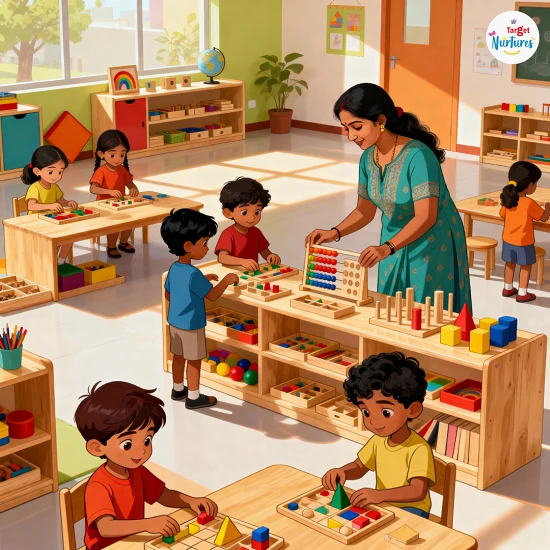
Vibrant Montessori education classroom for young Indian learners
At its heart, Montessori education is a child-led learning approach that encourages independence, curiosity, problem-solving, and hands-on exploration. Developed by Dr Maria Montessori, the Montessori method focuses on respecting each child’s natural pace rather than pushing everyone to follow the same timetable. Children learn through tactile materials, real-life tasks, and self-correcting activities that help them understand concepts deeply.
This approach is very different from what most parents experienced in school, which leads us to the traditional preschool model.
How Does Traditional Preschool Education Work?
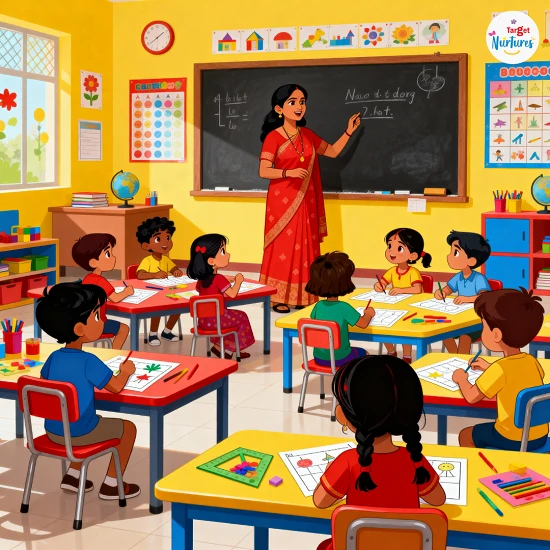
Traditional education classroom in vibrant modern Indian style
Traditional education typically follows a teacher-led approach where children learn through structured lessons, worksheets, group activities, and fixed routines. The traditional education system focuses on standardised goals. It often emphasises early academic skills, discipline, and readiness for formal schooling.
While Montessori settings encourage freedom within boundaries, traditional preschools offer familiarity, routine, and clear expectations. Understanding these contrasts helps us see the core differences between the two styles.
If you are exploring how traditional education continues into higher classes, you can also read our simple guide on Indian education Boards, including CBSE, ICSE, IB, and SSC here.
Key Differences Between Montessori Education and Traditional Preschool Learning
When comparing Montessori vs traditional education, the difference is visible the moment you walk into a classroom. Montessori rooms feel calm, open, and thoughtfully arranged, whereas traditional classrooms are lively, structured, and theme-driven.
Here are some key contrasts:
- Teaching style: Montessori teachers act as guides; traditional teachers lead the class.
- Learning pace: Montessori education allows children to move at their own rhythm; traditional education follows a fixed schedule.
- Materials: Montessori activities use tactile, real-life objects; traditional preschools rely on books, worksheets, and creative play.
- Class mix: Many Montessori preschool rooms include mixed-age groups; traditional classes are usually age-specific.
- Assessment: Montessori avoids grades; traditional preschools may use worksheets or periodic evaluations.
These differences directly affect how children develop emotionally and socially.
Which Approach Supports Better Emotional and Social Growth?
Montessori education encourages children to solve conflicts peacefully, help each other, and take responsibility for their environment. This fosters confidence, empathy, and emotional maturity. The benefits of Montessori become especially visible in a calm and respectful learning space.
Traditional preschools, however, build social skills through group activities, songs, storytelling, and teacher-led interactions. Children learn teamwork and adaptability as they function in structured groups.
Emotional growth is just one part of the picture. The next big question is: which method better supports academics?
Which Method Prepares Children Better for Academics?
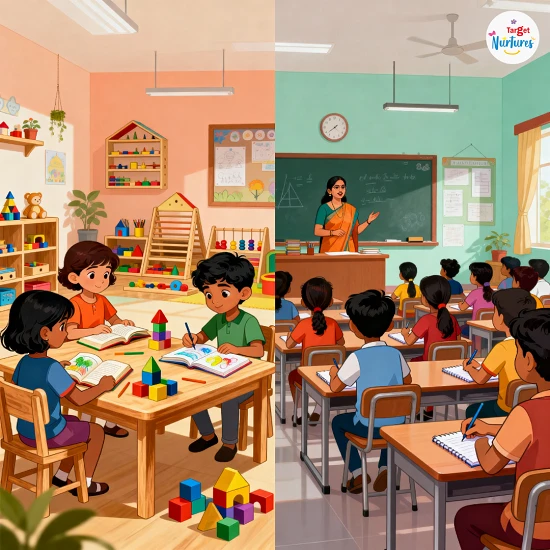
Montessori vs traditional education differences for preschoolers
Both styles can prepare a child well, but in very different ways.
Montessori school benefits include strong concentration, self-motivation, problem-solving, and early literacy or numeracy through hands-on materials. The Montessori curriculum focuses on deep understanding rather than memorisation.
Traditional education provides familiarity with worksheets, structured lessons, and early exposure to classroom routines, which can help children transition easily to mainstream schools.
Now, let's take a look at the difference between a typical day in Montessori vs a Traditional preschool.
What Does a Typical Day Look like in Montessori vs Traditional Preschool?
In a Montessori preschool, children enjoy long, uninterrupted work periods where they choose their activities from the Montessori syllabus or materials. There is minimal rush, and the environment feels peaceful.
In a traditional preschool, the day is divided into morning assembly, snack breaks, theme-based lessons, creative play, and academic sessions. The day feels predictable, structured, and fast-moving.
Pros and Cons of Montessori Education vs Traditional Education
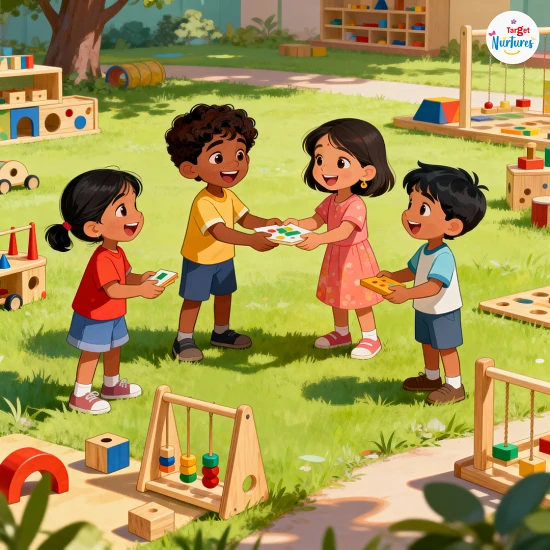
Montessori education supporting emotional growth in preschoolers
Benefits of Montessori education often include independence, problem-solving, sensory development, and strong emotional intelligence. However, some parents feel that Montessori can seem too unstructured or slow-paced.
Benefits of traditional education include routine, discipline, structured learning, and strong group bonding. However, some children may feel pressured by fixed expectations or strict academic timelines.
Weighing these pros and cons leads to the final question most parents have.
Which Preschool Approach is Right for Your Child?
The honest answer is that every child is different. Montessori education works beautifully for children who enjoy independence, focus, calm environments, and hands-on exploration. Traditional preschool suits children who thrive on routine, group activities, and predictable schedules.
You should consider your child’s personality, the school’s authenticity, and what aligns with your family values before making a choice. And because these decisions often lead to more questions, here are the ones parents ask most.
Frequently Asked Questions (FAQs)
1. Is Montessori education suitable for every child?
Ans: Yes, most children benefit from the Montessori method, especially those who enjoy independent learning.
2. What is the Montessori method of teaching?
Ans: It is an approach based on hands-on learning, self-directed activity, and collaborative play.
3. Can a child switch from Montessori to traditional school later?
Ans: Absolutely. Children from Montessori backgrounds usually adapt well because they are confident and independent.
4. Is Montessori education too unstructured?
Ans: Not at all. Montessori classrooms have clear boundaries and carefully designed materials.
5. Why is Montessori education sometimes more expensive?
Ans: Authentic materials, trained teachers, and specialised classrooms increase costs.
6. What are the benefits of Montessori vs traditional education?
Ans: Montessori nurtures independence and deep learning, whereas traditional schools offer routine and academic structure.