

As parents, watching your child stand on the sidelines while others laugh and play together can stir many emotions. You may feel worried or concerned, wondering if your child is finding it hard to fit in. At the same time, it often sparks a desire to understand their feelings better and to know how you can gently help them build friendships.
Friendship is not an inborn trait. For many young children, making friends does not come easily, especially during the early years when social skills are still developing. This skill grows slowly through experience, guidance, and emotional safety. When parents understand how friendships form, they can help kids make friends in ways that feel natural and supportive, not forced.

Children playing together at the park
Setting the Stage for Friendships: Building Your Child’s Social Readiness
Before children learn how to make friends, they need a strong foundation at home. Social confidence grows when children feel emotionally secure and understood.
- Emotional security at home: Children who feel heard and supported at home are more willing to explore social interactions outside. Simple conversations about feelings help children understand their own emotions and those of others.
- Basic language and expression: Social interaction depends on communication. Children need simple words and phrases to express needs, ask questions, and respond during play. Daily conversations, reading, and storytelling support this development.
- Time to observe social situations: Some children prefer to watch before joining. When kids observe their parents’ interaction with the society, it helps them understand behaviour, group dynamics (how groups function), and social cues. This is an important step in kids' social development.
Simple Ways Parents Can Help Kids Make Friends
Below are simple, practical ways parents can support their child and help them build friendships more comfortably at home and in social settings.
1. Talk About Social Situations in Everyday Moments
Social learning does not begin on the playground. It begins at home during everyday routines.
- Talk about the importance of sharing, waiting, and kindness during daily activities at home.
- Discuss with your kid what it feels like to include someone or to feel left out.
These small conversations build social skills for kids and make real-life situations easier to handle.
2. Practise Friendship Skills Through Role Play
Many children want friends but feel unsure about how to approach others.
- As parents, make your child practise simple phrases like ‘Can I play with you’ or ‘What are you building’.
- Act out scenarios such as joining a group or taking turns with toys.
Practising at home helps children feel prepared and reduces anxiety when they try it outside.
3. Encourage Play Without Pressure or Comparison
Play is the most natural way for children build friendships.
- Allow free, unstructured play where children can interact among themselves at their own pace.
- Avoid comparing your child’s social behaviour to others.
When parents remove pressure, children feel more comfortable exploring friendships naturally.
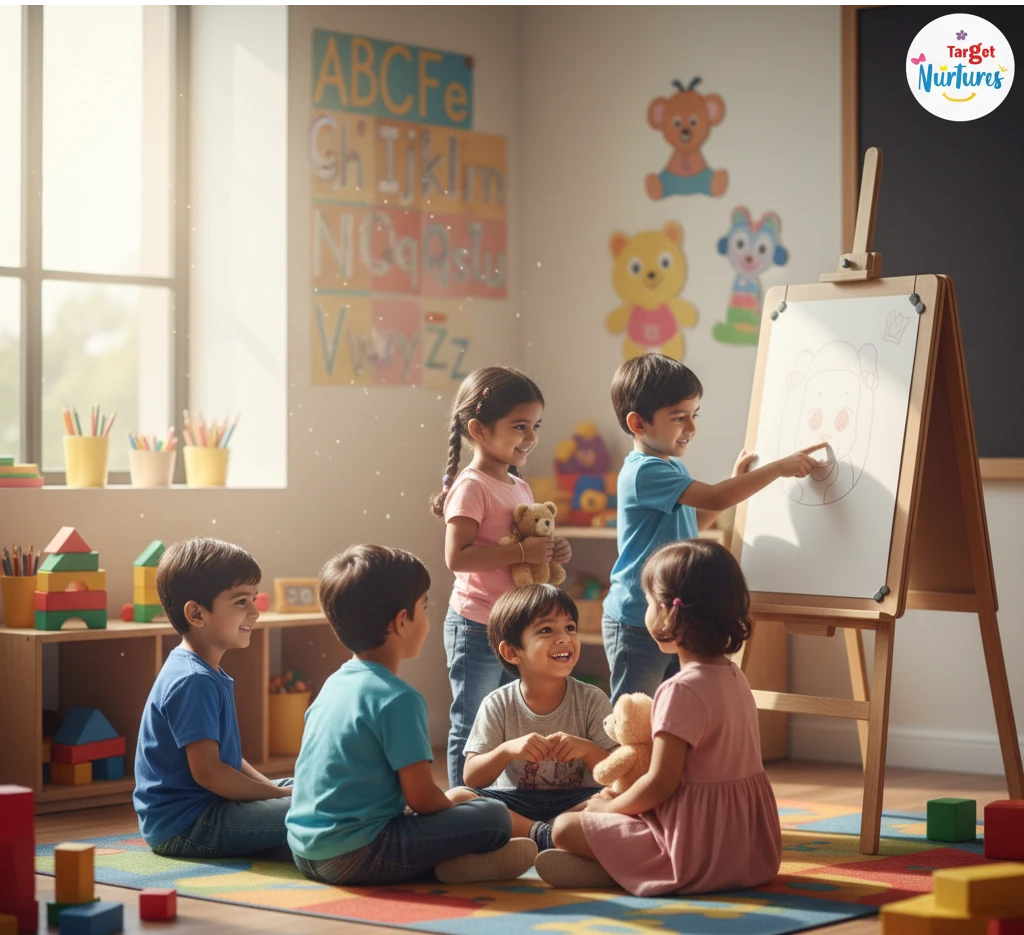
Kids interacting happily during group play
4. Support Shy Children with Gentle Steps
Helping a shy child make friends requires patience and understanding.
- Begin with small group settings or one-on-one play.
- Allow your child to observe before joining.
Respecting a child’s temperament helps them feel safe and gradually build confidence.
5. Model Positive Social Behaviour
Children learn social behaviour by watching adults closely.
- As parents, show kindness, listening, and calm communication in everyday interactions.
- Let your child see how you greet others and resolve small disagreements.
Did you know? Children develop strong social skills through positive role modelling, even without being directly taught.
6. Create Opportunities for Social Interaction
Children need opportunities to practise social skills in real settings.
- Arrange casual playdates for your child with other children they are acquainted with.
- Choose activities where their interaction happens naturally, such as park play or group classes.
These experiences help kids practise making friends in comfortable environments.
Supporting Your Child’s Social Growth as Friendships Begin to Form
Once children start forming friendships, parental support remains important.
- Encourage problem-solving: Allow children to handle small disagreements. This teaches negotiation and emotional regulation.
- Praise effort over outcome: Focus on trying, sharing, and kindness rather than the number of friends.
- Avoid stepping in too quickly: Children learn valuable social lessons by resolving minor conflicts on their own.
Supporting children after friendships form helps relationships grow stronger over time.
Conclusion
Helping kids make friends is a journey that unfolds gradually. Every child develops social skills at their own pace, shaped by personality, surroundings, and experience. What children need most is patience, reassurance, and space to grow.
When parents focus on emotional safety, gentle guidance, and everyday social learning, friendships naturally begin to form. Over time, these small, consistent efforts help children feel comfortable, connected, and ready to build meaningful relationships in their own way.
Frequently Asked Questions (FAQs)
1. Why does my child find it hard to make friends?
Ans: Some children struggle to make friends due to shyness, limited social exposure, or difficulty expressing feelings, which is common in early childhood and improves with support.
2. At what age do kids start making friends?
Ans: Most children begin forming simple friendships between ages 3 and 5, as social skills develop through play, routine interactions, and guidance from their parents.
3. How can I teach my child social skills at home?
Ans: Social skills for kids can be developed at home through role play, storytelling, pretend games, and everyday conversations about emotions and kindness.
4. Can shy children learn to make friends easily?
Ans: Yes, shy children can make friends when given time, encouragement, and low-pressure social settings that allow them to feel safe and confident.
5. When should parents seek help if a child struggles socially?
Ans: If a child consistently avoids social interaction or shows distress, parents may consider speaking with teachers or child development professionals for guidance.