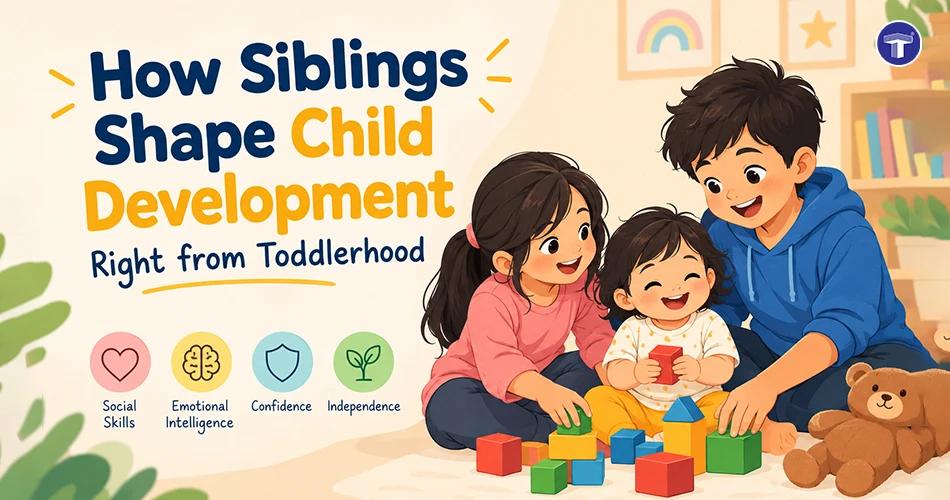
Watch two little ones giggle, make a jigsaw puzzle together and you’ll see something special. How siblings shape child development can be observed right from toddlerhood, often in those noisy, innocent toddler years.
If you are juggling a toddler and a baby, you may wonder what all the tugging, hugging, and shouting is doing to them. But here’s the good news: much of it helps. Let’s look at what siblings and child development have in common, and how you can play a role in it.
Sibling Play and Toddler Language Development
Let’s start in the playroom, where most of the learning happens.
-
Copying, Chatting and Learning New Words Together
Toddlers soak up everything, and an older sibling is a wonderful teacher. Your little one gets a chance to hear new words, try them out and get cheered on or gently corrected in real time.
-
Pretend Play that Builds Imagination
A cardboard box becomes a bus. A blanket becomes a cave. Siblings invent these games together, swapping roles and making up rules as they go, supporting their cognitive development from an early age.
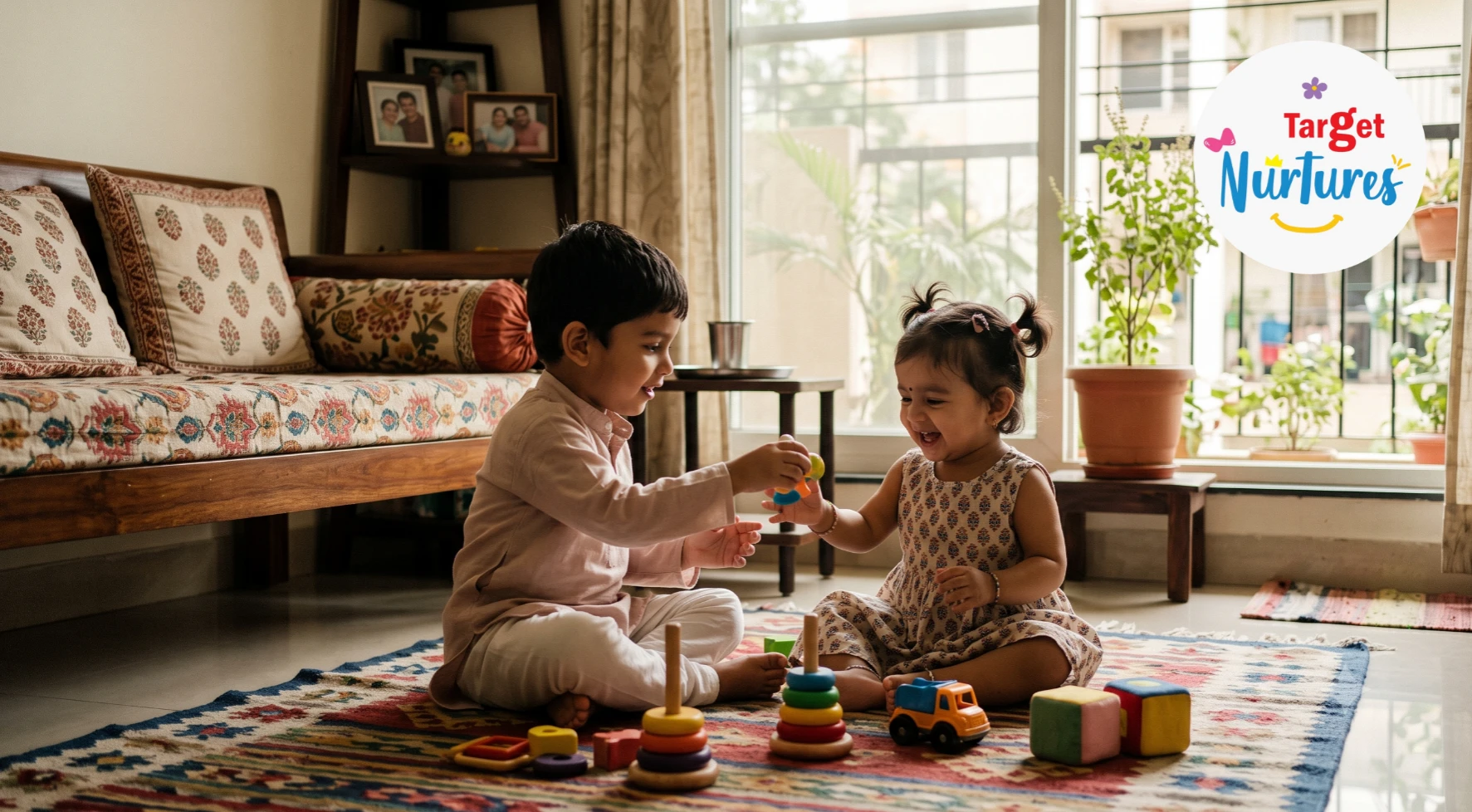
Playing Together Supports Siblings and Child Development
How Siblings Shape Social Skills in Toddlers
Language development is only the start. Siblings also teach the unwritten rules of social conduct.
-
Sharing, Waiting and Taking Turns
Kids do not inherently like to share anything, be it toys, snacks, or a puzzle. Still, a sibling gives your toddler gradual daily practice. Every squabble over the last bite is a small lesson in patience for young kids.
-
Learning to Understand Other People’s Feelings
When the younger one cries, the elder one notices. Slowly, they learn to read faces and offer a hug or a toy. That is the start of empathy and early social readiness.
Sibling Rivalry and Emotional Growth in Early Childhood
Of course, it isn’t always just about giggles. All siblings quarrel over little matters. A five-year University of Cambridge study followed children aged two to six. It found that mild sibling rivalry can speed up social understanding, because a sibling acts as a natural ally. Fighting that drags on for years needs attention, though.
Big Feelings, Little Siblings: Learning to Cope
Jealousy, anger, and frustration all turn up in the playroom. Each time your toddler experiences one, they learn a little more about calming down. That’s how they learn how to make friends when they step out of home.
How Parents Can Support Healthy Sibling Relationships
Parents act as the neutral judge when their little ones wrestle. It’s your duty to bridge any gaps that may form between them.
-
Avoiding Comparisons between Children
‘Why can’t you be more like your sister?’ never helps. Each child grows at their own pace. Celebrate their wins separately and they will worry less about competing.
-
Giving Each Child One-on-One Time
Ten quiet minutes with you can ease a lot of jealousy. Colour a page together or solve an activity book, and let your toddler lead.
-
Reading Together as a Sibling Bonding Activity
Make both your children sit onto one sofa with a few picture books. The older one points at pictures while the younger babbles along. Bedtime story books can also become a habit they both love.
Conclusion
Siblings can be loud and exhausting. But they are also your toddler’s first teacher, rival and friend. Knowing how siblings shape child development can make the tough days easier to laugh through.
So let your kids figure out their bond over time and see how they flourish together. They are learning more than you realise.
Important Links
Frequently Asked Questions
1. At what age do siblings start shaping child development?
Very early. Babies watch and copy older siblings, so shaping of a child’s development begins in infancy and grows clearer once toddlers play together.
2. What is the ideal age gap between siblings?
There is no perfect gap. Smaller gaps bring more playmates, while larger ones allow more one-to-one attention. Warm support from the parents matters most.
3. How do I stop my toddlers from fighting all the time?
Stay calm, separate them briefly, and make them understand each feeling. Praise when they demonstrate kindness and keep spare copies of favourite toys handy.
4. Do children miss out on social skills?
Not at all. Nursery, playdates, cousins, and friends also teach social skills like sharing and turn taking. Siblings simply add daily practice at home.
5. How can I prepare my toddler for a new baby?
Talk about the baby early, read stories about new siblings, and let your toddler help pick a small gift. Keep their daily routines steady and spend as much time with them as possible.