
Picture this: your child is on the screen all day with the utmost attention but can’t finish reading a five-minute story. Research shows that children’s attention spans are shrinking, largely due to the use of digital devices.
Many parents today feel frustrated watching their kids bounce from one activity to another, rarely pausing to focus on just one thing. If you are one of them, we are here to break it down for you.
What Causes This Lack of Focus and Patience?
- Multitasking culture: They usually switch screens between apps, videos, and games. It trains their brain to expect constant novelty.
- Lack of hands-on activities: Many kids don’t get enough opportunities to engage in tactile, step-by-step tasks that require patience.
- Fast-paced content: The content they see, usually has quick rewards and is fast-paced. Kids get used to things happening immediately, making it tough for them to stick with anything that takes time.
- Pressure to stay busy: We often feel the need to fill every moment with activities, leaving little room for slow, mindful play.

A joyful father-daughter moment brought to life with a simple origami airplane
Why Origami Works?
Here’s where origami comes in. A simple, screen-free activity with powerful benefits:
- Step-by-step focus: Origami requires kids to follow a sequence of steps, which naturally builds attention span and concentration.
- Accepting mistakes: Folds might not be perfect the first time, and that’s okay. Kids learn to be patient and persistent, understanding that mistakes are part of learning.
- Enjoying the process: Instead of rushing to the end, origami encourages kids to appreciate each fold and transformation, helping them find joy in the journey, not just the result.
- Problem-solving and spatial skills: Figuring out how a flat sheet becomes a tulip or a frog boosts spatial reasoning and creative thinking.
- Mindfulness: The repetitive, hands-on nature of folding paper can have a calming, meditative effect, helping kids slow down and tune in to the present moment.
Psychologists have found that activities like origami, which involve focused attention and delayed gratification, can help strengthen the neural pathways responsible for self-regulation and executive function. And these are the key skills for lifelong learning and emotional resilience.
Here’s what parents have told us after trying Origami
Parents who introduce origami into their kids’ routines often notice:
- Kids can sit through a task for longer periods, even those who usually struggle to focus.
- Kids become more willing to try again, this helps reduce frustration when things don’t go perfectly.
- Kids feel proud when the finish a project, it build a sense of pride and accomplishment, eventually boosting confidence.
- Many parents say things like, ‘I didn’t expect him to sit for so long!’ and ‘She was so proud of her paper butterfly!’
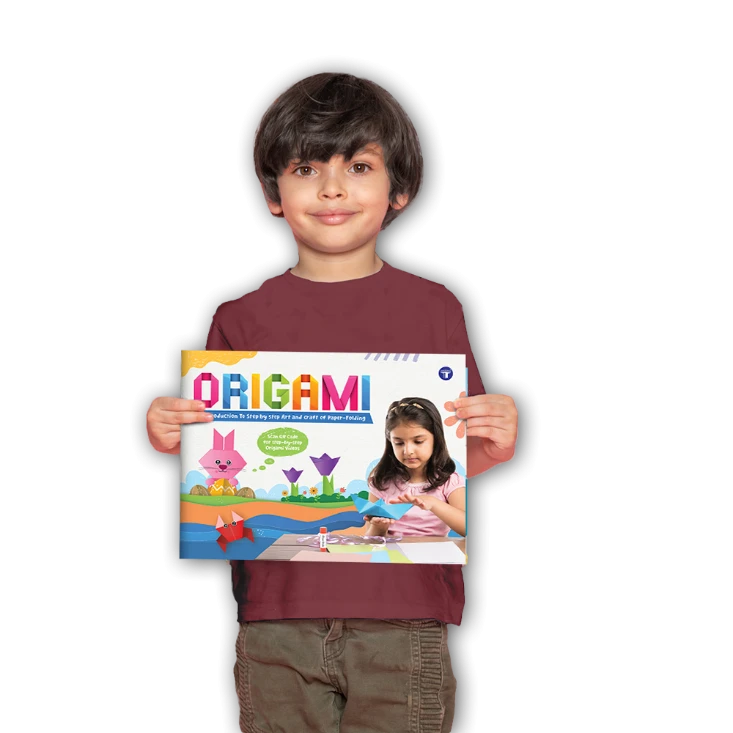
Gift your child the joy of creativity and focus with Target’s Origami Book
We saw how much origami can do for a child’s growth, so we decided to turn that into a fun, easy-to-use book for kids and parents to enjoy together. This book has step-by-step instructions that kids can follow independently or with a parent. We also have QR code tutorials for each project, where can you can craft with the video.
What’s more?
You don’t need to buy origami papers separately, we have it free, just for you!
Dear Parents,
Patience doesn’t come from shouting ‘Sit still!’ a hundred times. It comes from moments like these, one fold, one laugh, one creation at a time. Every paper elephant or jumping frog is a small step toward a calmer, more focused child.
How has your origami experience been ? Comment down below. We would love to know!
Important Links
| Easy Origami for Kids – Fun, Benefits & Step-by-Step Guide | Screen-Free Ways to Play and Bond with Your Baby |