
If you’ve ever found yourself wondering whether to hand your little one a storybook or let them watch their favourite learning show online, you’re definitely not alone. But, here’s a reassuring thought: you don’t really have to choose one.
Books and screens can actually go hand in hand, and together, they can support your child’s growth in more ways than one. All you need to do is maintain a balance between children and technology.
The Screen vs. Book Debate
In the technology-driven world, this is one of the most common conversations in parenting circles today. On one side, screens offer colourful and engaging content that captures young attention spans quickly. On the other hand, books build focus, imagination, and enhance language skills in ways that are hard to replace.
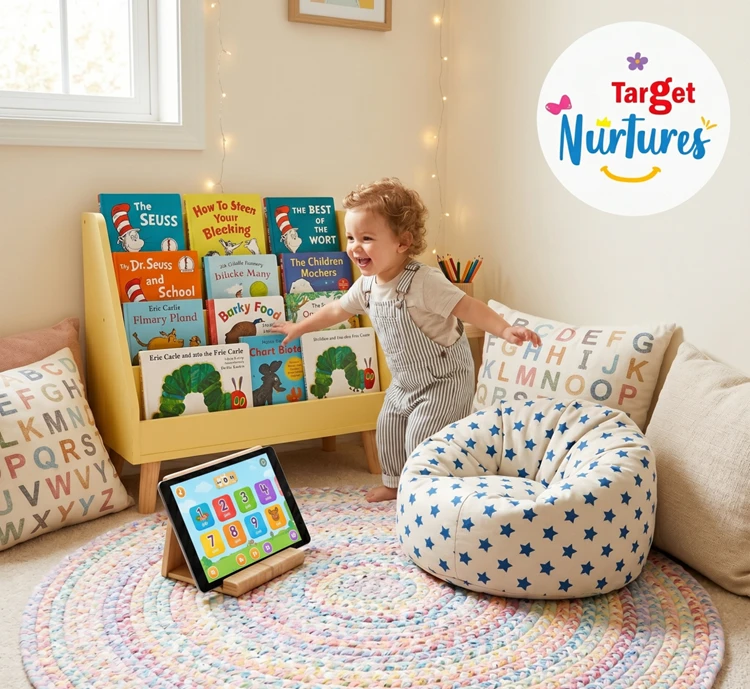
A toddler’s cosy reading corner with books and a screen
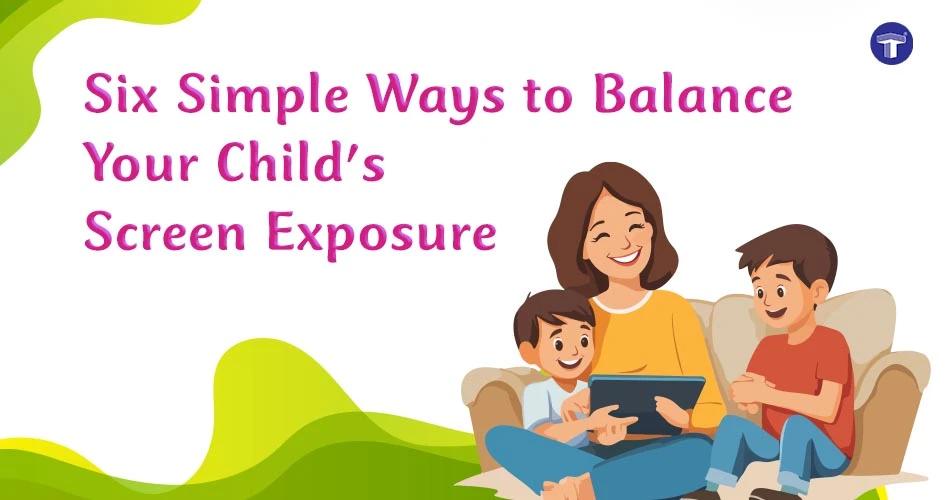
How to Make the Most Out of Screen-Time?
1. Use Screens to Spark an Interest in Stories
Let a short, animated story on screen introduce a character or theme. Then, follow it up with a picture book on the same topic.
2. Try E-Books as a Bridge
E-books combine the feel of a story with interactive elements that keep toddlers engaged. Some even read aloud, which supports early phonics development.
3. Choose Educational Over Passive Content
Applications designed to build vocabulary, letter recognition, or storytelling skills are a much better choice than mindless scrolling. Introduce interactive learning kits that encourage your child to participate, not just watch.
4. Read Together
Whether it’s a paper book or an e-book, what matters most is that you’re reading together. It builds the foundation of their early learning.
The Best of Both Worlds: Ways to Balance Children and Technology
Routines are your best friend when it comes to managing children and technology at home. Here are some simple and practical ways to find the right balance between books and screens for children:
1. Set a Reading Time Each Day
Even 10 to 15 minutes daily builds reading habits that last. Bedtime story sessions work best for most toddlers.
2. Use Screens as a Reward, Not a Default
Letting your child earn screen time after a reading activity creates a positive association between the two, rather than a competition.
3. Create a Cosy Reading Corner
A small, inviting space with their favourite books makes reading feel special. Pair it with a fun storytelling routine, and your toddler will look forward to it every day.
Important Links
Conclusion
The goal was never to choose between books and screens: it was always to find the right balance for your child. When you approach children and technology, don’t look at screens as the enemy, but as a tool in your parenting kit.
Start small. Your little one doesn’t need a perfect routine; they just need you to support and guide them in the right direction.
Frequently Asked Questions (FAQs)
1. How much screen time is recommended for toddlers?
Ans: The WHO recommends no more than one hour of screen time per day for children aged two to five years.
2. Can e-books replace physical books for toddlers?
Ans: E-books are a great supplement, but physical books remain important for building concentration and a love of reading.
3. What type of screen content is best for young children?
Ans: Interactive, story-based, and educational screen content works best. Look for applications that encourage the child’s participation, vocabulary building, and early literacy skills.
4. At what age can children start using educational apps?
Ans: From around 18 months, apps with high-quality content can be introduced to the kids. They should be ideally used alongside a parent for the best learning benefit.
5. How do I prevent my toddler from preferring screens over books?
Ans: Use fun and interactive activity books that hold their attention without making them feel bored. Read with enthusiasm, use voices, and keep reading time consistent and enjoyable.