
Have you ever wondered why your child learns some things quickly but struggles with others? It may feel confusing, but there is often a simple reason behind it.
Every child has a unique learning style. When parents understand how their child learns, learning becomes easier and more enjoyable, with small changes at home making a meaningful difference.
Understanding How Your Child Learns
Children learn in different ways. Some prefer visuals, others respond to sounds, while some need hands-on experiences. Learning styles describe how children take in and process information.
The VARK model includes four types: visual, auditory, reading and writing, and kinaesthetic learners. Observing your child’s natural preferences helps make learning more engaging, and smoother.
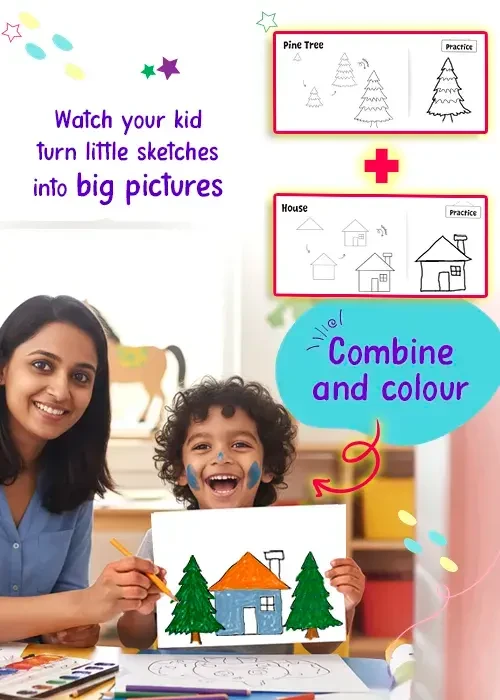
A Parent Engaging a Child in Learning through an Activity Book
Types of Learning Styles in Kids
-
Visual Learners
Visual learners understand best through pictures, colours, and images. They enjoy illustrated picture books, drawing, and watching demonstrations.
-
Auditory Learners
Auditory learners learn through listening. They respond well to songs, verbal instructions and when recited interactive stories. You may often notice them repeating words or humming tunes.
-
Reading and Writing Learners
These learners enjoy books, scribbling, and simple writing activities, often exploring alphabet writing books that build familiarity with letters and words.
-
Kinaesthetic Learners
Kinaesthetic learners need movement and touch to learn effectively. They prefer hands-on activities like building or exploring objects. Engaging activity books help increase the curiosity in these kids even further.
How to Identify Your Child’s Learning Style
Clues from everyday behaviour can help understand your child’s learning style.
-
Observe play patterns
Notice what your child enjoys. Do they prefer drawing, storytelling, or building things? Their choices often reflect how they learn best.
-
Watch how they follow instructions
Some children respond better when shown something, while others understand when told. This small difference reveals a lot.
-
Notice repeated preferences
Children naturally return to doing activities they like the most. What they choose repeatedly is often a strong indicator of a child’s learning style.
Simple Ways to Support Your Child’s Learning Style
Once you understand your child’s learning style, supporting them becomes much easier.
-
Supporting Visual Learners
Use picture books, charts, and colourful flashcards. Visual learning materials help children connect ideas quickly and remember them for longer.
-
Supporting Auditory Learners
Read aloud, use rhymes, and talk while your child performs activities. Conversations and storytelling make learning more engaging for these children.
-
Supporting Reading and Writing Learners
Encourage scribbling, labelling, and simple writing tasks. Early learning workbooks can gently strengthen your child’s understanding of words and concepts.
-
Supporting Kinaesthetic Learners
Include movement to foster greater learning for the child. Activities like counting while jumping or using clay and building blocks help them understand through action.
Many parents find that combining books with activity-based learning materials creates a balanced approach that suits different learning styles effectively.
Making Learning Feel Natural at Home
- Simple daily interactions: Talking, asking questions, and involving children in small tasks can support learning naturally.
- Learning through play: Playtime becomes more effective when it matches how your child learns best.
- Building confidence: When children feel understood, they become more confident and engaged learners.
Conclusion
Supporting your child’s unique learning style is not about doing more. It is about doing things differently. When you notice how your child learns and respond to it, learning becomes smoother and more enjoyable.
Every child has their own learning pace and strengths. With patience, observation, and small daily efforts, you can create an environment where your child feels confident, curious, and ready to learn.
Frequently Asked Questions (FAQs)
1. At what age can I identify my child’s learning style?
Ans: Learning preferences in children can be observed as a toddler. Simple behaviours like play choices and favourite activities often reveal early learning tendencies in children.
2. Can children have more than one learning style?
Ans: Yes, many children use a mix of learning styles. While one style may be stronger, they often adapt depending on the activity, environment, or type of information being learned.
3. How can I support my child if I am unsure of their learning style?
Ans: Offer a mix of activities like reading, talking, drawing, and hands-on play. Observing what your child enjoys most will help you gradually understand their learning preferences.
4. Do learning styles change as children grow?
Ans: Yes, a child’s learning style can evolve over time. As children grow, their dominant learning style may shift or expand to include multiple approaches.
5. Can learning style affect a child’s confidence?
Ans: Yes, when children learn in ways that suit them, they feel more comfortable and successful, building confidence and making them more open to exploring new ideas.