

Preparing for NEET 2026 with Std. 12 Board exams can feel like walking a tightrope. One misstep, and everything can tumble. But with the right Board and NEET exam preparation strategy, you can definitely manage both without losing your motivation. After all, both exams test your understanding and application of core scientific concepts.
We know, it’s overwhelming to manage both NEET and Boards together! This blog will help you devise a smart strategy for yourself to balance your NEET and Board preparation effectively.
Let’s take one step at a time.
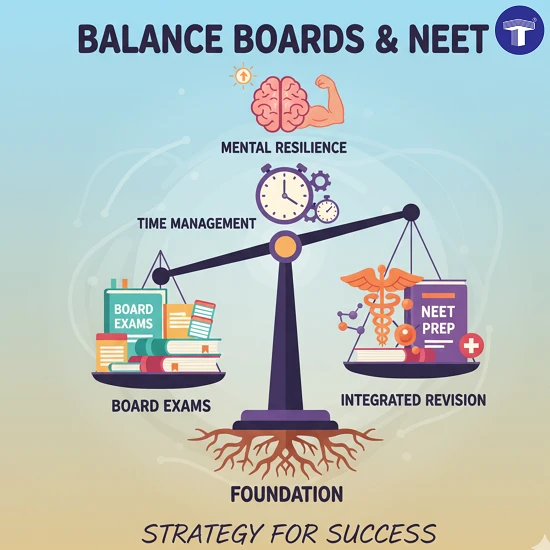
Balancing Board Exams and NEET Preparation
Why Managing Both NEET and Board Preparation Feels Tough?
Like most aspirants, you’ve probably asked yourself, ‘Should I focus on Boards or NEET preparation?’ Haven’t found the answer yet? Let’s understand why.
The truth is, you cannot prioritise one over another. Both exams complement each other and are equally important in your academic journey. While Board exams track your overall academic record and eligibility, NEET is the gateway to your dream medical college in India.
What are the Key Differences Between Std. 12 Board and NEET Exam?
- If you’re wondering, ‘Is NEET and Boards syllabus the same?’ Then, the main difference between NEET and Board syllabus is that Std. 12 Board covers only Std. 12 topics, while the NEET syllabus includes both Std. 11 and Std. 12 topics from Physics, Chemistry, and Biology.
- While both use NCERT-based concepts, NEET requires a deeper and more application-based understanding of topics compared to the Board exams.
- Board exams have a mix of subjective and objective questions. NEET is exclusively objective (Multiple Choice Questions) with negative marking for each incorrect answer.
- Board exams typically have one subject at a time. NEET is a single exam for all three science subjects, requiring a high level of time management to complete in one sitting.
But after reading the differences, we can deduce the best part is that there is a significant overlap of syllabus between the two exams. With the right focus and effective time management, you can prepare for both simultaneously. Let us dive into how you can do it smartly.
How to Balance NEET and Boards?
How to Manage Time Between Both NEET and Boards?
Time is the most precious resource. Hence managing your time effectively is the key to studying better. To prepare for both Std. 12 Boards and NEET you need to create a dual purpose study schedule.
How can you do that? Let’s take a look.
- Start preparing early, ideally by Std. 11. This allows you the time for in-depth preparation.
- Make a common timetable that incorporates both, your Board as well as NEET syllabus.
- Allocate 60–70% of your study time to NEET preparation during the non-board months. As your Board exam approach, that is from the month of November switch the ratio to Board exam preparation.
- Use the syllabus overlap to your advantage. Plan your preparation strategy with the help of the right NEET books accordingly, so you can revise overlapping topics during Board exams and enhance your NEET preparation strategy.
- Identify your learning style before you kickstart your preparation to create the best study technique for your NEET journey.
Strengthen Your Foundation for NEET and Board Preparation
- NCERT textbooks form the backbone for both Boards and NEET preparation. Many questions in the NEET examination, are directly from the NCERT textbooks or based on the NCERT content. Make sure you build strong foundation.
- Once your foundation is built, move to NEET-specific reference books for deeper understanding.
Integrate Balance in NEET and Boards
- Analyse the chapter-wise weightage through past years’ papers to understand which chapters carry more marks and plan your preparation smartly.
- Solve NEET multiple choice questions after completing a Board chapter. This will help you revise the chapter for your Board as well as prepare you for NEET.
- Take weekly NEET mock tests, even during the Board exam months. This will help you maintain exam temperament, identify weak areas, and make you familiar with the NEET exam pattern.
- Solve previous years’ question papers to know about the difficulty trends, type of questions asked, and an overall trend analysis of the NEET UG examination.
- Refer to the best books for Class 12 Board exam and NEET preparation books for holistic and in-depth preparation of both the exams.
Build Mental Resilience
- Set realistic goals: Success is built step by step. Remember the saying, ‘Rome wasn’t built in a day.’ Similarly, your NEET dream won’t come true overnight, it requires consistent effort.
- Prioritise rest and nutrition: Lack of sleep and poor diet can sabotage your performance. A power-nap, a short walk, or meditation can do wonders to sharpen your focus.
How to Keep Up with NEET When Boards are Near?
During Board exam season, it’s natural for NEET preparation to take a back seat.
But don’t hit a pause entirely. Here are some tips on how you can maintain the momentum:
- Dedicate 1 to 2 hours from your study schedule for NEET revision.
- Solve chapter-wise MCQs for any one subject per day.
- Go through the previous mistakes and focus on the weaker sections.
Conclusion
Balancing board exams and NEET preparation may feel like a juggling act, but with the right mindset, smart planning, and consistent effort, you can ace both. Remember, it’s not about working endlessly but about working efficiently.
Keep your focus steady, your routine balanced, and your motivation alive, because it’s all about the art of balancing.
Frequently Asked Questions
1. Is Board exam preparation enough for NEET?
Ans: Board exam requires only the preparation of Std. 12 syllabus, whereas NEET exam requires an in-depth preparation of both Std. 11 and 12 syllabus.
2. Can I crack NEET while preparing for the Class 12 Board exam?
Ans: With the right preparation strategy for both Board and NEET examination, you can definitely crack your NEET examination.
3. What is the difference between NEET and Board exam patterns?
Ans: The Std. 12 Board exams have a mix of subjective and objective questions. NEET examination is exclusively objective (Multiple Choice Questions) with negative marking for each incorrect answer.