

As parents, we all want our children to grow up responsible, independent, and financially wise. Teaching kids about money management early in life is one of the most valuable lessons you can give them. It not only teaches them the value of money but also encourages them to make thoughtful choices as they grow.
Here are five simple and fun ways to teach your children how to save money, while building lifelong habits that will serve them well into adulthood.
1. Start with the Basics of Money
Before talking about saving, it’s important that your child understands what money is and how it works. Begin by explaining where money comes from; how it’s earned through hard work and used to buy the things we need.
You can use pretend money or piggy bank games to make this fun. For younger kids, use simple examples such as exchanging pretend coins for toys. For older ones, try small real-life examples like letting them pay at the shop counter.
When children see money in action, they start understanding its value and purpose.
2. Give Kids a Piggy Bank or Savings Jar
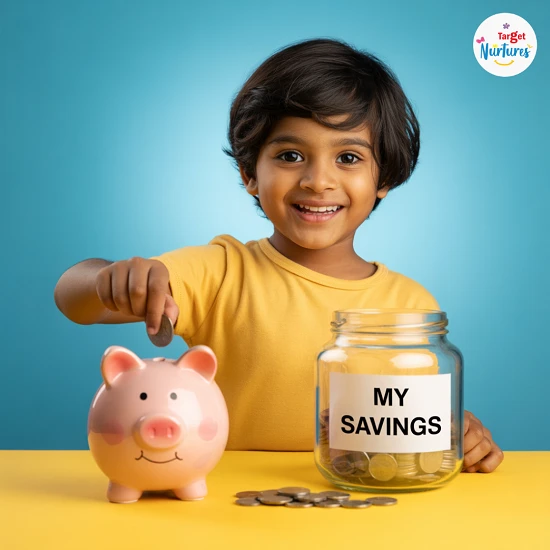
Saving money made fun for kids
Every child loves having something that feels like their own. Give your child a piggy bank or a clear savings jar where they can physically see their money grow. This visual progress keeps them motivated and excited to save more.
Label the jar with a goal; maybe ‘For a New Toy’ or ‘For a Family Treat’. When your child finally reaches the target, celebrate together. It teaches them that true happiness comes from waiting patiently and working towards a reward — the joy of delayed gratification — and helps them value the rewards of patience.
Tip: Choose a transparent jar so they can literally watch their savings increase!
3. Introduce the Concept of Budgeting for Kids
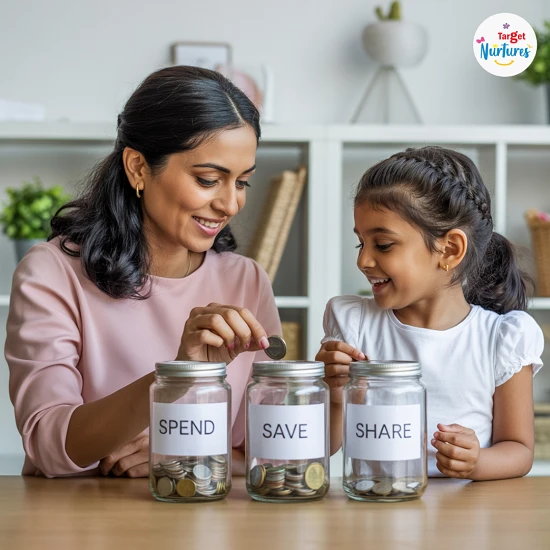
Teach kids smart budgeting habits
As children get older, start talking about budgeting. You can keep it simple; give them a small weekly allowance and guide them to divide it into three parts – spend, save, and share.
This helps children learn how to plan their expenses, set priorities, and balance wants and needs. You can even use a small notebook or digital tracker to record their spending.
Example:
If they get ₹100, they could spend ₹60, save ₹30, and donate ₹10. This small exercise can build strong habits that last a lifetime.
💡 Related read: Explore more about the benefits of starting a savings account for your kids in this insightful article by Family First
4. Set a Family Savings Goal
Children learn best by watching their parents. Make saving a family activity! Pick a fun goal together, perhaps a weekend trip, a board game, or even a family dinner out. Place a jar in a visible spot and let everyone contribute.
When children see their parents saving too, it reinforces the message that saving is important and rewarding.
You can even make it more engaging by using a savings chart or progress tracker on the fridge to show how close the family is to reaching the goal.
5. Teach Kids to Save Money Through Real-Life Examples and Stories
Stories have a powerful way of shaping young minds. Share simple stories or experiences about how saving helped you in the past or how wasting money led to regret.
You can also introduce age-appropriate books or videos about money management. For example, stories that show characters earning, spending, and saving wisely make the concept relatable and fun.
Encouraging children to think before spending – asking themselves, ‘Do I really need this?’ – helps them develop financial mindfulness.
👉 Watch this short video for parents on creative ways to teach kids about saving money.
Bonus Tips and Tricks for Parents
Here are a few extra ways to make money lessons stick:
- Lead by example: Show your children how you plan and save.
- Reward saving: Match their savings occasionally as a fun incentive.
- Use visual aids: Try charts or apps to help older children track progress.
- Talk about value: Discuss quality over quantity when shopping together.
- Involve them in decisions: Let them compare prices and make small choices in the store.
These small lessons will build a solid foundation for financial discipline and smart money habits.
Final Thoughts
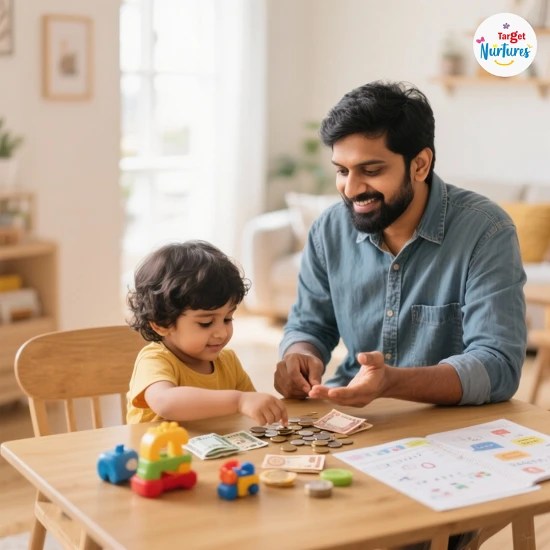
Teach kids money basics early
Teaching your children how to save money is really about helping them build confidence, independence, and a healthy attitude towards money. When they learn to plan, wait, and make mindful choices, they carry these values into every part of life.
Encourage small steps, guide them with real examples, and make saving a fun part of their everyday routine. Over time, you’ll see your child not only saving money but also understanding its true worth!
FAQs on Teaching Kids to Save Money
1. Why is it important to teach kids how to save money at an early age?
Ans: Teaching kids how to save money from a young age builds their financial awareness and discipline. When children learn that money doesn’t grow on trees and that saving helps achieve goals, they become more responsible and thoughtful about spending. Early exposure to money management sets the foundation for smart financial decisions later in life.
2. At what age should I start teaching my child about money management?
Ans: You can start introducing money lessons as early as four or five years old. At this stage, children can grasp simple concepts like spending, saving, and sharing. As they grow, you can expand the conversation to include topics like budgeting, needs versus wants, and even long-term savings goals.
3. Should I give my child an allowance to teach them about saving?
Ans: Yes, giving a small allowance can be a great way to teach children about money management. It gives them a sense of control and responsibility. Encourage them to divide their allowance into parts – for spending, saving, and sharing. This helps them understand budgeting and the importance of delayed gratification.
4. What are the best money-saving activities for kids at home?
Ans: There are plenty of fun savings activities you can try at home:
- Setting up a piggy bank challenge or savings jar.
- Playing shopkeeper games to teach value and exchange.
- Creating a family savings chart to track progress towards a goal.
- Involving your child in budget-friendly shopping by comparing prices.
These activities make learning about saving money both practical and enjoyable.
5. How can I teach my child the difference between saving and investing?
Ans: Start by explaining that saving means keeping money safe for short-term goals, like buying a toy or book, while investing helps grow money over time for bigger goals. You can use simple examples – for instance, a savings jar for small rewards and a story about how investing helps people earn more later. As children grow older, you can introduce basic ideas of interest, returns, and goal-based investing in a relatable way.