
In times dominated by the use of technology, every parent has found themselves helpless when it comes to balancing their child’s screen exposure. When your toddler is mid-meltdown and you have household chores to accomplish, a phone screen suddenly feels like the only peace treaty available.
The truth is, screen exposure does not need to be completely eliminated. With a few gentle adjustments, you can help your little one enjoy watching screens without letting them affect playtime, sleep, or family time. Here are six simple ways to find balanced screen exposure, without any guilt attached.
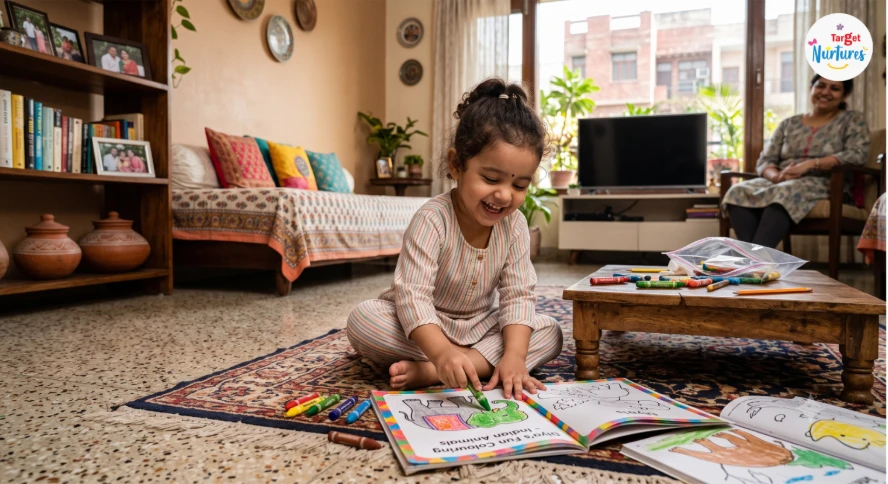
A toddler happily engaged with a colouring book instead of a screen
Six Simple Ways to Balance Your Child’s Screen Exposure
1. Set a Simple Screen Time Routine for Toddlers
Toddlers thrive on predictability, and screen time is no different. Instead of allowing screens whenever boredom strikes, try fixing short slots, perhaps after a reading session or before an evening walk. A predictable routine will help your child know what to expect, naturally reducing the daily tug-of-war over the tablet.
2. Choose Quality Over Quantity in Your Child's Screen Time
Not all screen exposures should be treated equally. Ten minutes of an interactive rhyme video with you sitting beside your toddler teaches far more than an hour of cartoons playing in the background. Choose content that encourages your child to respond, point, or repeat words, rather than simply staring quietly on their own.
3. Create Screen-Free Zones and Times at Home
Screens can be totally avoided in certain spaces and moments. Mealtimes, bedtime story sessions, and car rides are lovely opportunities for screen-free time, where your toddler's attention stays on food, sleep, or the world around them. These small boundaries help strike a balance between screen exposure and early learning, giving your family a few guaranteed pockets of connection each day.
4. Replace Screen Time with Hands-On Activities for Kids
Toddlers are naturally curious, and their little hands love exploring textures and colours. Keeping a colouring book or a simple activity book within easy reach gives them something engaging to turn to once the screen goes off. It builds fine motor skills too, something no screen can quite replace.
5. Model Healthy Screen Habits as Parents
Children tend to copy what they see, long before they understand what they hear. Note that toddlers under eighteen months benefit from almost no screen exposure, while those between two and five do best with under an hour a day, watched together with a parent. Put your own phone away during playtime, and your toddler will slowly follow suit.
6. Watch for Signs of Screen Overexposure in Toddlers
Every child reacts differently to screens, so it helps to look out for small cues. Increased irritability after screen time, disrupted sleep, or a shorter attention span during play are gentle signals that it might be time to slow things down. Trust your instincts here, since you know your toddler best.
| Sign | What It Looks Like |
| Mood after screen time | Fussy, cranky, or resistant to stopping |
| Sleep pattern | Trouble settling down or staying asleep at night |
| Attention span | Restless or easily distracted during play |
| Speech and interaction | Fewer words or less eye contact than usual |
Conclusion
Balancing screen exposure is not about total elimination of screen usage, and no parent gets it right every single day. Small, smart, and consistent choices matter far more than strict rules that feel impossible to follow in the present era.
All you can do is be extremely patient with your toddler. With a mix of easy yet challenging routine, quality content, and a few screen-free rituals, you will soon find a rhythm that fits beautifully into your family.
Important Links
| Pre-primary Books | Activity Books |
| Story Books | Learning Kits |
Frequently Asked Questions
1. How much screen time is okay for a toddler?
Ans: Experts suggest limiting screen time to about one hour a day for ages two to five, with none advised before eighteen months.
2. Does screen time affect a toddler's speech development?
Ans: Excessive passive screen time can reduce speech opportunities, since toddlers learn language best through real conversations, eye contact, and interactive play with caregivers.
3. What counts as screen time for toddlers?
Ans: Screen time includes television, tablets, smartphones, and computers used for entertainment, videos, or games, excluding brief video calls with family.
4. Can educational apps replace outdoor playtime?
Ans: No, educational apps can support learning, but they cannot replace physical play, which builds coordination, social skills, and healthy sleep patterns in toddlers.
5. How do I reduce my toddler's screen time without tantrums?
Ans: Introduce screen-free activities gradually, offer a short countdown before switching off, and replace screens with hands-on play to ease the transition smoothly.