
Every parent has seen those days when their toddler throws their spoon, screams over minor spills, or says 'no' to absolutely everything, sometimes all before breakfast is even over. In moments like these, positive parenting is not about being a perfect parent. It is about choosing patience over panic, even when you are running on very little sleep and even less patience.
This blog shares simple, doable positive parenting tips you can use right at home, starting today. No strict lectures, no guilt, just gentle strategies that genuinely work for toddlers and the tired, loving parents raising them.
What is Positive Parenting?
Positive parenting simply means guiding your child with warmth instead of fear. Rather than punishing every blunder, you understand first and correct gently after. Your toddler feels safe and seen, so they trust you more, and that trust makes them far more willing to listen, even during the trickiest moments of the day.
This is not just a feel-good idea either. The American Academy of Pediatrics has long recommended positive reinforcement over punishment for young children, noting that gentle, consistent discipline works better in the long run than shouting or rebuking. When toddlers feel secure, their little brains actually learn faster too, since they are not stuck reacting in fear or confusion.
So the next time a meltdown hits, remember that staying calm is not just kind; it is genuinely effective, and it teaches your child how to handle big emotions too.
Everyday Positive Parenting Tips
These positive parenting tips are small, but they will add up beautifully over time. These are tips you can start using from this very evening without waiting for the 'right' moment.
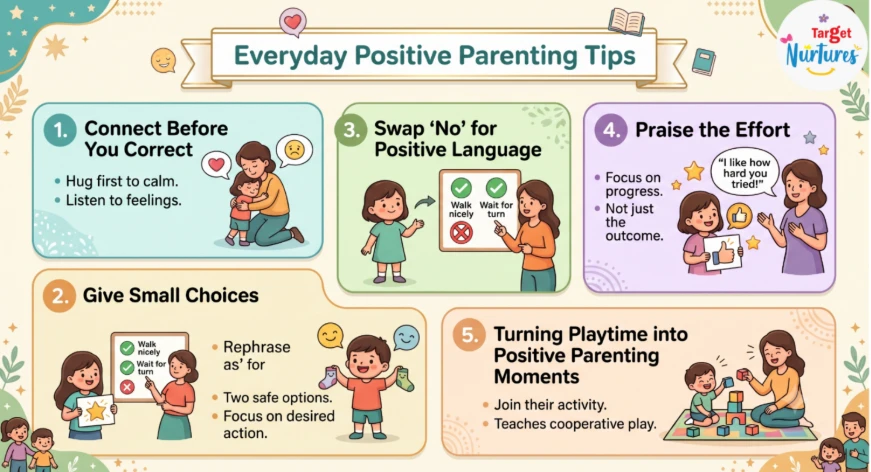
Everyday tips for positive parenting of toddlers
1. Connect Before You Correct
Get down to your toddler's eye level before reacting to anything. A gentle hand or a soft 'I see you are upset' calms them faster than any instruction ever could.
2. Swap 'No' for Positive Language
Instead of 'do not run', try 'let us walk together'. Toddlers respond better when told what to do, not just what to stop doing, since it gives them a clear next step.
3. Give Small Choices
'Red cup or blue cup?' feels like a small choice, but it hands your toddler a sense of control, encouraging independent thinking in kids.
4. Praise the Effort
Appreciate the trying, not just the winning. 'You worked so hard on that' builds real confidence, far more than a 'good job' ever does.
5. Turning Playtime into Positive Parenting Moments
Play is where lessons stick best with young ones. A cosy bedtime story about sharing, or a colourful little activity book about feelings, can turn an ordinary evening into a lovely, wordless lesson in kindness and patience, without it ever feeling like a lecture.
| Situation | Reactive Response | Positive Parenting Response |
| Toddler refuses to share a toy | 'Don't be so selfish!' | 'It's hard to share, let's take turns together' |
| Toddler runs off in a shop | Shouting 'Stop right now!' | 'Hold my hand so we stay safe together' |
| Toddler cries over a broken toy | 'It's just a toy, stop crying' | 'I can see you're really sad about this' |
Conclusion
Positive parenting is not about getting everything right, every single time. It is about showing up daily with a little more warmth and patience, one small moment at a time. Some days will still be messy, tearful, and loud, and that is completely alright.
Start with just one positive parenting tip this week and see how it feels. Watch how your toddler responds, and let that gentle progress remind you that you are already doing a wonderful job, even on the hard days.
Important Links
| Activity Books | Story Books |
| Cursive Alphabet Practice Book | Learning Kits |
Frequently Asked Questions
1. What is the golden rule of positive parenting?
Ans: The golden rule of positive parenting is building a connection before correction. When a toddler feels safe and understood first, they naturally become far more willing to listen and cooperate.
2. Is positive parenting the same as permissive parenting?
Ans: No, positive parenting still has clear limits and structure. It simply enforces them with warmth and calm explanations, rather than fear or harsh punishment.
3. How do I start positive parenting with a toddler?
Ans: Start small. Pick one gentle phrase, like offering choices instead of commands, and use it consistently for a week before adopting another positive parenting tip.
4. Does positive parenting actually reduce tantrums?
Ans: It does not eliminate tantrums, but it shortens them. Toddlers who feel heard and understood tend to calm down faster than those treated with anger.
5. At what age should positive parenting start?
Ans: Even babies respond to warm tones and gentle touch, so positive parenting habits can begin as early as infancy.