Does your little one love pairing socks, lining up toy cars, or stacking things that look alike?
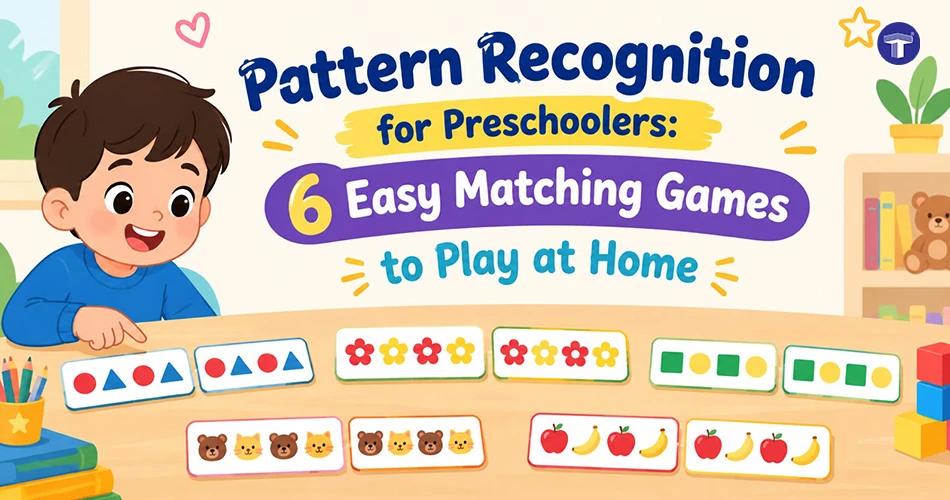
These small discoveries are early steps towards pattern recognition for preschoolers, helping children notice similarities, differences, and what comes next in the sequence. These tiny wins are steps towards building foundation in Maths and logical reasoning.
Pattern recognition activities do not need fancy tools or strict routines. With everyday objects, matching games for preschoolers can turn playtime into a cheerful chance to observe and learn patterns.
How Everyday Play Helps Preschoolers Discover Patterns
Pattern recognition begins when children notice similarities, differences, and repetition. Matching is a useful starting point: a child might easily pair red blocks before spotting a red-blue-red-blue sequence. Everyday objects, from colourful socks to familiar toys, offer countless opportunities to practise these skills, also enabling fine motor development from early childhood.
Why are Matching Games Important for Preschoolers?
Matching activities build observation and early problem-solving while introducing sorting and sequencing. A study in Early Childhood Research Quarterly found that pattern knowledge improved during pre-kindergarten, and explaining patterns in early childhood supported a child’s brain development.
Pattern recognition activities for preschoolers at home
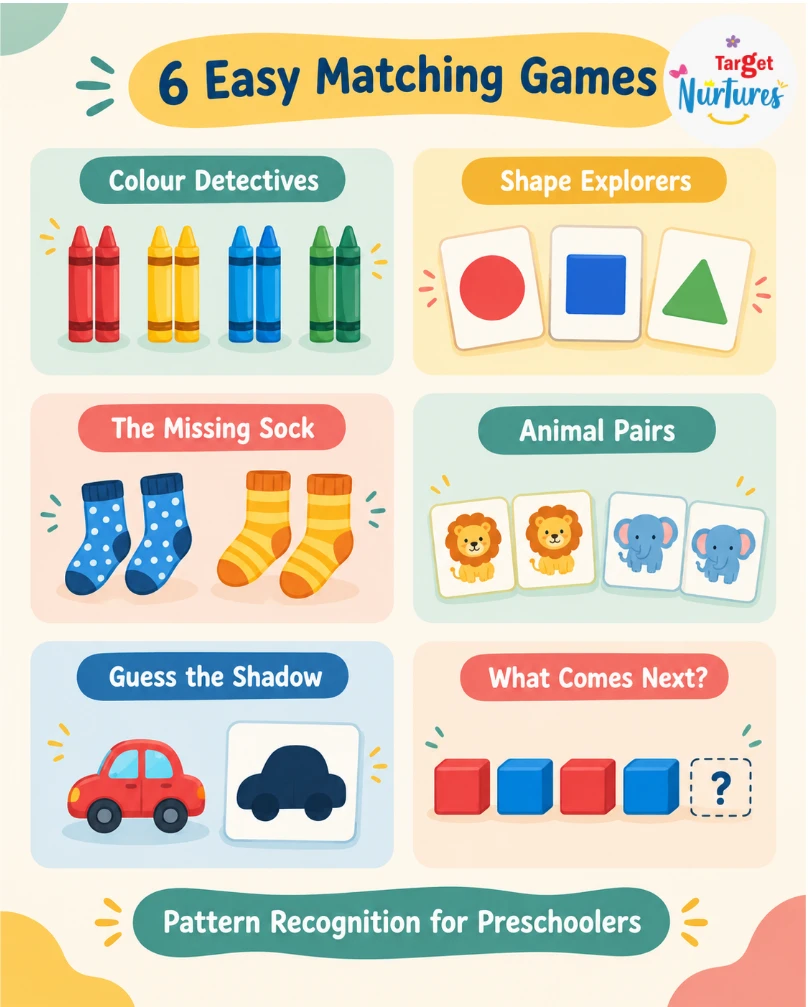
6 Easy Matching Games for Preschoolers to Play at Home
-
Colour Detectives: Colour Matching Games
Gather crayons, building blocks, or other colourful objects and spread them across a mat. Ask your child to find objects that share the same colour, starting with just two colours to keep things simple.
A colouring book can offer another way to explore colours while making learning feel like play.
-
Shape Explorers: Shape Matching Activities
Cut circles, squares, and triangles from coloured paper, then invite your child to find and pair identical shapes. You can make the activity more exciting by asking them to spot a circular plate, a square cushion, or a triangular design around the house.
Picture dictionaries can help children connect familiar shapes and objects with words, encouraging both visual recognition and vocabulary development.
-
The Missing Sock: Matching Household Objects
Turn laundry day into a playful matching challenge! Place a few clean socks in a basket and ask your child to find pairs with the same colour or pattern. Slowly introduce socks that look slightly different. You could also try pairing containers with their lids or matching similar spoons.
-
Animal Pairs: Picture Matching Games
Bring out the colourful flashcards. Ask your little one to find matching elephants, cats, birds, or other familiar creatures. You can also ask questions about their colours, sounds or habitats to keep the conversation going.
Jumbo colouring books offer another fun way to recognise familiar animals and extend the picture-matching activity.
-
Guess the Shadow: Visual Matching Activities
Draw or print simple outlines of familiar items, such as a cup, spoon, toy car, or teddy bear. Place the corresponding objects or pictures beside the outlines and invite your child to match them, encouraging them to observe outlines and look at familiar objects from a different perspective.
-
What Comes Next? Pattern Recognition
Once your child is comfortable matching pairs, introduce the concept of sequence. Arrange coloured blocks in a red-blue-red-blue pattern and ask, ‘What comes next?’ When they get the hang of it, try slightly trickier combinations, such as two red blocks followed by one blue block.
Conclusion
Pattern recognition for preschoolers need not feel like a formal lesson. Matching socks, sorting toys, and noticing clothing patterns can become little learning moments that pay off when the child develops beyond toddlerhood. Small praises to encourage efforts go a long way.
The aim is not to get every answer right. It is to help your child feel curious, capable, and excited to try again.
Important Links
Frequently Asked Questions
1. At what age can children start matching games?
Children can begin simple matching play in toddlerhood. Choose safe, familiar objects, and adapt each activity to your child’s attention span and interests.
2. What is the difference between matching and pattern recognition?
Matching involves pairing similar items, while pattern recognition means noticing a repeating rule and working out what should come next in the sequence.
3. How long should preschoolers play matching games?
Start with five to ten minutes and follow your child’s interest. Short, enjoyable sessions often work better than expecting them to continue playing.
4. Can matching games help with early maths?
Yes, matching and pattern games introduce sorting, comparison, sequencing, and visual relationships, all useful foundations for early mathematical thinking and number skills.
5. How can I teach patterns without buying toys?
Use simple objects like socks, spoons, crayons, leaves, or other safe household items. Arrange them in simple sequences and invite your child to continue the pattern.