
Watching your toddler point at a letter and say it out loud for the first time is a small victory that feels huge. If you are wondering how to teach your toddler the alphabet the fun way, you are certainly not alone.
The catch here is that toddlers are wired to soak up letters through play, not just worksheets. Read along to discover simple, fun alphabet activities for toddlers that fit into your everyday routine, so learning letters also feels like a game.
Why Toddlers Love Learning Letters Early
Toddlers have curious little minds, and letters are just another exciting shape to explore. Introduce the alphabet to your toddler through phonics, colours, and textures, and their little brains build connections faster than expected.
Research from the National Early Literacy Panel also validates that early alphabet knowledge is one of the strongest predictors of later reading success. Every playful letter moment now is quietly nudging your toddler up for that success.
Fun Alphabet Activities for Toddlers That Don't Feel Like Work
Here are a few easy ways to make letters part of playtime, not pressure.
- Sing it out: Alphabet songs and rhymes help toddlers remember letter names without even trying, since little ones naturally love repetition and rhythm.
- Get hands-on: Give your toddler small, achievable milestones to accomplish, for example, a page in Alphabet Writing Books, stitching in fun and learning. Also, letting your toddler trace the alphabet in sand, playdough, or shaving foam turns abstract shapes into something they can feel and remember.
- Read together often: A colourful storybook at story time builds letter recognition, making reading your toddler’s daily habit.
- Play letter hunts: Hide letter placards or magnetic letters around a room and ask your toddler to find one to keep them moving and learning at once.
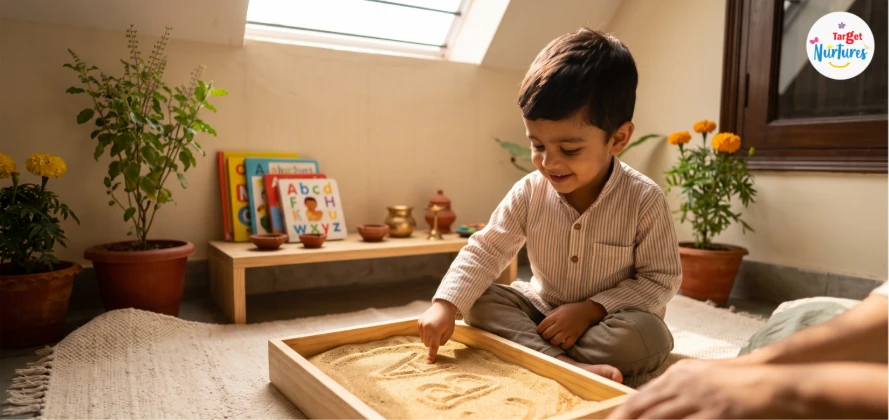
Toddler tracing letters in sand during playtime
Turning Everyday Routines into Alphabet Fun
You do not need dedicated lesson time to teach the alphabet. Bath time, meals, and walks are full of chances to spot letters naturally.
- During bath time: Foam that sticks to tiles can be moulded into letters, making splashing around an easy letter-recognition game.
- At the dinner table: Naming the first letter of foods on their plate, like R for Roti, links letters to things toddlers already love.
- On a walk: Pointing out letters on shop signs or hoardings turns an ordinary stroll into a fun little scavenger hunt.
Making Alphabet Learning a Fun Daily Habit
- Keep sessions short: Five to ten minutes of focused alphabet play with flashcards works far better than one long sitting, since toddlers concentrate best in small bursts.
- Celebrate small wins: Clapping or cheering when your toddler recognises a letter builds their confidence. This keeps them eager to learn more and helps them remember letters more easily the next time.
- Stay consistent, not rigid: A few consistent, fun and engaging letter moments throughout the day are far more effective than long sessions with longer gaps.
Conclusion
Teaching your toddler the alphabet does not have to feel like ticking off a milestone chart. With a bit of play and plenty of patience, letters will soon feel like old friends to your little one.
Every toddler learns at their own pace, and that is perfectly okay. Keep it fun, keep it consistent, and watch your little learner turn letters into a big love for reading.
Important Links
Frequently Asked Questions
1. When should I start teaching my toddler the alphabet?
Most toddlers show interest in letters between eighteen months and two years. Start with simple letter sounds and songs, and let their curiosity guide the pace.
2. How many letters should my toddler know before preschool?
There is no fixed number, but recognising a handful of letters, especially those in their own name, is a lovely starting point before preschool begins.
3. What is the best way to teach letter sounds to toddlers?
Pairing each letter with a fun sound, action, or object your toddler loves makes letter sounds far easier to remember than repeating them alone.
4. How long should alphabet practice sessions be for toddlers?
Keep sessions short, around five to ten minutes, since toddlers concentrate best in small bursts. Frequent, playful practice works better than long sittings.
5. Is it fine if my toddler learns letters out of order?
Yes, absolutely. Toddlers often learn letters from their own name first. Order matters far less than building genuine interest and confidence with letters.