
Every parent asks at some point, 'Is my toddler ready for preschool?
One day they need your help performing every small task, and the next you find yourself wondering if they can manage a whole morning without you. If that worry of letting go sounds familiar, you are in exactly the right place.
This is not about ticking every box perfectly. It is a warm, practical look at what preschool readiness for toddlers actually looks like, the everyday signs worth watching for, and easy activities you can try at home so you and your child feel a little more ready when the big day arrives.
What Does 'Preschool Ready' Actually Mean?
- Separation Comfort: It simply means your toddler can manage short stretches away from you without prolonged distress, not that they never miss you at all.
- Basic Self Help Skills: Self-attempting chores like washing hands, using the toilet with help, or eating snacks independently makes your toddler's first day at school smoother.
- Curiosity and Play: A toddler who enjoys exploring new ideas or playing alongside others is showing real readiness. Social skills in toddlers help them make friends easily.
Everyday Signs Your Toddler Might Be Ready
- Follows simple instructions: They can understand and follow short, one step instructions like 'put the toy away' in one go.
- Enjoys being around other children: They watch, imitate, or play near other children happily, and enjoy making new friends.
- Communicates needs: They can point, gesture, or use a few words to show hunger, tiredness, or discomfort.
- Settles after goodbyes: They may cry briefly when you leave but calm down within a few minutes with a trusted adult.
Signs Your Toddler Might Need a Little More Time
- Intense, prolonged distress: If separation from you leads to your toddler’s long meltdowns that do not ease with comfort, a little more time at home helps.
- Limited communication: A child struggling to express basic needs to a stranger, even non-verbally, can find a new environment more overwhelming.
- Very low tolerance for change: Toddlers who find any change extremely upsetting may benefit from gradual exposure first.
This is not a reflection of your parenting. Every toddler blooms differently, and a few extra months at home is never a setback.
A Simple Preschool Readiness Checklist
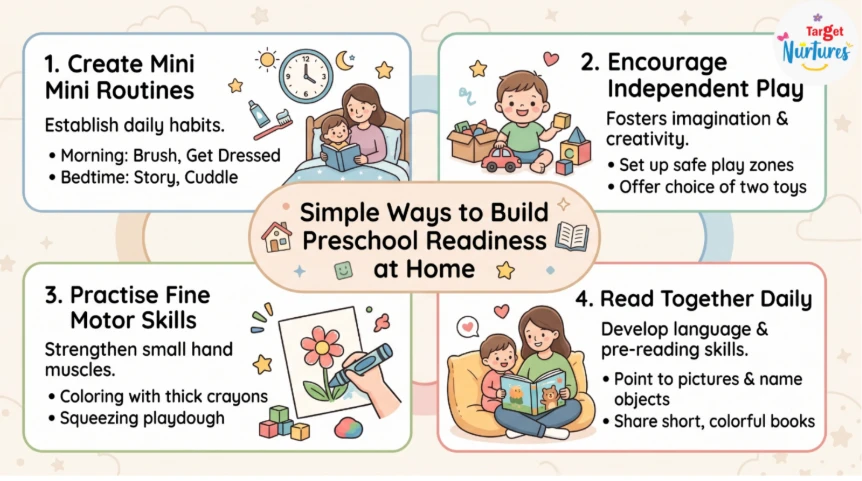
Simple Ways to Build Preschool Readiness at Home
1. Create Mini Routines
Practise a simplified school day, snack time, and a short goodbye and hello ritual, so it feels familiar later.
Short, repetitive routines make toddlers feel more comfortable with change.
2. Encourage Independent Play
Let your toddler play alone for short stretches nearby, building confidence to be without you for a while.
Encourage your toddler to mingle with their friends and visit their home, to nurture their social skills.
3. Practise Fine Motor Skills
Gentle scribbling, jumbo colouring, tracing books, or writing exercises help little hands prepare for classroom tasks.
Early learning kits offer a lovely, low-pressure way to build these skills through fun and engagement at home.
4. Read Together Daily
Reading together with your child builds their listening skills, vocabulary, and the stamina to sit still that preschool requires.
Consistent home-based early learning activities link directly to stronger readiness and confidence once toddlers start formal preschool
Conclusion
No checklist can guarantee a smooth first day of school for all toddlers, but this one surely contains all that they will require. What matters most is that your toddler feels curious and gently prepared.
If you are still unsure whether your toddler is ready for preschool, give it time, keep practising these small habits, and celebrate every sign of independence. Preschool readiness is a journey, not a deadline.
Important Links
| Pre-primary Books | Activity Books |
| Alphabet Writing Books | Learning Kits |
Frequently Asked Questions
1. At what age should a toddler start preschool?
Ans: Most toddlers start preschool between two and a half and three and a half years, though readiness depends more on individual development than exact age.
2. How long does it take for a toddler to adjust to preschool?
Ans: Most toddlers settle within two to six weeks, though some adjust faster and others need a little more patience and consistency.
3. What if my toddler cries every day at drop off?
Ans: Brief crying during goodbyes is common and usually eases once a routine starts to form. Consistent, calm goodbyes help build trust and confidence.
4. Is toilet training required before preschool?
Ans: Many preschools prefer some toilet training progress, but most understand toddlers are still learning and will happily offer gentle, patient support during the day.
5. How can I help my toddler make friends at preschool?
Ans: Encourage a few playdates beforehand, practise taking turns and sharing at home, and talk positively about making new friends to build their confidence.