
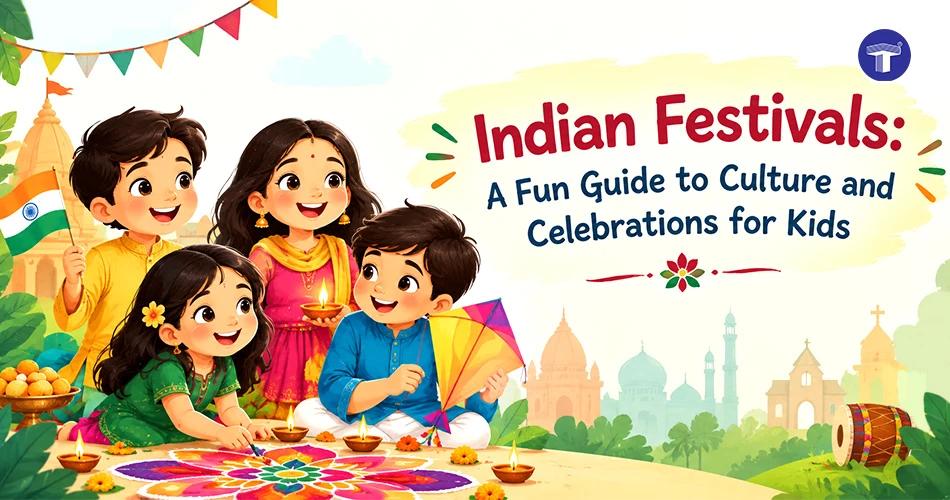
Every household in India seems to glow a little brighter when a festival is around the corner, and little ones are the first to notice it. Indian festivals for kids are not just about greetings, sweets and new clothes; they are a child's earliest experiences with culture and traditions.
Let’s walk you through why these celebrations matter, which ones your toddler will love most, and simple, low-effort ways to bring festival culture home, without turning any of it into a lesson.
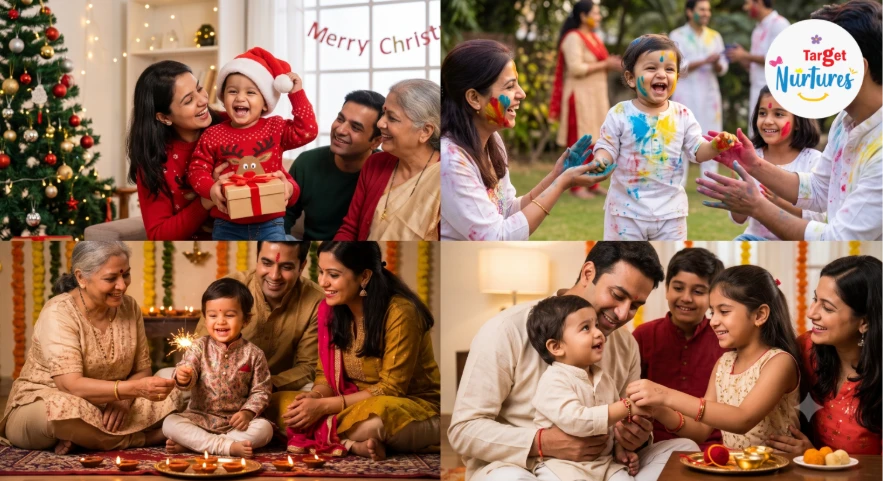
A toddler discovering the joy of Indian festivals
Why Indian Culture and Festivals Matter for Little Ones
Toddlers learn the most through feelings, colours, sounds and repetition, and Indian festivals offer all four in wonderful abundance. The lights, the music, the family get-togethers, all become a gentle introduction to Indian culture for kids long before they understand the stories behind it.
Cultural experiences also strengthen a child’s sense of belonging and cultural identity from a young age, which helps in controlling the level of Western influence on their little minds.
Popular Indian Festivals that Introduce Kids to Culture
Diwali is one of the most celebrated Indian festivals, enough for a toddler to remember its festival magic, with twinkling diyas, colourful lights and rangoli patterns that beg their attention. Talking about the victory of truth over evil through an illustrated book on Ramayana, gives little ones their first quiet lesson in hope.
Holi brings pure, giggly joy, colours smeared on cheeks, water guns and the sweet chaos only toddlers can truly appreciate. Keep the celebration gentle with skin-safe colours, short bursts of play and plenty of water nearby, all suited to their age.
Raksha Bandhan is a lovely way to foster sibling love and care, even for children without siblings, through cousins or close friends. Moments like these not only embed culture in your little one, but also help them grow more responsible and loving.
Other festivals like Eid, Christmas, Pongal, Janmashtami, and Baisakhi also contribute equally to enhancing the cultural mindset in children, bringing them closer to their Indian roots.
Fun Ways to Bring Festival Culture Home
-
Story Time with a Festive Twist
Pairing festival moments with a colourful storybook about festivals can help the meaning stick long after the celebrations end. Read a short story about the festival before it arrives, so your toddler already feels connected when the day comes.
-
Simple Craft Corners
Encourage your toddler to take part in the festivities by decorating their room. Making small posters or sticking sequins on a diya made of paper brings fun together with learning.
-
Dress-up and Pretend Play
A dupatta as a cape, a cardboard sword or a paper crown turns any festival into imaginative play your child will beg to repeat.
Festivals become far easier to plan for once you know what to expect from each one for your toddler. Having a few culture-themed storybooks on hand for these moments can turn preparation into part of the fun itself.
Conclusion
Raising a child who feels proud of their roots does not need grand gestures, just small, joyful moments repeated with love, year after year. Indian festivals for kids offer exactly that, a gentle and colourful path into culture your little one will carry for life.
So the next time a festival is approaching, let your toddler light a diya, smear a little colour or tie a rakhi. These celebrations for kids are where culture quietly becomes a part of who they are.
Important Links
| Pre-primary Books | Hindi Books |
| Activity Books | Learning Kits |
Frequently Asked Questions
1. At what age can toddlers start understanding festivals?
Most toddlers notice festival excitement, lights, colours and gatherings, from around eighteen months, though real understanding of meaning develops closer to age three or four.
2. How can I explain Diwali to a two-year-old?
Start by introducing the story of Ramayana through engaging picture books. Keep it simple, stressing on how it is the festival of lights, and lighting diyas means happiness winning over darkness.
3. Is Holi safe for toddlers to play?
Yes, Holi is safe when played with care. Use organic colours, avoid eyes, and keep play sessions short so your toddler stays comfortable throughout.
4. How do festivals help a child's development?
Festivals build sensory awareness, family bonding and early cultural identity. They also introduce new words, textures and traditions in a joyful setting.
5. What if we cannot celebrate every Indian festival at home?
That is perfectly fine. Choosing two or three festivals to celebrate meaningfully teaches culture just as well as celebrating every single one.