

Every parent has been past the moment when their little one proudly shows them a page full of wobbly letters, and they are not sure whether to smile or worry. All they need are simple ways to improve their child's handwriting in the comfort of their home.
As a parent or a mentor, you do not need fancy tools or long lessons to help. A few small tweaks to your everyday routine can turn your child’s handwriting practice into play instead of pressure. Let us look at where the struggle usually begins, and how to guide your little one towards neater writing
Common Handwriting Struggles Parents Notice at Home
Most children go through similar hiccups while learning to write. Spotting these early makes it easier to help.
- Uneven or wobbly letters: This usually means the hand muscles are still building strength and control.
- Very tight pencil grip: If a child’s pencil grip is too hard, they tire quickly and write slower than usual.
- Poor spacing between words: Inconsistent spacing is common, making it difficult for a child to sense where one word ends, and the next begins.
Fun Fine Motor Activities to Strengthen Little Hands
Before letters look neat on paper, little hands need strength and control. Here are some everyday activities that build exactly that, often without your child realising they are practising.
- Playdough and clay: Rolling and pinching clay strengthen the same muscles used to hold a pencil, building your child’s fine motor skills.
- Threading and lacing: Stringing beads onto a thread builds finger control and better hand-eye coordination.
- Tracing books: Pencil control activity books paired with writing practice books offer a great way to trace letters, helping improve your child’s handwriting at home.
- Building blocks or clothes pegs: Picking up and stacking small blocks or practising pinching motion using clothes pegs builds the grip needed to hold a pencil steadily.
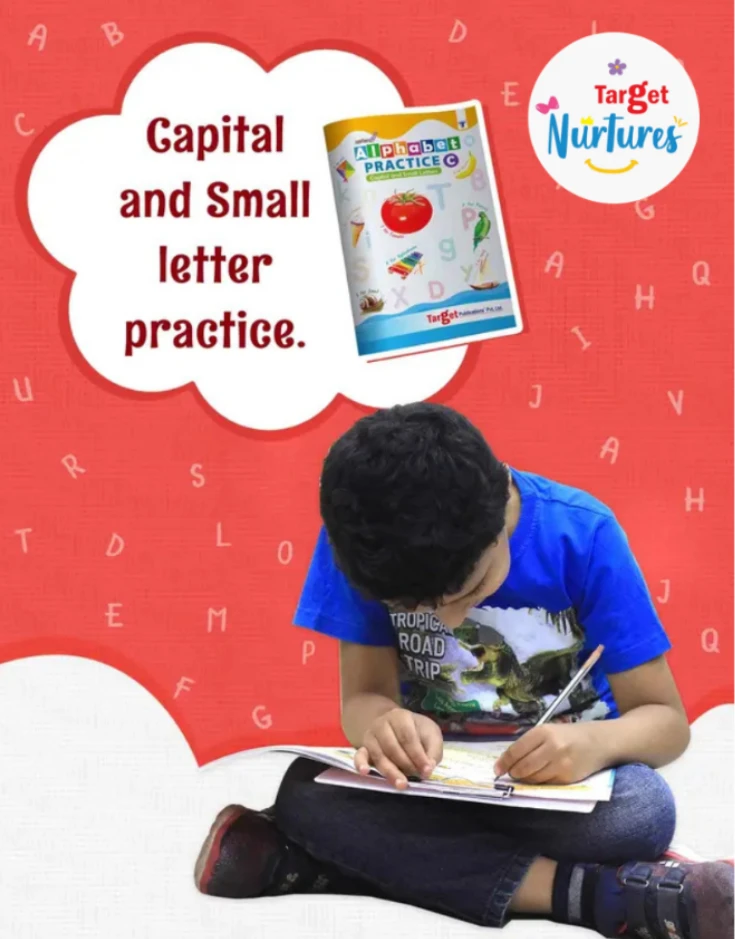
Gentle letter tracing practice at home
Easy Letter Formation Tricks for Practice at Home
Once your child's motor skills and pencil grip start to develop, you can gently guide the formation of letters. Small corrections now save relearning later.
- Start big, then go small: Kids practising letter formation on a whiteboard or even in a tray of sand helps their little hands get comfortable with the shape and direction of each letter before they attempt the same movement on paper.
- Always top to bottom: Starting every stroke from the top is the most efficient way letters take shape, and it is one of the simplest handwriting practices for kids, as it keeps letter formation consistent.
- Keep sessions short: Five to ten focused minutes of handwriting practice at home works far better than one long, tiring session, since toddlers have short attention spans.
These small habits do more for handwriting than any amount of pressure ever could.
Conclusion
Your child may not start writing perfect letters overnight. Improving your child's handwriting at home is more about patience and playful practice than immediate results.
So the next time your child hands you a page of uneven letters, remember how far they have already come and appreciate their little efforts. With consistency and encouragement, neater handwriting will follow naturally.
Important Links
- Pre-primary Books
- Activity Books
- Alphabet Writing Books
- Cursive Alphabet Practice Book
- Learning Kits
Frequently Asked Questions
1. At what age should my child's handwriting improve?
Most children show noticeable improvement in handwriting between ages five and seven, though every child builds fine motor skills at their own pace and comfort level.
2. How much handwriting practice does a child need each day?
Just ten to fifteen minutes of daily practice at home is usually enough to build steady, lasting improvement in a child’s handwriting without causing any frustration or unnecessary tiredness.
3. Does messy handwriting reflect a learning difficulty?
Not necessarily. Messy handwriting is often just a sign of developing motor skills in toddlers, though ongoing difficulty is always worth discussing gently with a teacher.
4. Can drawing help improve my child's handwriting?
Yes, drawing and colouring strengthen the same fine motor muscles used in handwriting, making them a fun, natural way to practise at home together.
5. Should I correct my child's pencil grip immediately?
It helps to correct the pencil grip early and gently, since an awkward grip can become a habit that is much harder to change later on.