

Every parent has witnessed two little ones reaching for the same crayon, or racing to see who finishes their puzzle first. The little ones’ brains remain fixed on winning. And this is where your child's relationship with competition quietly begins.
When your child is guided gently, this spark can grow into one of the most valuable skills they ever learn, gaining the ability to try, sometimes lose, and try again anyway. Fostering healthy competition in your child simply means shaping that spark into confidence rather than pressure.
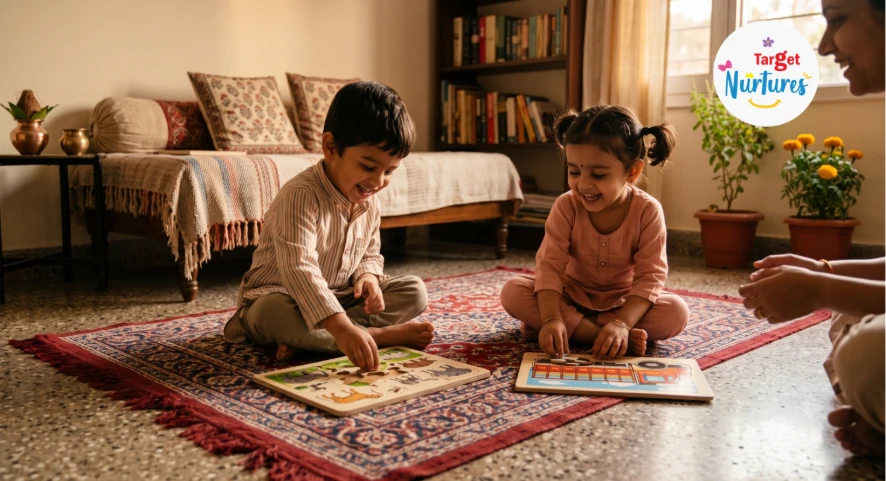
Two siblings engaged in healthy competition during playtime
Healthy Competition vs Unhealthy Competition: Spot the Difference
What Healthy Competition Looks Like at Home
Healthy competition feels light. Your child enjoys the game itself, cheers a little for their sibling, and moves on quickly after a loss. They compare their own progress today with yesterday, not with everyone around them, and they strive to be better when they play next.
Signs Your Child's Competition Has Turned Unhealthy
Watch for tears that last well beyond the game, blaming others for a loss, or refusing to try new activities at all.
It has been found that children praised mainly for their qualities, rather than their effort, tend to feel more shame after a setback. Hence, praise your child even for the smallest effort
| Healthy Competition | Unhealthy Competition |
| Focused on effort and enjoyment | Focused only on winning |
| Bounces back quickly after losing | Meltdowns or blame after losing |
| Compares with their own past try | Compares constantly with others |
| Parent plays the cheerleader | Parent plays the judge |
Healthy vs unhealthy competition in children, at a glance
Why Healthy Competition Matters for Your Child's Growth
Builds Resilience and Confidence
Every small win and small loss teaches your child that setbacks are not the end of the story. Over time, this builds a quiet inner confidence that they can handle whatever comes next, whether that is a tricky new puzzle or a competent opponent.
Teaches Teamwork and Emotional Regulation
Friendly competition, at home or with playmates, teaches your child to wait their turn, celebrate someone else's success, and manage big feelings when things do not go their way.
Simple, Playful Ways to Encourage Healthy Competition
Turn Everyday Moments into Friendly Games
Turning daily chores into a cheerful little race takes the pressure off winning and puts the focus back on fun, effort, and togetherness. Even something as simple as ‘who spots a red car first on a walk’ can foster low-stakes, healthy competition in your child.
Celebrate Effort, Not Just the Win
A quiet afternoon spent colouring together, each of the siblings filling in their own page, is a lovely way to introduce friendly comparison without any pressure to win. Story time works just as well, choosing a picture book where the character tries, stumbles, and tries again lets your child understand healthy competition without attending a dedicated session.
Conclusion
Fostering healthy competition in your child is really about the small, everyday choices you make as a parent. The words you use after a loss and the praises you bestow after a win have a greater impact than just encouragement.
Stay patient and supportive, and let your child see that trying matters far more than winning. With time and gentle guidance, they will carry this healthy, confident mindset far beyond the playroom.
Important Links
- Pre-primary Books
- Activity Books
- Alphabet Writing Book
- General Knowledge Books
- Learning Kits
Frequently Asked Questions
1. At what age does healthy competition begin in children?
Most toddlers show early competitive behaviour between two and three years, often over toys or turns, marking the natural start of healthy competition.
2. What are common signs of unhealthy competition in kids?
Meltdowns after losing, constant comparison with others, or reluctance to try new activities are some signs that suggest your child is nudging towards unhealthy competition.
3. Does healthy competition really help a child's development?
Yes, healthy competition builds resilience, confidence, and a child’s social skills, helping children handle both success and setbacks with a positive, growth-focused mindset.
4. How should I respond when my child struggles with losing?
Stay calm and acknowledge their disappointment gently, reminding them that trying again matters more than winning. This slowly builds their emotional regulation over time.