
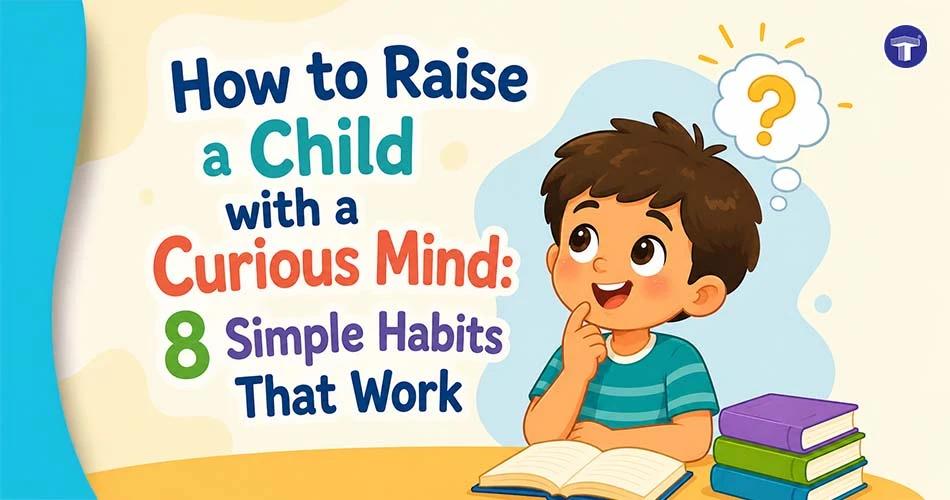
"Why is the moon following us?" "Why do leaves fall?" "Why can't fish walk?" You have most likely experienced this if you are a parent. You are mid-chore, and your toddler brings up another 'why'. It can feel endless on a tiring day, but it is genuinely a lovely sign. That curiosity is quietly leading to your toddler’s brain development, one question at a time.
Raising a child with a curious mind now can shape a lifelong learner, one who enjoys school and everyday life rather than simply enduring it.
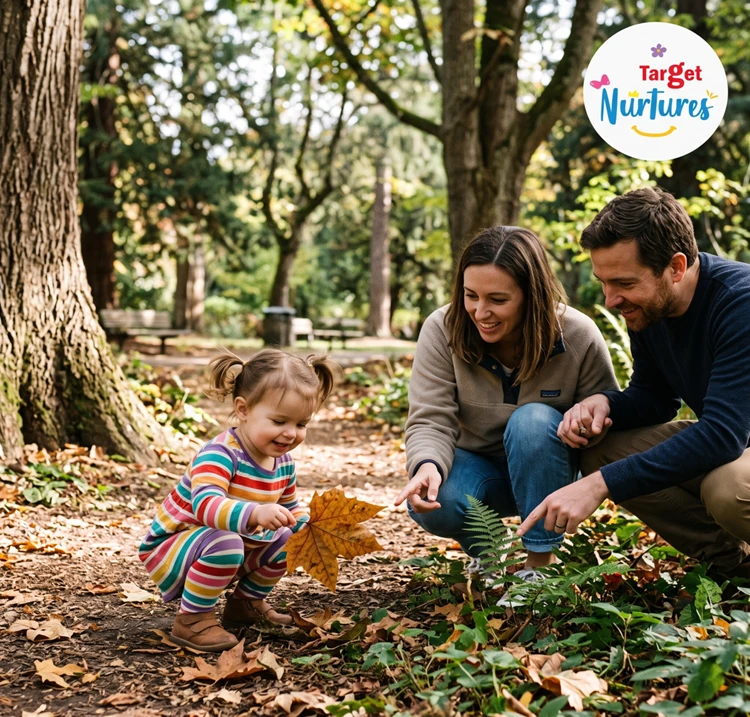
A toddler exploring nature during a walk, building curiosity
8 Simple Habits to Raise a Curious Child
You do not need fancy toys or expensive classes to raise a curious mind. Here are eight simple habits that genuinely work toward nurturing a child’s curiosity.
1. Let Them Ask 'Why' as Many Times as They Want
Resist the urge to 'get over it’. Even a short, honest answer tells your child that questions are welcome, not a nuisance, which they carry throughout their life.
2. Turn Everyday Chores into Mini Discoveries
Folding laundry or watering plants can slowly become tiny science lessons without any extra effort. Let your toddler help and ask what they notice in ordinary tasks.
3. Say Yes to Messy, Hands-On Play
Sand, water, mud, let them get stuck in. Hands-on play helps toddlers explore textures, weight, and cause and effect, building curiosity through touch and hands-on discovery.
4. Read Together, But Let Them Lead the Story
Pause on a page and ask what happens next. An engaging picture book can spark questions that are remembered forever, well beyond bedtime stories.
5. Take Curiosity Outdoors with Nature Walks
A walk to the park is never just a walk. Point out insects, clouds, flowers or fallen leaves. Nature gives endless material for little minds to explore and wonder about.
6. Answer Questions with Questions, Not Just Facts
When your child asks something, first try asking, 'What do you think?’ It builds confidence and shows that curiosity is about exploring and learning, not just knowing the right answer straight away.
7. Let Them See You Being Curious Too
Wonder aloud about small things. You may say, 'I wonder why the sky changes colour.’ This shows your child that even a grown-up can have a curious mind, and that learning never halts.
8. Celebrate the Effort of Exploring, Not Just the Outcome
Praise the effort, not just the correct guess. A simple activity kit at home can give them safe ways to test ideas and celebrate small wins along the way.
Important Links
| Pre-primary Books | Activity Books |
| General Knowledge Books | Learning Kits |
Conclusion
Raising a curious child is not about perfect parenting or some mathematical formula. It is about small, patient efforts put in every single day, even the messy ones.
Some days feel chaotic and slow, and that is completely fine. What matters most is that your child feels safe to wonder, ask, and explore freely, growing curious every single day.
Frequently Asked Questions
1. At what age does curiosity develop in toddlers?
Ans: Curiosity in children typically begins around 12 to 18 months and grows rapidly through the toddler years, as children start exploring their surroundings and asking simple questions.
2. How can I encourage curiosity in my toddler?
Ans: Answer their questions patiently, allow hands-on exploration, and involve them in daily tasks. Simple interactions build curiosity more than expensive toys.
3. Why is curiosity important for child development?
Ans: Curiosity supports learning, memory, and problem-solving skills. It also builds confidence, helping children approach new situations with interest instead of fear or hesitation.
4. What are common signs of a curious child?
Ans: Frequent questions, exploring new objects, wanting to know how things work, and enjoying new experiences are common signs of a naturally curious child.
5. Can too much curiosity ever be a problem?
Ans: Curiosity itself is healthy, but gentle guidance is needed around safety. Redirect risky exploration calmly, without discouraging your child's natural desire to learn.