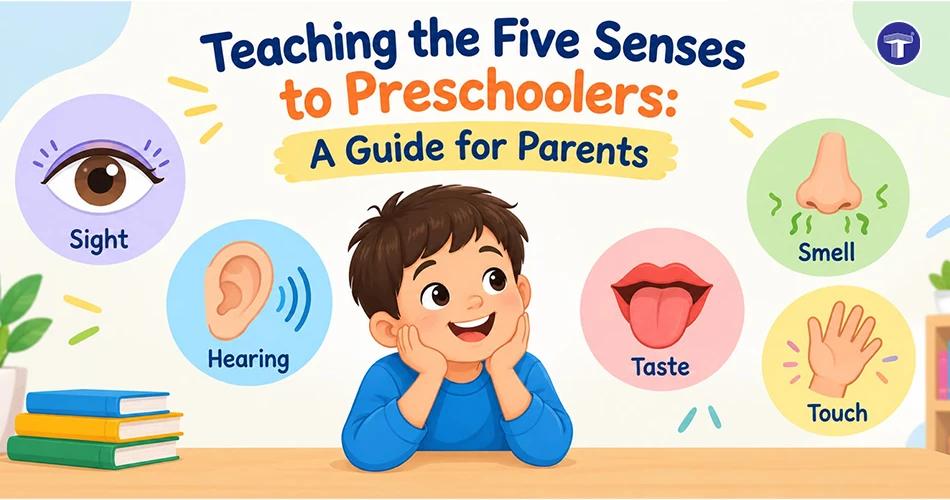
Has your little one ever sniffed a cooking pot, squealed at a squishy mud puddle, or wondered why a toaster goes 'pop'? That curiosity is exactly where teaching the five senses to preschoolers begins. And you do not need a classroom or a fancy kit to get started.
We know your days are already full of rhymes, snacks, tantrums, and screentime negotiations. So, here are simple five senses activities for preschoolers that use things you probably already have at home. Let us explore them together.
Five Senses Activities for Preschoolers at Home
Children learn best by doing, so it’s best to keep things light and playful.
-
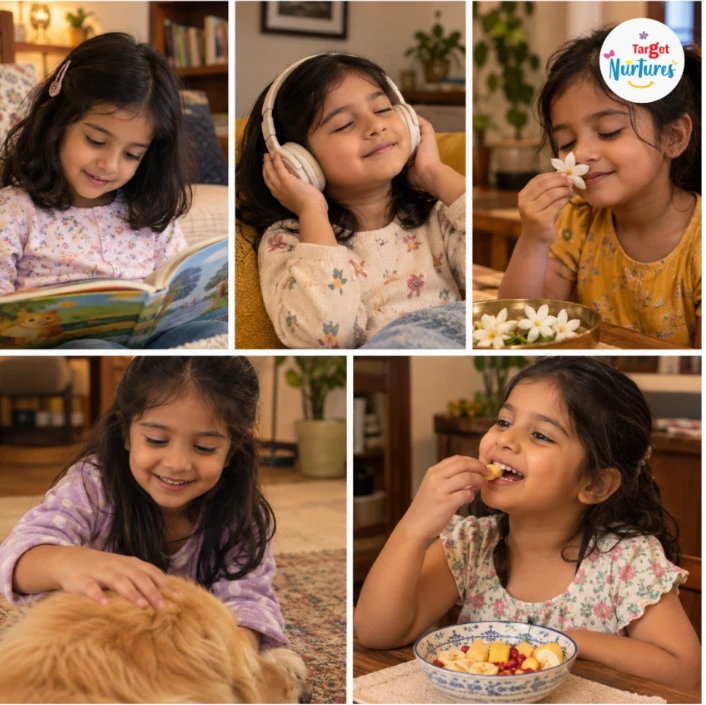
Sense of Sight: Colour Hunts and I Spy Games
Pick a bright colour and invite your child to find things of that colour around the room. Spy games work wonderfully, too. It builds a toddler’s attention span and patience quietly.
- Sense of Hearing: Listening Drills and Sound Games
Step outside and ask, 'What can you hear?' Birds, scooters or a neighbour's pressure cooker might be on the list. At home, fill securely closed tins with rice or lentils and shake them. And watch if your child can match pairs by sound alone.
-
Sense of Touch: Easy Sensory Play for Preschoolers
Make a bag from an old pillowcase and hide a sponge, a spoon, or a soft toy inside. Then let your little one guess the object. Such sensory play activities build brain connections from an early age.
-
Sense of Smell: Scent Jars and Mystery Sniff Games
Pop cotton balls into jars with cloves, cardamom, or mint, and play such sniffing games once in a while. Smells strengthen a child’s memory too, so you may hear, 'That smells like Nani's kitchen!'
-
Sense of Taste: Safe Taste Tests for Young Explorers
Offer tiny bites of foods with different flavours, such as jaggery, lemon, a salted cracker, and dark chocolate. Check for allergies first and never force a taste. Picky eaters may feel more comfortable exploring new flavours when there is no pressure.
Five senses activities for preschoolers, at a glance
Storytime and the Five Senses: Picture Books that Bring Learning Alive
Stories help little ones find words for what they feel. Pause while reading and ask, 'What would this smell like?' Or ‘Do you like the taste of the fruit in this picture?’
Colourful picture books featuring different characters, objects, flowers, and farm animals make this easy. Let your child enact a few sounds and expressions of the characters.
Colouring and Craft: Learning the Five Senses Through Art
Draw a big face together and let your child add eyes, ears, a nose, a mouth, and hands. Or ask them to colour things they can smell, hear, or taste. Keep colouring books and activity books handy for assistance.
What Research Says About Sensory Learning in Early Childhood
According to the Harvard Center on the Developing Child, more than one million new neural connections form every second in the first few years of life. Early experiences shape these connections, and everyday sensory play gives children opportunities to explore and learn.
Conclusion
Teaching the five senses to preschoolers does not have to feel like a lesson. A listening drill, a scent jar or a bedtime story is enough to begin. Pick one idea this week and see what happens.
Your child will surprise you with their understanding of the five senses. Some days they will perform exceptionally well, and the others might be slow. Both count. Follow their lead and enjoy the sniffing, squishing, and giggling.
Important Links
Frequently Asked Questions
1. At what age should I start teaching the five senses to preschoolers?
Sensory learning starts at birth. Around ages three to four, children can begin learning the names of the senses through simple play. Impart practical knowledge to keep learning fun and easy.
2. Are there more than five senses for preschoolers?
Apart from the five senses, children also use balance, body awareness, and temperature sense. Supervised water play can help them explore these.
3. How do I know if my child has sensory issues?
During their development years, children vary a lot. If your child strongly avoids certain sounds, textures, or foods regularly, speak to your paediatrician or an occupational therapist for advice.
4. How long should five senses activities for preschoolers last?
Five to ten minutes of sensory play suits most preschoolers. Stop when their interest fades and try again another day. Short, happy sessions are more fruitful than long ones.