
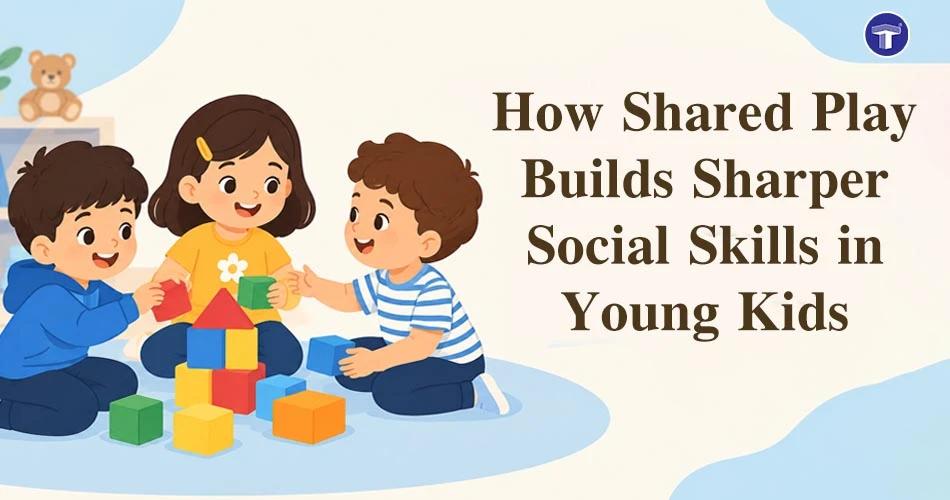
Two toddlers sharing the same toy, or playing together, with one rolling a ball and the other jumping to catch it, look like small, insignificant moments. But they are quietly building something important. Long before a lesson on sharing or kindness, children learn it simply by playing with or beside one another.
This is shared play. It does not require fancy toys, a packed playdate calendar, or a large group of toddlers. All they need is a friend, a few minutes and something fun and engaging to do together.
In this blog, we will look at why shared play matters, how it affects your toddler’s mind, and some easy ways to bring more of it into their routine.
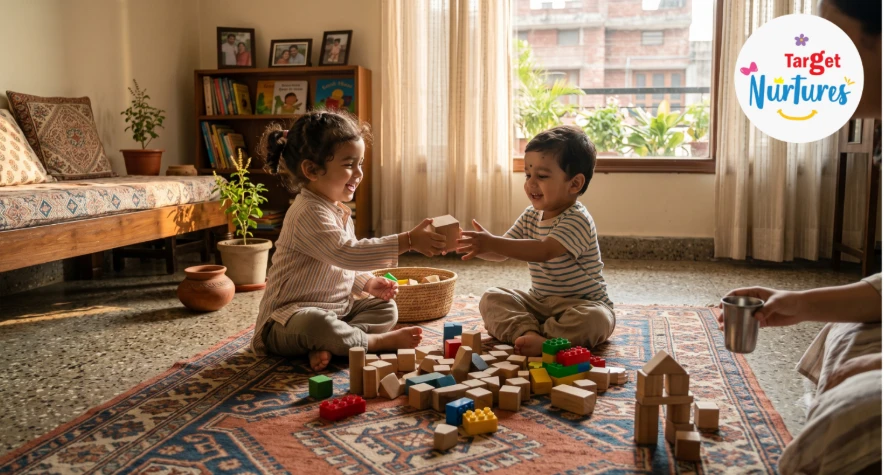
Two toddlers sharing toy blocks during playtime
Why Shared Play Shapes a Toddler’s Social Skills
Solo play helps build focus and imagination, but shared play adds another person's point of view. When toddlers hand over a toy to one another, wait for their turn or play in teams, they are simply discovering that other people have feelings too. This small realisation serves as a significant initial lesson in building toddlers' social skills
A lot happens beneath the surface here.
- Watching a playmate's face teaches a child to notice excitement or disappointment, an early lesson in reading emotions.
- Waiting to use a shared set of blocks or a favourite picture book builds patience naturally.
Every small negotiation with a friend is a gentle rehearsal for facing society later.
What Research Says
Shared play is not just a nice idea, it is backed by research. Harvard's Center on the Developing Child explains that back-and-forth play, known as 'serve and return', strengthens the brain connections children use for communication and social skills. Every small social encounter, be it a smile, a shared laugh, or a passed toy, contributes to a child’s brain development.
Simple Ways to Bring More Shared Play into Your Day
1. Everyday Games and Activities that Spark Connection
You do not need an elaborate set-up. Games like pretend play, stacking a tower with a sibling or enjoying story time with a colourful picture book are all types of shared play.
Here is a quick look at a few activities and the skills they build:
| Activity | Skill It Builds |
| Building blocks together | Turn-taking and patience |
| Pretend or role play | Empathy and communication |
| Simple matching games | Following rules calmly |
| Shared story time | Listening and taking turns to speak |
2. Small Habits that Encourage Sharing
Keep a couple of toys or an activity book handy for two children to use together, rather than one for each. This will leave them with no option but to share and co-operate.
Gentle appreciation, like saying 'you waited so nicely', helps your child understand why sharing feels good, encouraging the behaviour. When squabbles happen, step in calmly rather than rushing to fix it, giving your toddler a small chance to work it out first.
Conclusion
Shared play will not always look neat; there will be tears over a toy and the occasional tug of war. That is normal and part of the process. What matters is that your child keeps getting small, safe chances to sharpen their social skills right from a young age.
So next time your toddler plays alongside a friend or sibling, resist the urge to step in too soon. Let the sharing and even the small disagreements do their quiet work, one playful moment at a time.
Important Links
| Pre-primary Books | Activity Books |
| Cursive Alphabet Practice Book | Learning Kits |
Frequently Asked Questions
1. At what age do toddlers start engaging in shared play?
Ans: Most toddlers show interest in shared play between two and three years, starting with parallel play before moving into more interactive, cooperative play with peers.
2. What if my toddler refuses to share toys during play?
Ans: This is normal at this age. Gently model sharing, praise small efforts and avoid forcing it. Confidence with sharing grows steadily over time.
3. How can I encourage shared play if my child has no siblings?
Ans: Arrange short playdates, join a toddler group or simply play alongside your child yourself. Regular practice with any playmate builds the same social skills.
4. Does screen time affect a toddler's social skills?
Ans: Excessive screen time can reduce face-to-face interaction, which toddlers need to practise reading emotions and taking turns, so balance it with real playtime.
5. How long should a shared play session be for toddlers?
Ans: There is no fixed rule, even ten to fifteen minutes of focused shared play daily is enough to build meaningful social skills.